Start with the events the room needs to host
A meeting room designed only around a long table can feel awkward when a group wants to collaborate or a speaker needs a clear view of the audience. Before choosing furniture, list the likely uses of the space: presentations, interviews, training sessions, small celebrations or breakout discussions. For each use, sketch where people will sit, where they will enter and how they will reach refreshments or facilities without interrupting others.
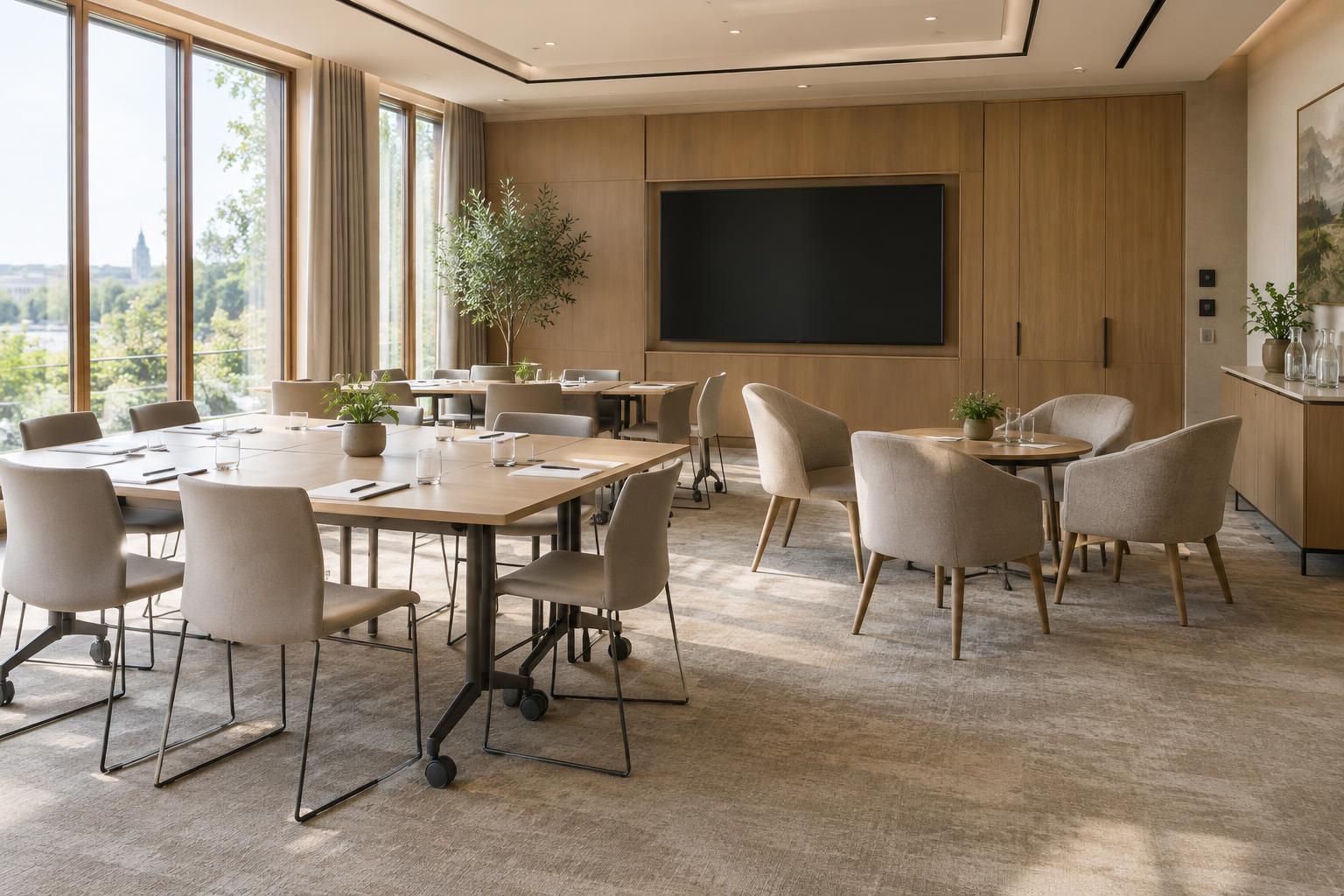
This exercise helps establish what should stay fixed and what should move. A screen and connection point might have permanent locations, while tables and chairs can be rearranged. Leave enough clear floor area for the layouts the hotel intends to offer, including an accessible route in each arrangement. A flexible room is not one that can theoretically hold every configuration; it is one that staff can reliably prepare for the events they actually book.
Make layout changes manageable
Movable furniture is useful only when it is comfortable, durable and practical to handle. Tables that fit through doors, chairs that can be moved safely and a nearby place to store unused pieces make changes easier. Check proposed layouts with the furniture in place rather than relying on an empty-room plan. Door swings, presentation equipment and circulation routes can consume more space than expected.
Think through the reset from a staff member’s perspective. Where do extra chairs go during a small meeting? Can tables be moved without scraping finishes or blocking a corridor? Is there room to set up before guests arrive? Keeping a small set of well-tested layouts can make room preparation more consistent while still giving event organizers meaningful choices.
Support attention and conversation
Meeting-room comfort depends on more than seating capacity. People need to see faces and screens, hear speakers and take notes without struggling with glare. Provide lighting that can support both presentation and discussion modes, with controls that staff or organizers can understand quickly. Window coverings should allow daylight when it helps and reduce glare when it does not.
Sound also affects how the room functions. Soft furnishings and other appropriate interior finishes can help moderate reflections, while the placement of doors and service activity may reduce distractions during a session. Consider where participants will gather for informal conversation: a small area near the room can be useful, provided it does not obstruct access to neighboring spaces. If you are exploring ways to make breakout time feel more inviting, browse Creative Play · Curious City Explorer for a different perspective on how people engage with shared spaces, then adapt any ideas to the room’s purpose.
Give equipment a clear home
Technology works best when its location is predictable. Decide where a presenter is likely to stand or sit, then plan power, display connections and controls around that position. Avoid placing cables across walking routes. A clearly marked control point and straightforward instructions can reduce the need for staff to explain the setup at the start of every event.
Leave room for ordinary meeting materials as well as equipment: water, notebooks, handouts and personal bags all need somewhere to go. If the hotel offers video meetings, consider what a remote participant will see and hear from the main seating positions. Testing the room with a person presenting, a person seated at the back and someone joining remotely can reveal inconveniences that are easy to miss on a floor plan.
Plan for service and the next booking
Refreshments, cleaning and room resets are part of meeting-room design, not afterthoughts. Locate a suitable place for water or coffee that guests can reach without crossing the presenter’s space. If food service is offered, consider how staff will bring items in and remove them. Finishes should suit the expected wear and be straightforward to clean between bookings.
Finally, walk through a full event day: arrival, setup, breaks, departure and reset. Notice where coats and bags accumulate, whether bins are easy to find and how staff reach storage when the room is occupied. A meeting room that handles these small transitions gracefully is more useful to guests and easier for the hotel team to operate.