Make the restroom easy to find and use
Guests should not have to search the dining room or interrupt a busy server to find the restroom. Simple signs at natural decision points can help, especially when the route passes a hallway or turns a corner. If guests still ask for directions, staff can give a short, specific answer rather than pointing vaguely across the room. A clear route also matters when tables or waiting guests crowd a corridor.
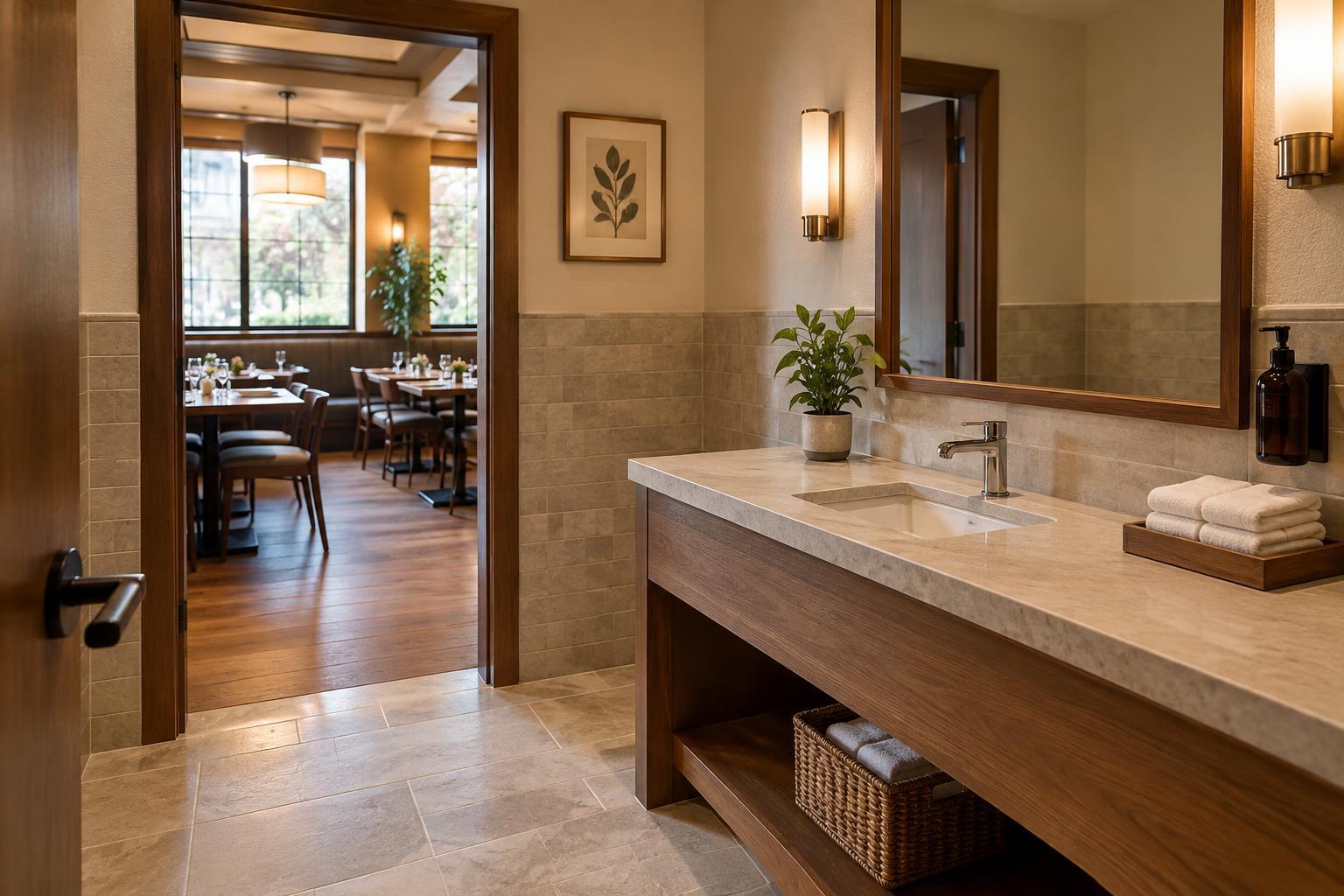
Consider the journey from the table, not just the room itself. A dim hallway, a heavy door or stored items along the route can make the trip uncomfortable or difficult. If the space has an accessible route, staff should know how to describe it without making assumptions about what a guest needs. Directions and signs should match the layout as it actually operates, including any changes made for private events.
Build upkeep into the shift
A restroom that looks ready at opening may need attention well before closing. Assign checks to a role on each shift, with a backup when that person is serving guests or taking a break. A useful check covers soap, drying supplies, toilet paper, bins, floors, fixtures and obvious odors or leaks. Staff should have a clear way to report a problem they cannot resolve themselves.
The timing of checks should reflect how the restaurant is being used. A busy lunch period or a large event may call for more frequent attention than a quiet afternoon. A simple record can help a team see whether checks are happening and whether the same issue keeps returning. The goal is not paperwork for its own sake; it is to make responsibility visible so a problem does not wait for a guest to mention it.
Choose details that hold up in daily use
Finishes and fixtures should be considered from both the guest’s and the cleaning team’s point of view. Good lighting makes the room easier to navigate and helps staff spot spills. Hooks, a convenient place for personal belongings and bins that are easy to find can reduce awkward moments. Surfaces that tolerate the restaurant’s regular cleaning routine may be more useful than details that look appealing only when newly installed.
Small maintenance faults can undermine an otherwise thoughtful room. A latch that does not close smoothly, an unreliable tap or a dispenser that is difficult to refill creates extra work and frustration. Staff who clean the space are well placed to notice these issues, so give them a straightforward reporting channel and a place to note which fixtures need attention. Where a repair cannot happen promptly, decide how to guide guests to another usable facility, if one is available.
Respond discreetly when something goes wrong
If a guest reports an empty dispenser, a spill or a door that will not lock, thank them and act without making them repeat the problem to several people. Staff can offer directions to another restroom if one is available, then alert the person responsible for checking the space. A safety concern, such as water on the floor, calls for immediate attention and a way to keep others from entering the affected area until it is addressed.
Restroom care works best when it is treated as part of service rather than an occasional cleaning task. Managers can include it in opening routines, shift handovers and walk-throughs without asking staff to discuss guest use publicly. When directions are clear, supplies are dependable and problems are handled promptly, guests can return to their meal without the restroom becoming a memorable part of it.