A space with more than one purpose
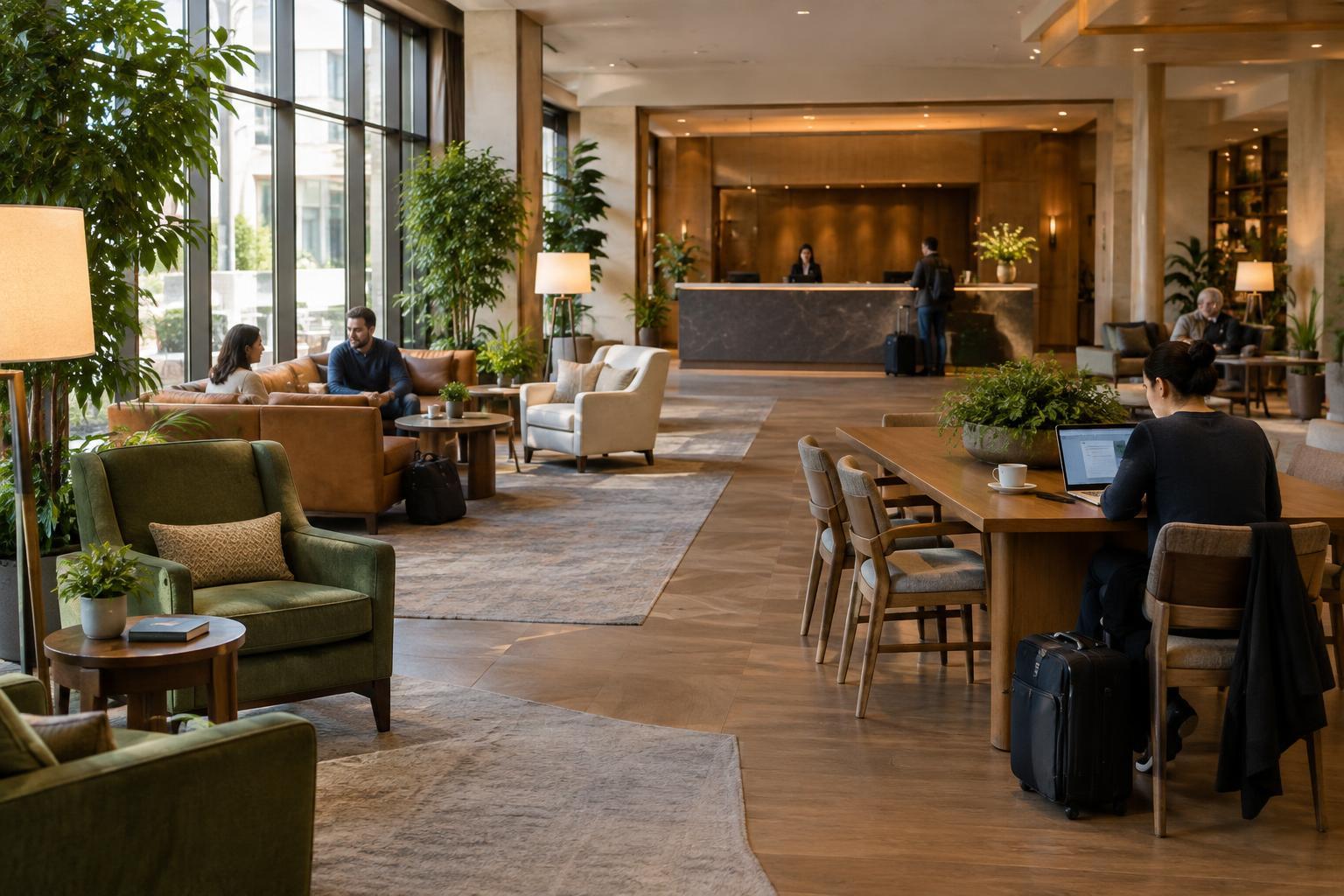
A guest may enter the lobby carrying bags after a long journey. Later, the same guest might wait there for a friend, take a brief call or plan the next day’s outing. Other people may be checking in, meeting colleagues or looking for a quiet seat. Because these needs overlap, a successful shared space does not have to serve every activity equally well. It does need to help people understand what they can do there and where they will be most comfortable.
The first impression is often practical: Is there somewhere to sit without blocking a walkway? Can a guest find the desk, lift or exit without asking? Is it obvious which seats belong to a café and which are available to everyone? A visually striking lobby can still feel awkward if guests cannot answer those questions. Clear sightlines, easy-to-read signs and an uncluttered route through the space make the room more welcoming before any conversation begins.
Seating that offers real choice
Guests use shared spaces for different lengths of time, so one seating style rarely suits everyone. A bench near reception can help someone waiting a few minutes, while a table and supportive chair may suit a guest reading or using a laptop. Small groups appreciate places to talk without taking over an entire room. Where space permits, a mix of seats lets guests choose how visible, settled or social they want to be.
Placement matters as much as furniture. Seats directly beside a busy entrance may be convenient but exposed to drafts and passing luggage. A secluded corner may feel restful, yet it can be hard to locate or use if lighting is poor. Operators can look at the room from a guest’s position: Can someone reach a seat without squeezing past another group? Is there space for a mobility aid or suitcase nearby without obstructing circulation? These details affect whether an available seat feels usable.
Atmosphere without guesswork
Lighting and sound tell guests what kind of activity a space welcomes. Bright light near an information point helps people read signs and documents; softer light in a lounge can encourage a slower pace. Neither approach works everywhere. A guest who hopes to read should not have to sit in shadow, while someone seeking a calm conversation may avoid a seat directly beneath a loud speaker. Adjusting distinct areas for distinct uses can be more helpful than trying to create one mood throughout.
Clear boundaries also reduce uncertainty. If some tables require a purchase, say so politely and make other seating easy to identify. If a lounge closes for an event, explain where guests can wait instead. A short, visible note about opening hours or food service can prevent a guest from settling in only to be asked to move. Staff can reinforce these cues with simple offers of help rather than assuming everyone knows how the room operates.
Keeping the space useful throughout the day
The same lobby may be quiet in the morning and crowded when groups arrive. A layout that works at one hour can create bottlenecks at another. Regular walk-throughs help staff notice bags collecting near a doorway, chairs drifting into a path or a popular table becoming an informal queue. Small adjustments, such as moving a sign or giving waiting guests a clear place to gather, can make the room easier to share without redesigning it.
Maintenance is part of the experience, too. Guests are more likely to use a shared space when seats are clean, surfaces are cared for and a spill is addressed promptly. Amenities such as power outlets, water or reading material can be welcome, but they should be easy to find and kept in working order if offered. A modest, dependable space is often more useful than one filled with features guests cannot comfortably access.
The aim is not to control how long someone sits or exactly how they spend their time. It is to provide understandable choices and protect room for other guests to move, wait and relax. When a lobby makes its purpose clear and adapts to everyday use, it becomes more than a passage to the guest room: it becomes a reliable part of the stay.