The menu format sets the expectations
A menu is both a list of food and a guide to how an evening will work. An à la carte menu lets guests choose and pay for individual dishes. A set menu offers a defined combination of courses, sometimes with a choice within each course, at a stated price. A tasting menu presents a planned sequence of smaller courses, usually chosen by the kitchen. These are broad descriptions rather than rigid rules: a restaurant may combine elements of all three.
For guests, the main differences are freedom, cost clarity and control over time. For staff, they are the number of decisions to manage, the way orders reach the kitchen and the amount of coordination each table needs. Neither format is automatically more welcoming or more refined. A good experience depends on whether the restaurant explains the format clearly and delivers what it promises.
À la carte: flexibility with more decisions
À la carte dining gives guests room to shape their meal. Someone might order a starter and main, share several dishes or choose only one course. This can suit groups with different appetites and preferences. It also lets guests control spending dish by dish, although the final bill may be harder to predict when sides, drinks and extras are ordered separately.
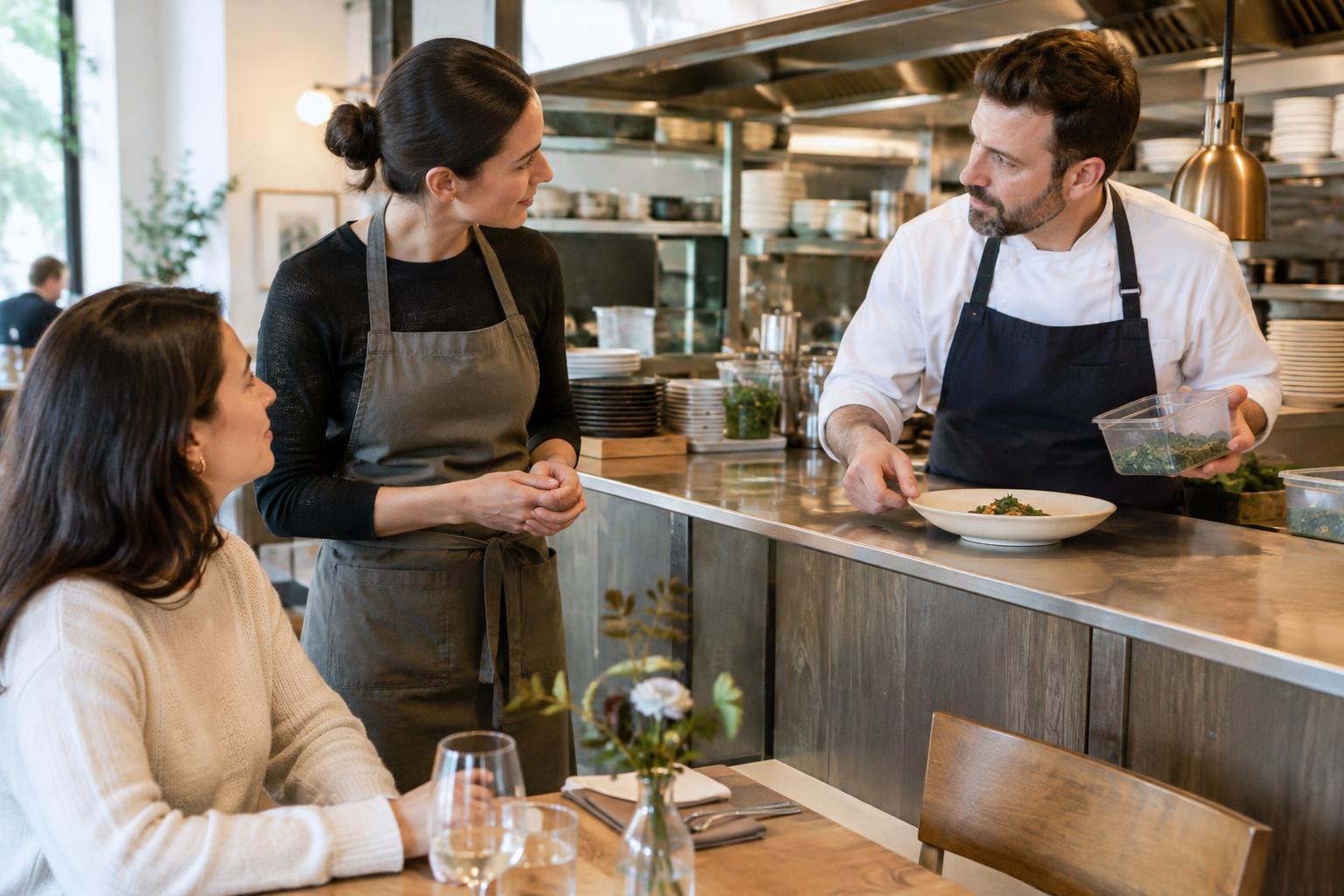
That flexibility creates work for the service team. Staff need to know what comes with each dish, answer questions about portions and help guests build an order that makes sense together. They also need to confirm which dishes should arrive at the same time, particularly when a table is sharing. In the kitchen, different combinations can make preparation and timing less predictable than a fixed sequence.
Clear descriptions and attentive order-taking make a difference. If a main needs a separate side to feel complete, or a dish takes longer than others, saying so before the order is placed helps guests decide without feeling steered.
Set menus: a defined path with limited choice
A set menu narrows the decisions: guests choose from a smaller selection or receive a specified series of courses. Its stated price can make the basic meal easier to budget for, but guests should still be able to see what costs extra, including supplements, drinks or optional additions. Fewer choices may feel relaxing to one diner and restrictive to another.
For the restaurant, a smaller range of dishes can make purchasing, preparation and service planning simpler. Staff can describe the courses confidently and anticipate the broad shape of each table’s meal. Even so, the team must track choices and exceptions accurately; a table of four may be on the same set menu but have different selections, dietary needs or preferred pacing.
The most useful explanation is often a practical one: how many courses are included, where guests have a choice, whether substitutions are possible and approximately how the meal will unfold. Staff should avoid promising adjustments the kitchen has not confirmed.
Tasting menus: a shared sequence that needs coordination
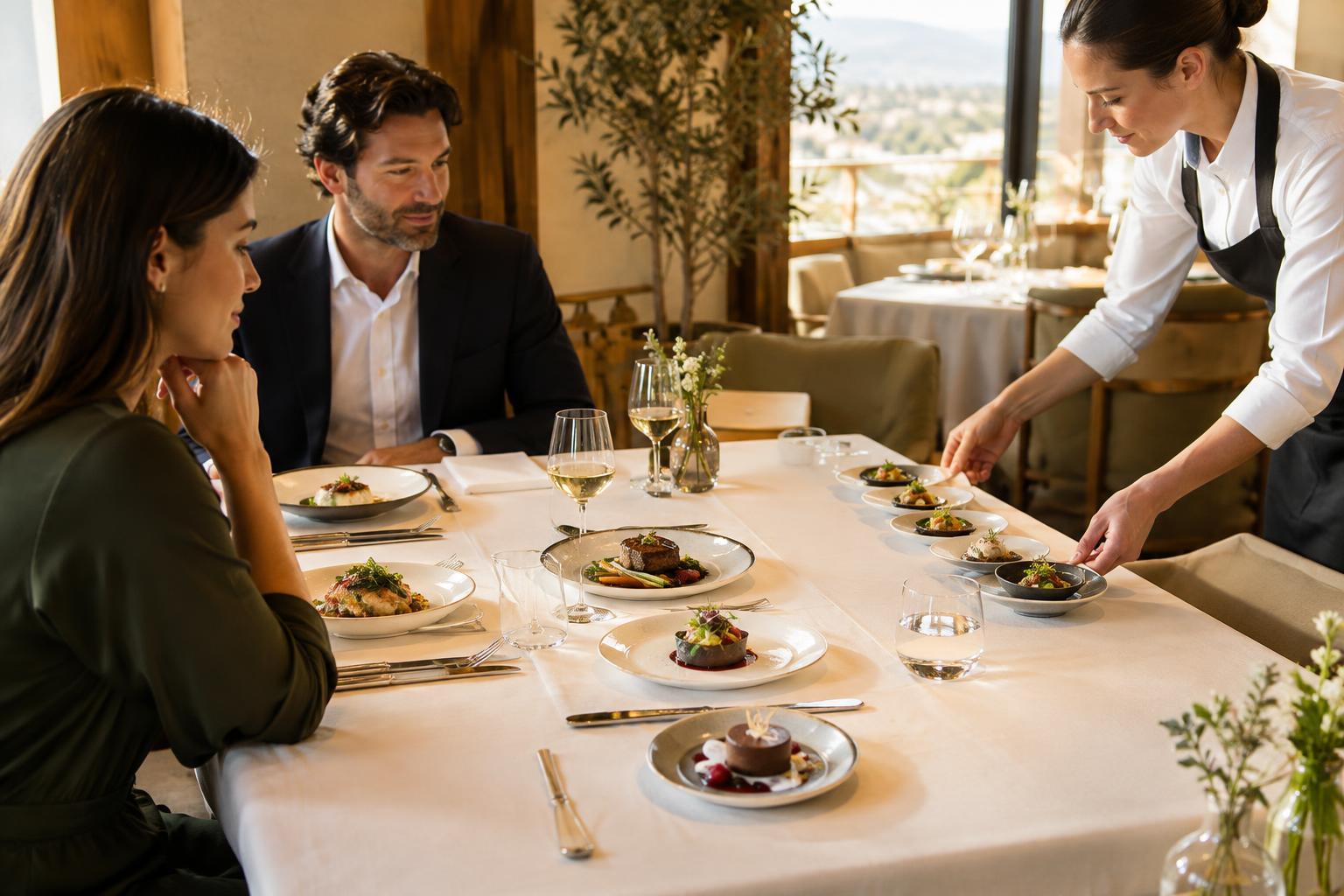
A tasting menu asks guests to place more trust in the kitchen’s plan. Several smaller courses arrive in a deliberate order, so the pleasure often comes from the progression as much as from any single plate. Guests may have fewer choices, a longer meal and a price that is easier to understand upfront, provided the restaurant clearly identifies extras. Groups should know in advance whether everyone at the table is expected to take part.
Service relies on close coordination. Front-of-house staff need to explain unfamiliar dishes without turning every course into a lecture, notice when guests are ready to continue and communicate pauses to the kitchen. The kitchen must keep multiple tables at different points in the sequence moving without making anyone feel rushed. Small delays can affect later courses, so a calm, flexible approach matters more than a perfectly timed script.
Because the sequence may be difficult to change at short notice, dietary requirements are best discussed before the meal when possible. A welcoming response is specific about what the restaurant can accommodate, rather than assuming every request will fit the planned menu.
Choosing and delivering the right experience
Guests can make a better choice by asking a few simple questions: How much time should I allow? What is included in the price? Can the menu accommodate my needs? If the answer is not obvious online or on the menu, staff should be ready to explain it without making the guest feel uninformed. A diner seeking a quick, flexible meal may prefer à la carte; someone who wants fewer decisions may welcome a set menu; a guest interested in a longer, guided experience may enjoy a tasting menu.
Restaurants do not need to commit to only one model. An à la carte menu might sit alongside a short set lunch, or a tasting menu might be offered by reservation. Whatever the mix, consistency helps: descriptions should match what is served, prices should be understandable and staff should know how to explain the choices. The format works best when it supports both the kitchen’s capacity and the kind of hospitality guests came to enjoy.