Describe the experience, not just the label
Choosing a hotel or other guest property often means picturing a journey: arriving, checking in, getting to the room, using its facilities and moving through shared spaces. For a guest with accessibility needs, a vague statement such as “accessible accommodation available” leaves too much of that journey unknown. People need enough detail to judge a property against their own requirements; no single feature works for everyone.
Accessibility information is most useful when it is specific and easy to find before a booking begins. A dedicated page can summarize the property, with links or clear references to individual room types and facilities. Use ordinary descriptions alongside any familiar accessibility terms. Rather than relying only on “step-free,” for example, explain which entrance is step-free and whether the route continues to reception, guest rooms and dining areas.
Make it equally clear when a feature is unavailable. A guest may still choose a property if they know a particular terrace has steps or a shuttle cannot accommodate their mobility device. Discovering that limitation on arrival removes their chance to plan.
Give room details guests can evaluate
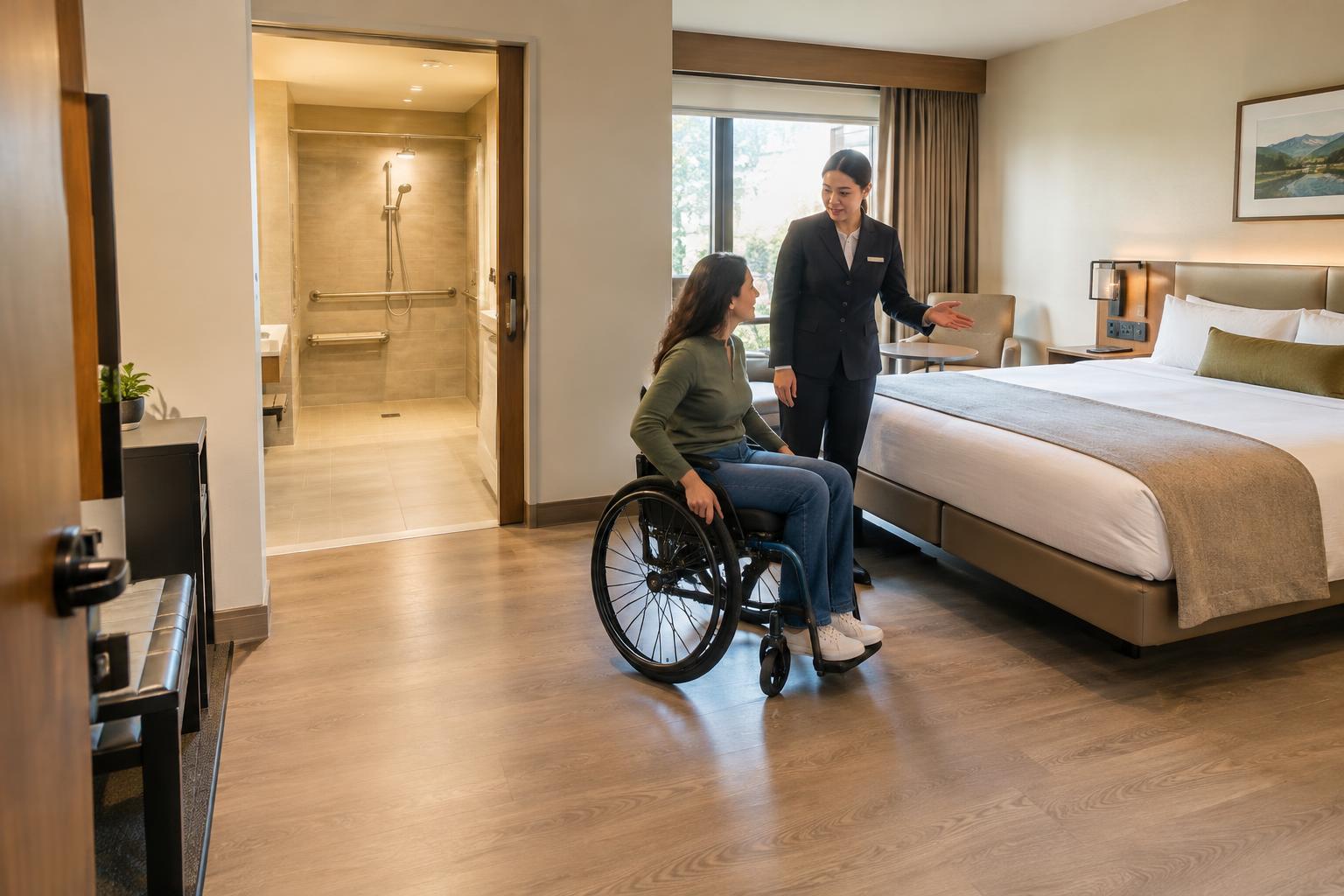
An accessible room listing should describe the features of the particular room being offered, not a collection of features found somewhere on the property. Useful details may include doorway and clear-floor dimensions, bed height, space beside the bed, the presence of a roll-in shower or tub, and the placement of grab bars. State whether a shower has a fixed or movable seat and whether one can be requested. If layouts vary between rooms of the same type, explain that variation rather than implying they are identical.
Consider how guests will use the room beyond the bathroom. Information about reachable controls, lighting, visual or audible alerts, and communication options can help people with different needs. A floor plan or clear photographs may make written descriptions easier to understand, especially when images show the approach to the bed and bathroom. Photos should support measurements and descriptions, not replace them: an angle that looks spacious may not show whether there is enough room to turn or transfer.
Booking information matters as much as physical features. Guests should be able to tell which room type has the features they need, whether it can be selected during booking, and how to confirm the allocation. If a requested item is available only on request, say so plainly and explain how the request will be handled.
Map the whole guest journey
Room details alone do not establish whether a stay will work. Describe arrival options, including the route from parking or a drop-off point to the entrance. Guests may need to know about slopes, steps, door operation, lift access and the distance between key areas. Where there are several entrances, identify the one that provides the most suitable route and explain whether it is available at the times guests are likely to arrive.
Continue that description through the shared spaces guests expect to use: reception, restaurants, meeting rooms, leisure facilities and outdoor areas. For each, distinguish between access to the space and access to its services. A restaurant might be reachable by lift while its buffet requires staff assistance; a pool area might be reachable even if the pool itself has no suitable entry equipment. Clear distinctions allow guests to make their own decisions without having to decode a broad claim that the property is accessible.
Communication is part of the journey too. Explain practical options for contacting the property and receiving information, such as email or telephone, where those options exist. If menus, check-in instructions or other guest materials are available in alternative formats, name the formats and say how to request them. Staff support can be valuable, but it should not be presented as a substitute for a feature that is not there.
Keep information reliable and easy to confirm
Accessibility details lose their value if they are buried in a booking flow or copied across listings without checking the rooms and spaces they describe. Properties can assign someone to review descriptions when rooms are refurbished, furniture is moved or a service changes. Front-desk and reservations teams should be able to find the same information guests see online, so answers remain consistent across channels.
Offer a straightforward way for guests to ask about details the listing does not cover. The most helpful response addresses the specific question, checks uncertain facts and avoids promising that a feature will meet every person’s needs. When a limitation is identified, explaining it clearly is more useful than offering reassurance without evidence.
Good accessibility information gives guests control before they commit. By describing actual features, routes and services in practical terms, a property makes it easier for people to compare options, plan a stay and arrive with fewer unanswered questions.