Make access part of the whole dining journey
A guest’s experience begins before they reach the table. They may need to find out whether there is step-free entry, room to move through the dining area, an accessible restroom or a quieter place to sit. Clear information on a restaurant’s website and a staff member who can answer questions by phone help guests plan without having to disclose more than they wish.
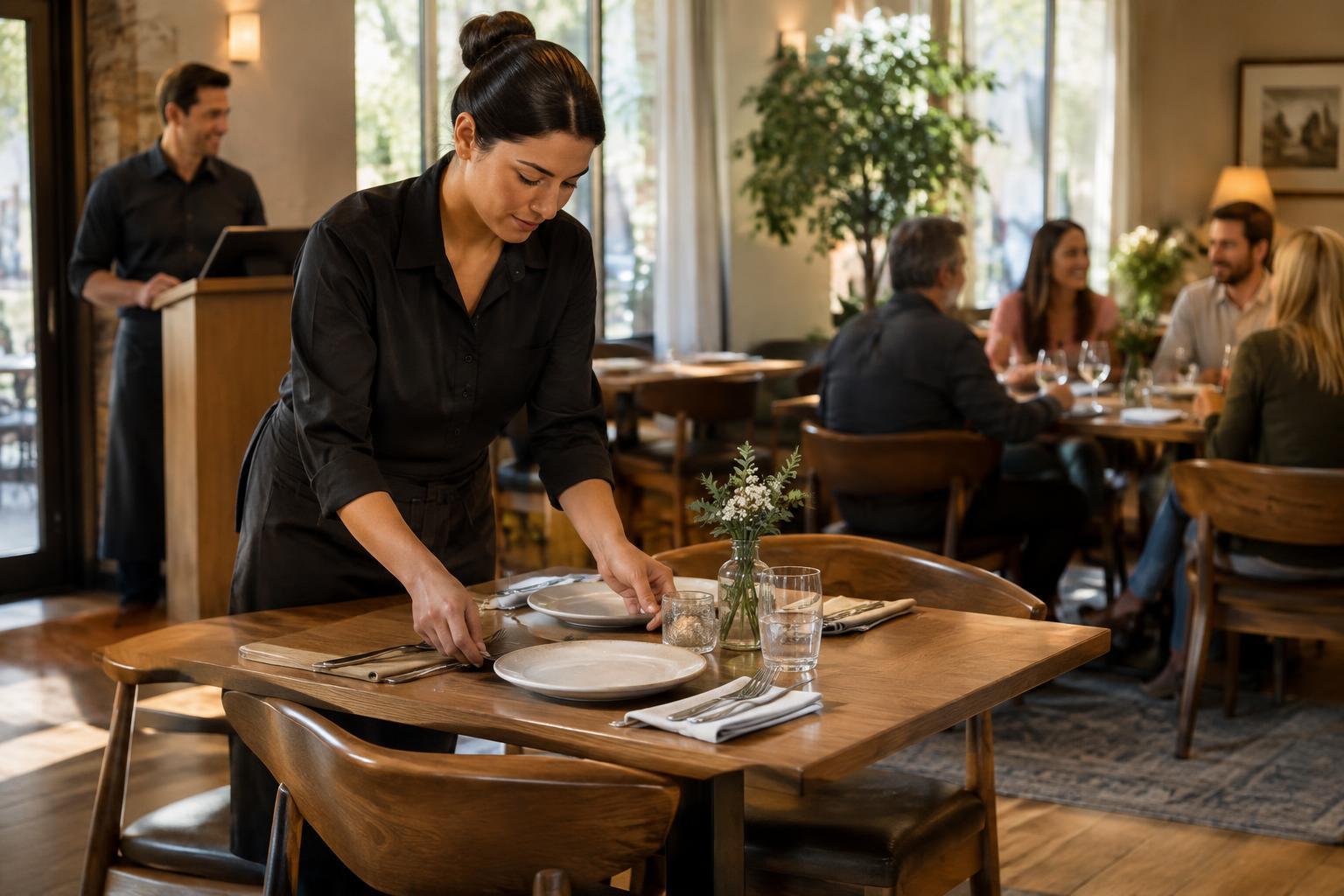
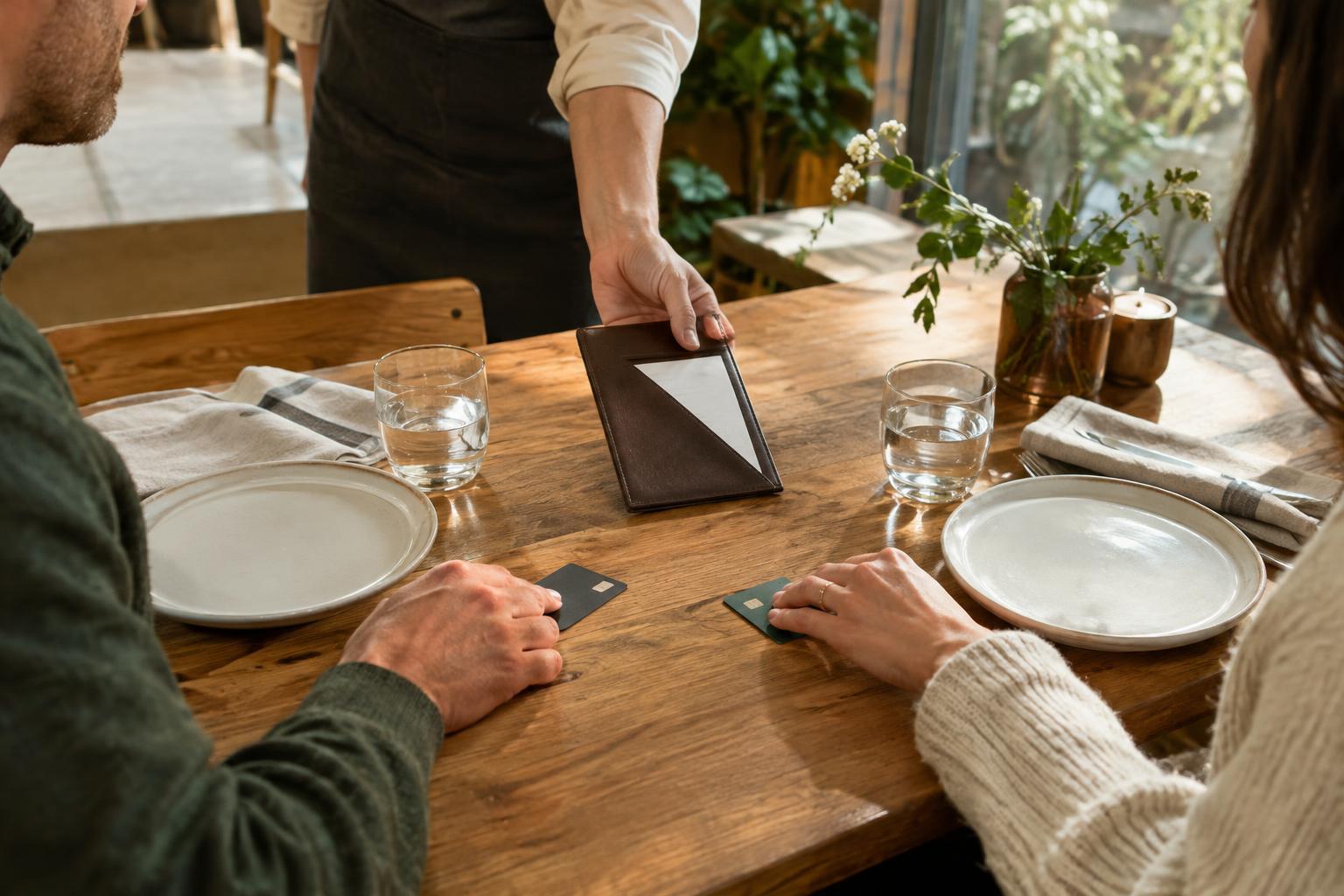
Walk through the visit from a guest’s point of view: arrival, greeting, seating, ordering, eating, paying and leaving. A clear entrance is less useful if a waiting line blocks it, or if furniture narrows the route to a table. Regular checks during service can catch problems that appear after opening, such as a delivery left in a passageway or spare chairs stored beside a restroom door.
Offer menus that are easy to obtain and use
A readable printed menu is a strong starting point. Use clear type, good contrast and descriptions that do not depend on tiny footnotes. Keep copies in good condition and make sure seasonal changes appear across all versions. Guests who have difficulty reading a menu may welcome a larger-print copy, a digital version they can enlarge on their own device or a staff member reading options aloud. Offer these choices rather than guessing which one a person needs.
A QR code can be useful, but it should not be the only way to see the menu. Some guests cannot comfortably use a phone, and others may be unable to navigate the digital menu provided. If a restaurant publishes a digital menu, simple navigation and text that can be selected or read by assistive technology are generally more useful than a menu presented only as an image. Staff should also be prepared to explain ingredients and preparation methods plainly, checking details with the kitchen when they are unsure.
Plan seating for choice, not just clearance
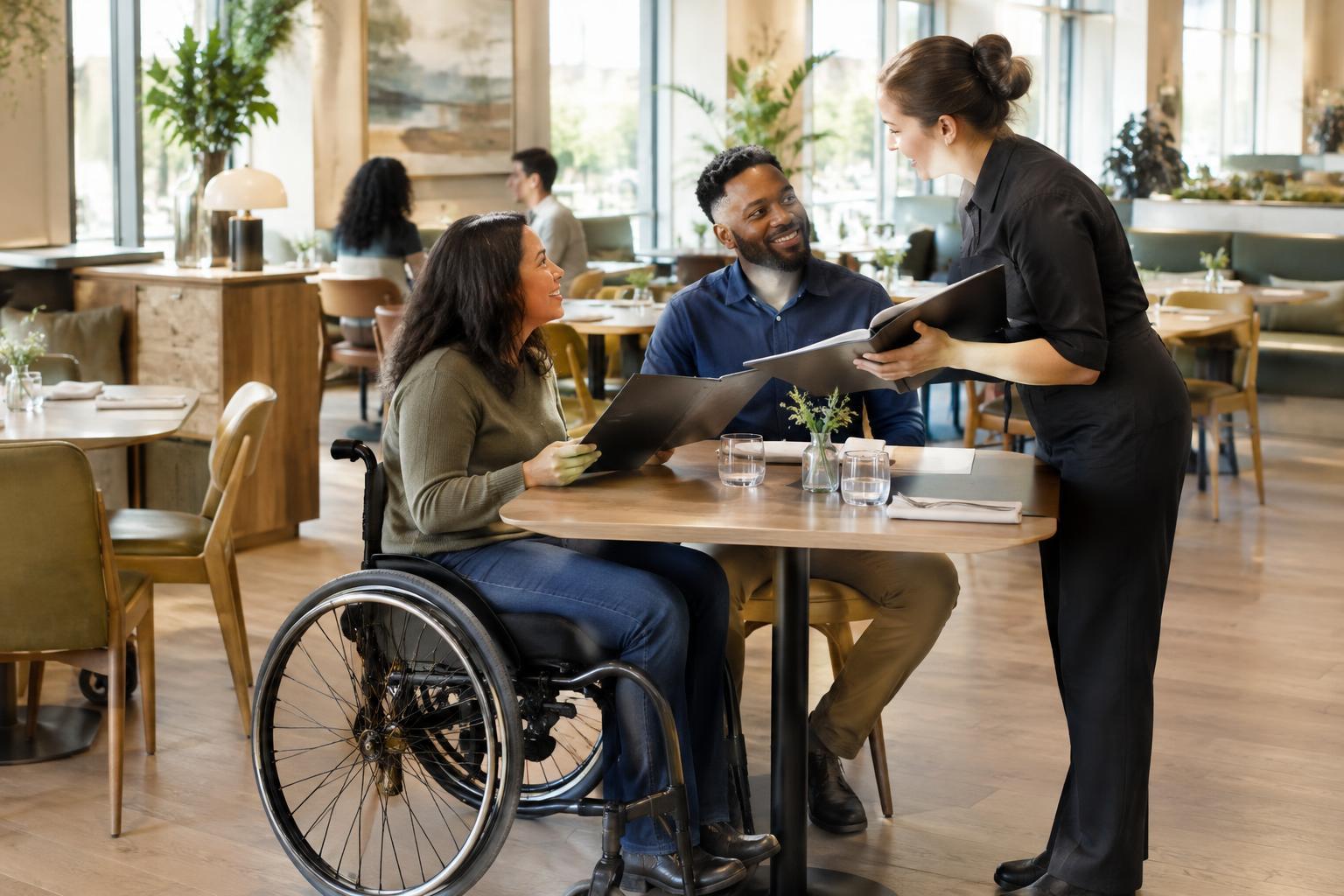
Accessible seating works best when guests have meaningful options. A table that accommodates a wheelchair or other mobility aid should not be treated as an afterthought in an undesirable corner. Stable tables, room to approach and turn, and routes that remain clear when nearby chairs are occupied all affect whether a space is usable. Some guests may prefer a chair with arms, a seat away from a speaker or a place with easier access to the exit.
Ask about seating preferences in a straightforward way: “Would this table work for you, or would another spot be better?” Do not move a mobility aid or rearrange a guest’s belongings without permission. If a requested location is unavailable, explain the available alternatives and let the guest decide where possible. During busy periods, hosts and servers should know which tables offer different features so they can respond without a long search or an awkward public discussion.
Train staff to assist without assuming
Good assistance begins with addressing the guest directly and listening to the answer. A companion or support person may be involved, but staff should not assume that person will speak or decide for the guest. Ask before providing physical help, and be specific: “Would you like me to describe the menu?” or “Would it help if I moved this chair?” A guest can decline assistance, and that choice should be respected.
Give staff time to practice common situations. A server might need to describe where items are placed on a table, repeat an order in a quieter spot or allow more time for a guest to respond. When an adjustment affects service, such as moving a table or pacing courses differently, share the relevant request discreetly with colleagues. The goal is coordinated service, not making a guest explain the same need at every step.
Build accessibility into everyday operations
A one-time change is easy to lose if it is not part of routine service. Include menu formats, clear routes, seating options and assistance preferences in opening checks and staff training. When menus change or furniture is rearranged, review whether earlier accommodations still work. Invite feedback in a way that lets guests describe a specific barrier, and use it to guide practical improvements.
No single arrangement will meet every need. Restaurants vary in layout and resources, and guests vary in what they find helpful. A reliable approach is to provide clear information, preserve choices and make reasonable adjustments without turning them into a spectacle. Those habits improve the experience not only for guests with disabilities, but for anyone who benefits from patient, attentive service.