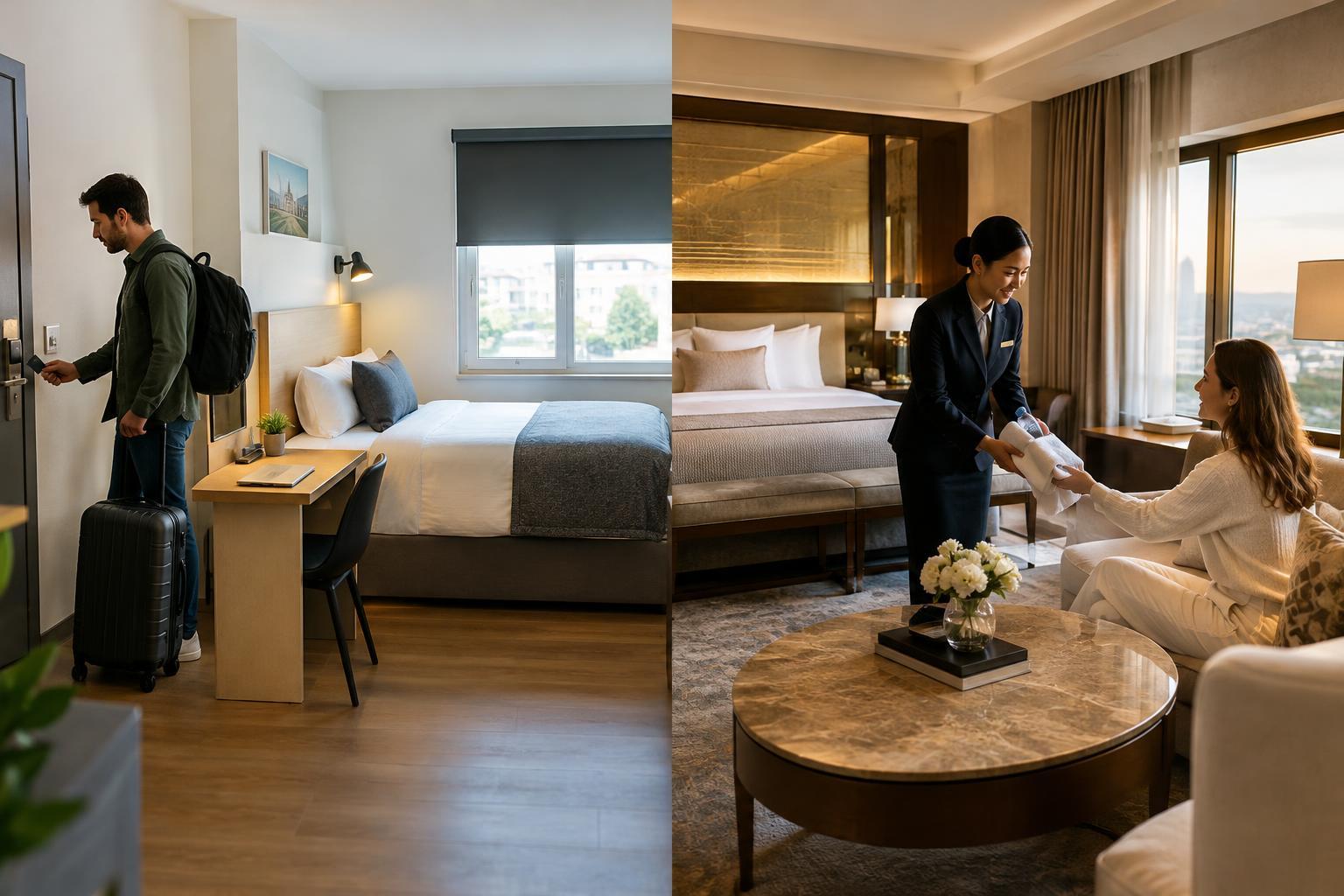
The promise sets the standard
A guest choosing a budget hotel may want a clean room, a comfortable night’s sleep and a straightforward check-in at a manageable price. A guest booking a luxury hotel may want those same essentials, plus more choice, attention and ease throughout the stay. Neither set of expectations is inherently higher in every respect. Guests judge a property against the experience it offers and the reason they booked it.
Price helps shape that judgment, but it is not the only cue. Photos, room descriptions, stated amenities and messages before arrival all create expectations. A modest property that clearly explains its limited reception hours can feel more dependable than an expensive one that leaves guests guessing about what is included. Clear promises give teams a practical service standard: deliver what was offered before trying to impress anyone with extras.
Budget guests often prize simplicity and control
In a budget stay, convenience often means removing friction rather than adding layers of service. Guests may appreciate a quick booking process, transparent charges, clear directions, working Wi-Fi and a room equipped as described. Self-service check-in can be welcome when it is easy to use and there is a way to reach a person if something goes wrong. A short, accurate answer to a question may be more useful than a lengthy scripted exchange.
Value does not mean guests will overlook the basics. Cleanliness, security, a usable bathroom and a reasonable level of quiet matter across price points. When a hotel charges separately for parking, breakfast or late checkout, making those terms easy to find helps guests plan and avoids a disappointing surprise. Budget teams can build trust by making the essentials consistent, not by suggesting that a lower rate excuses preventable problems.
Luxury guests may expect service to adapt
At a luxury property, guests may expect staff to notice preferences, coordinate details and offer options without making every request feel like a negotiation. That could mean explaining room choices clearly, helping arrange a suitable dining time or recognizing when a guest would rather have privacy than conversation. The goal is not constant attention. It is service that feels available, informed and appropriately timed.
Higher-touch service also raises expectations for continuity. If a guest has already explained a request to one employee, repeating it at each handoff can make the experience feel disjointed. Teams benefit from a clear way to pass along relevant information while respecting guest privacy. Personalization works best when it responds to what a guest has actually shared or chosen, rather than making assumptions about their tastes, budget or reason for travel.
Problems reveal the difference in service styles
A maintenance issue or incorrect booking can occur at any type of property. In both budget and luxury settings, guests generally need someone to acknowledge the problem, explain what can be done and follow through. A budget hotel may meet that need with a direct fix, a realistic timeframe and an accessible point of contact. A luxury hotel may also be expected to coordinate an alternative proactively and reduce the effort the guest spends resolving the issue.
The most useful response is proportionate to the disruption, not simply elaborate. Offering a perk while leaving the underlying problem unresolved can feel hollow. Staff should be able to say what they can do, avoid promises outside their control and check that the solution worked. A calm, honest recovery can preserve trust even when the original experience fell short.
Different extras, shared foundations
Expectations vary within each category. One budget traveler may want no interaction beyond a smooth arrival; another may need help finding an accessible route to the room. One luxury guest may enjoy a guided introduction to the property; another may prefer to settle in uninterrupted. Asking a few useful questions, offering choices and making help easy to request serve both groups better than treating price as a complete guide to preference.
For operators, the distinction is a question of where to put effort. Budget service can excel through clarity, reliability and efficient support. Luxury service can distinguish itself through flexibility, coordination and thoughtful detail. Both depend on accurate information, respectful staff and a reliable way to put mistakes right. When the experience matches the promise, guests can feel well cared for at either end of the price range.