Start with the job, not the claim on the bottle
A hotel or restaurant uses cleaning products for many different jobs: wiping a table, removing grease from a kitchen surface, cleaning a bathroom or washing floors. Before looking for a lower-impact alternative, identify what each product must do, where it will be used and whether cleaning alone is enough. A general-purpose cleaner should not be assumed to replace a product needed for a specific hygiene task.
Make a simple list of surfaces, soils and cleaning frequency. Include details that can affect product choice, such as delicate finishes, food-contact areas and heavily used shared spaces. This helps prevent one appealing product from being purchased for every task, only to prove ineffective or unsuitable. It may also reveal duplicate products that could be consolidated without weakening the cleaning routine.
Compare products beyond the words “green” and “natural”
Environmental language on packaging is a starting point for questions, not a complete answer. Ask suppliers for clear information about ingredients, intended use, dilution, packaging and disposal. If a product carries an independent certification, check what that certification covers rather than treating the logo as a guarantee that the product is best for every use.
Consider the whole routine around a product. A concentrated cleaner may use less packaging per prepared bottle, but only if staff can dilute it accurately and safely. A refill system may reduce single-use containers, but it needs suitable storage and a reliable process for keeping containers clean and correctly labeled. Likewise, a product that needs repeated applications to finish a job may offer less practical benefit than its packaging suggests.
Fragrance deserves attention too. A strong scent can make a space seem freshly cleaned, but it may be distracting in a guest room or dining area. Where suitable products are available, a low-scent option can help a property avoid relying on perfume as a signal of cleanliness.
Protect hygiene and the people doing the work
Lower environmental impact should not mean asking employees to improvise. Follow the product label for dilution, surface compatibility, contact time and protective equipment. Keep cleaning and disinfection tasks distinct, and use a product suited to each task when disinfection is required. Never mix chemicals unless the manufacturer explicitly directs it.
A product is easier to use consistently when the routine is clear. Provide labeled bottles, accessible instructions and training that reflects the actual work of housekeepers, kitchen teams and other staff. Check whether a new product leaves residue, creates slippery floors, affects finishes or adds steps that are hard to complete during a normal shift. Staff feedback can expose problems that are easy to miss in a purchasing comparison.
Test a small change before buying at scale
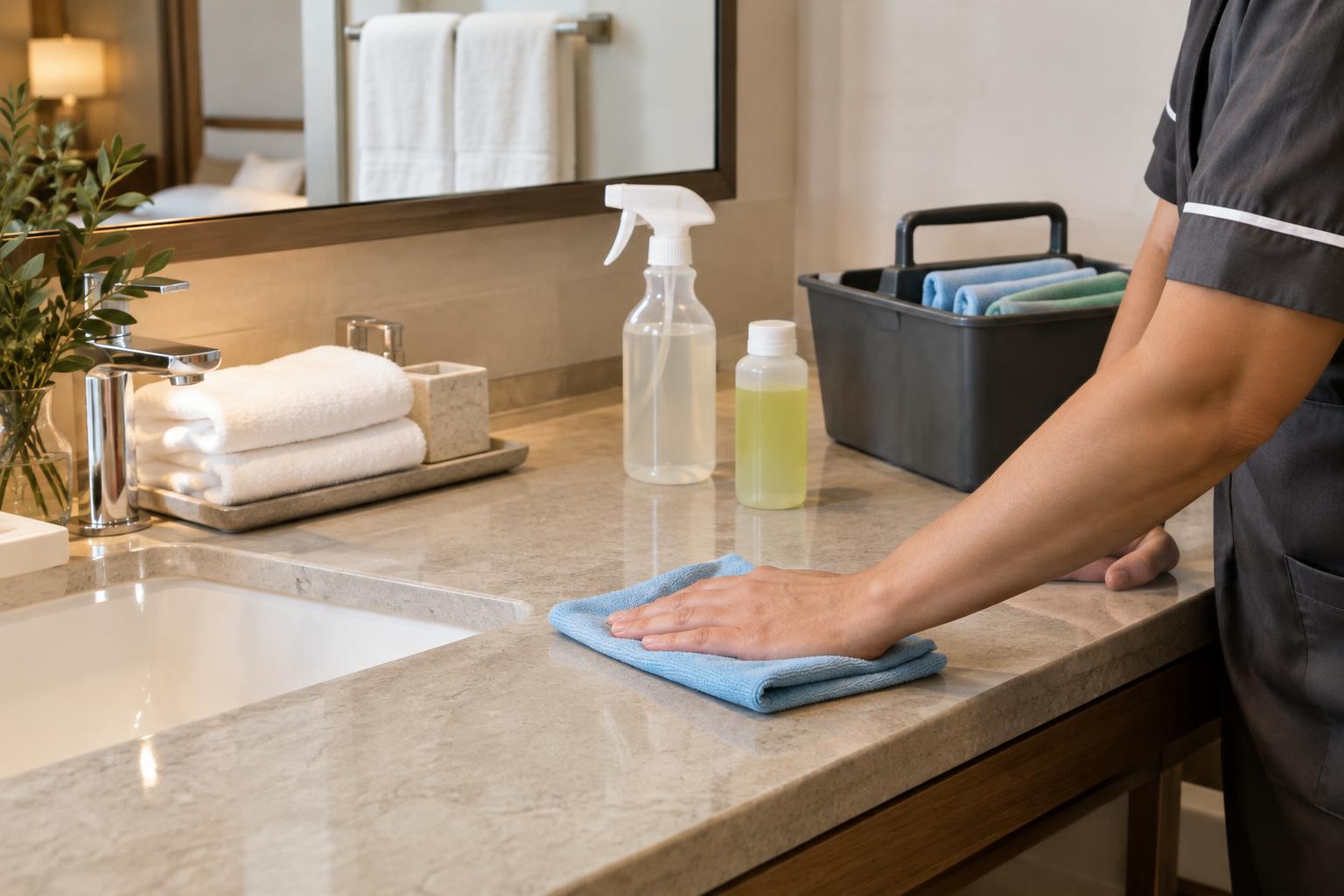
Choose one routine for a trial, such as cleaning guest-room counters or wiping non-food-contact surfaces in a shared area. Record what the current product is used for and how much is typically needed. Then test the alternative on the same task with staff who know the space. Ask whether it cleans effectively, rinses or dries as expected, and works with the tools already in use.
Look at the purchase in context rather than comparing bottle prices alone. Concentration, dispensing equipment, staff time, packaging and the likelihood of waste all affect day-to-day use. A trial does not need a complicated scoring system, but written observations make it easier to explain why a product was accepted or rejected. If a surface manufacturer specifies particular care, confirm compatibility before expanding the trial.
Make the better choice easy to repeat
Once a product works, document its purpose, preparation and storage location. Remove outdated instructions so staff do not have to choose between conflicting routines. Set up purchasing so the approved product and any compatible refills are easy to reorder, and avoid accumulating partially used containers that may be forgotten at the back of a cupboard.
Review the routine when a supplier, surface or cleaning task changes. The most useful sustainable choice is one that staff can follow reliably while meeting the property's cleaning needs. Clear expectations, honest product comparisons and small, observed trials can do more for lasting improvement than a shelf full of products chosen for their labels alone.