Start with how each space is used
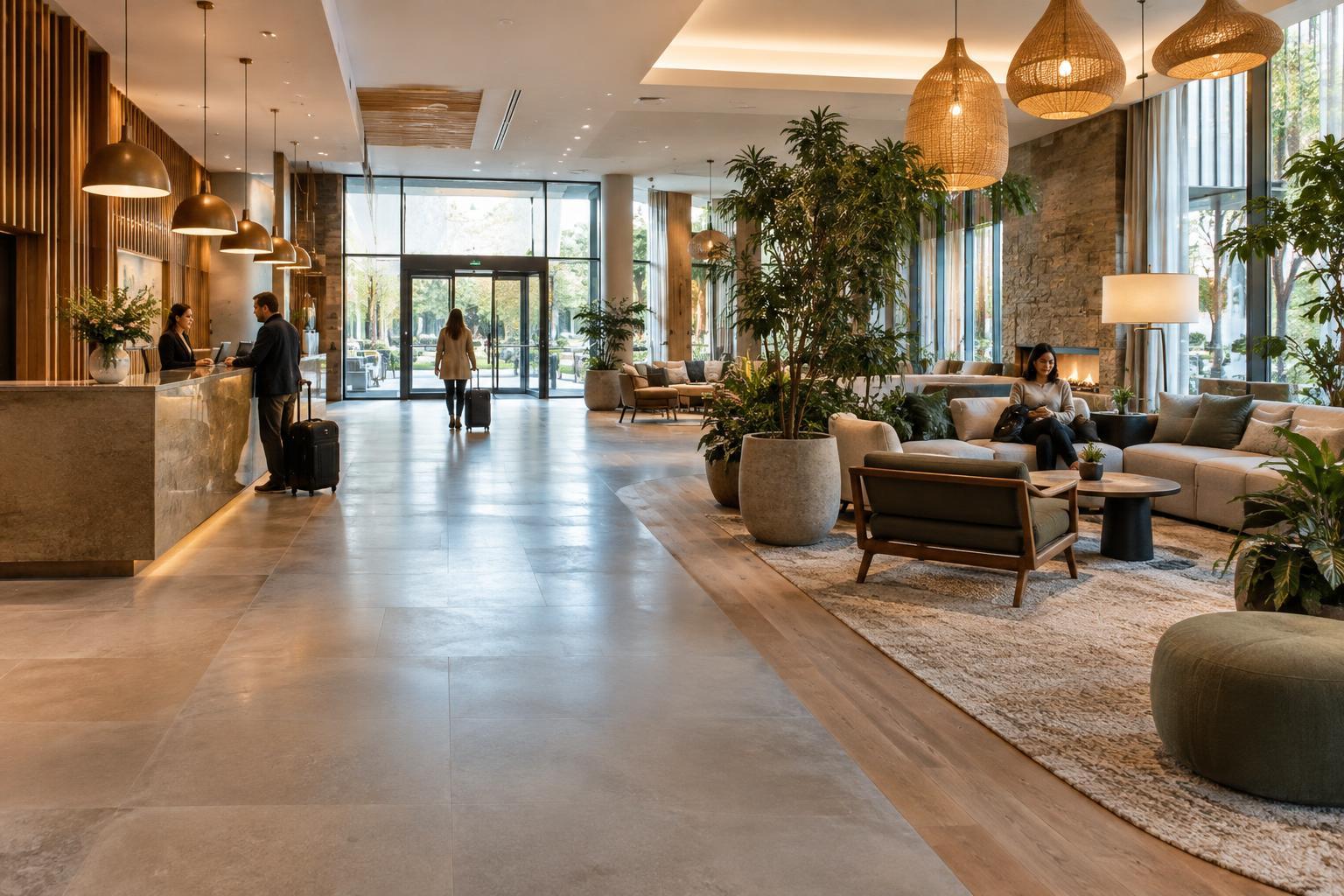
A finish that works beautifully in a quiet guest room may struggle in a lobby where wheeled luggage, wet shoes and cleaning carts pass through all day. Before comparing colors or samples, map the demands of each space. Note where guests queue, where bags brush against walls, where food or drinks are carried, and where staff need to move equipment. Entrances, corridors, bathrooms and dining areas place different demands on surfaces, even within the same hotel.
Pay attention to edges and transitions as well as broad surfaces. Wall corners, skirting, door frames and flooring near elevators often show damage first. Planning protection in these spots can be less disruptive than replacing an entire finish later. The goal is not to make every surface look industrial; it is to put resilience where everyday contact is most likely.
Judge samples by upkeep, not appearance alone
A finish sample should be considered under the lighting and conditions in which guests will see it. Very dark, glossy surfaces can make fingerprints, dust or water marks more noticeable, while heavily textured surfaces may trap dirt. Pale colors can brighten a room but may need careful placement where shoes or luggage frequently touch them. Look at samples from different angles, and consider how they will appear between scheduled cleanings, not only when freshly installed.
Ask how the surface is meant to be cleaned and whether that method fits the hotel’s routine. A material that requires a specialized product, long drying time or frequent resealing may be difficult to maintain consistently. Trial samples in a realistic setting when possible: check how easily common marks wipe away and whether repeated cleaning changes the finish. Housekeeping and maintenance teams can identify practical concerns that a design review might miss.
Choose flooring and walls for their busiest moments
Flooring needs to suit both movement and comfort. In corridors, consider how well it handles rolling luggage, foot traffic and routine vacuuming or mopping. At entrances and in other areas that may become wet, assess the appropriate slip resistance and how easily tracked-in grit can be removed. In guest rooms, softness and noise reduction may matter more, but those benefits still need to be weighed against stain removal and replacement options.
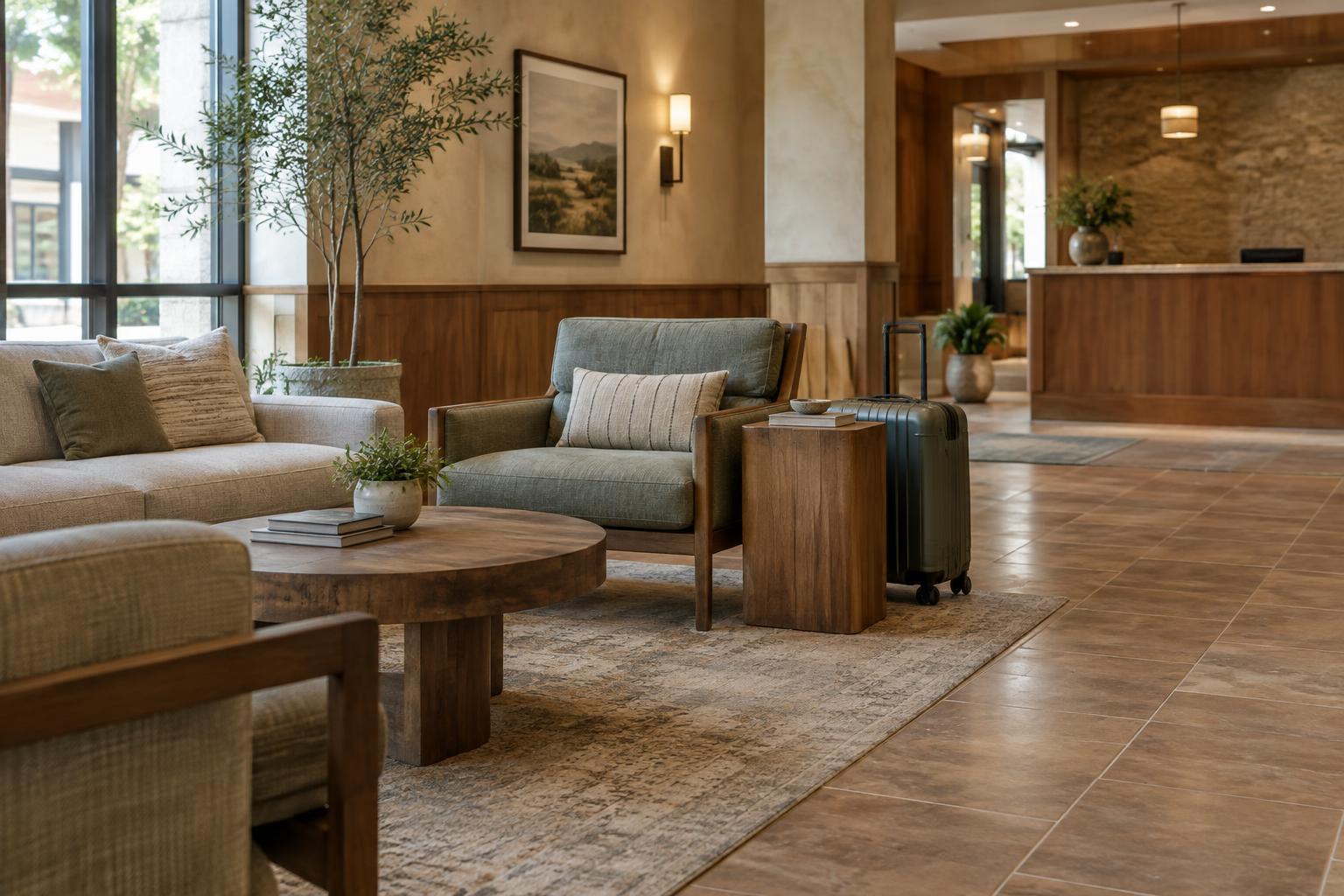
Walls deserve the same attention. Scrubbable finishes can help in corridors, while protective detailing may be useful behind chairs, beside beds and around luggage areas. Large, seamless surfaces can look calm, but a damaged area may be harder to repair discreetly. Modular flooring, replaceable wall panels or a paint specification that can be touched up may simplify maintenance. Check how replacement pieces or touch-ups will blend as surrounding materials age.
Look closely at joints, fabrics and furniture
Maintenance problems often begin where materials meet. Counter edges, tile grout, upholstery seams and the bases of bathroom fixtures can collect moisture or dirt if details are difficult to reach. Select construction details that support thorough cleaning, and review whether joints are likely to remain sound under regular use. In bathrooms, a surface that looks easy to wipe down may still create work if it has numerous narrow gaps or awkward corners.
For upholstered seating and headboards, consider both the fabric and the piece beneath it. Removable covers, replaceable cushions and accessible frames may make a furnishing easier to care for over time. Patterns or mid-tone colors can help everyday wear look less prominent, but they do not replace good cleaning access. Tables, lamps and casegoods should also allow staff to clean around them without repeatedly moving heavy or fragile items.
Plan for replacement before the first repair
A durable finish is not necessarily the hardest material available. It is one that keeps performing, can be maintained with available staff and equipment, and can be repaired without excessive disruption. Consider the likely effort of cleaning, the visibility of wear and the ability to replace a damaged section when comparing options. A lower initial price may be less appealing if upkeep is complicated or a small repair requires closing a large area.
Record the selected finish, its cleaning guidance and the details needed to obtain a matching replacement. Keeping a modest supply of suitable spare materials can be helpful where a close match will matter. Most importantly, test the design against the daily work of the hotel. Finishes support a welcoming guest experience when they still look cared for after a busy day and can be restored promptly when accidents happen.