Start with the scraps your kitchen produces
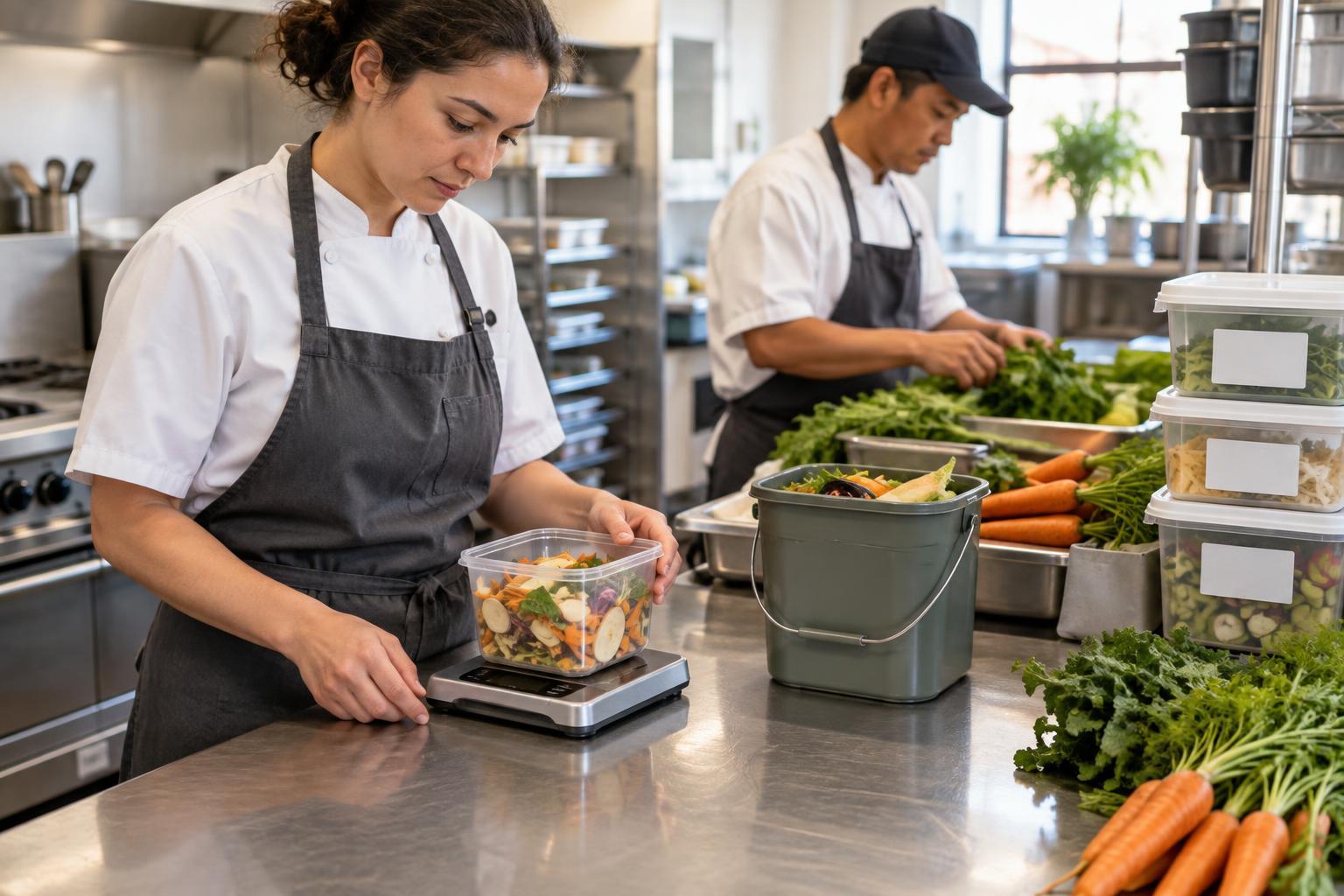
Hotel kitchens, restaurants and catered events can generate scraps at several stages: preparation, service, plate clearing and buffet breakdown. Before adding a new bin, observe where food is discarded and what is mixed with it. Vegetable trimmings from a prep station may be easy to collect cleanly, while plate waste can include napkins, wrappers or cutlery. Starting with one predictable stream makes the process easier to explain and assess.
Composting is one way to handle food that cannot reasonably be served or otherwise used. It should not replace sensible purchasing, storage, portioning and preparation practices that prevent avoidable waste in the first place. Keep a separate route for edible surplus if your operation has a safe and appropriate way to use or redistribute it. For everything else, decide what counts as a food scrap only after checking the rules of the composting service or facility you plan to use.
Build collection into the workflow
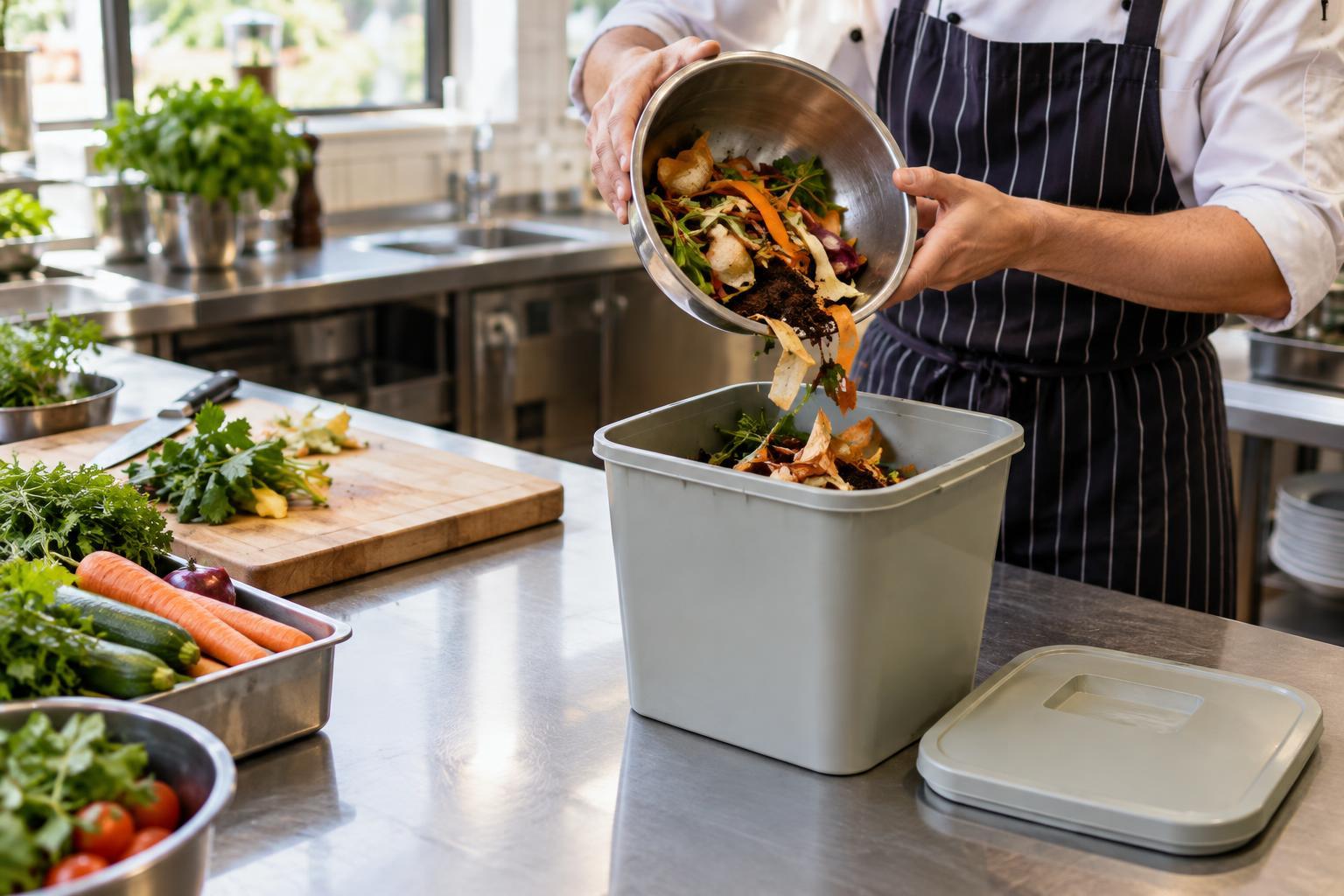
Place collection containers where staff already handle scraps, rather than expecting them to cross the kitchen for every peel or leftover. A small, clearly labeled prep container can be emptied into a larger, lidded holding bin. At a dish-return area, position the food-scrap bin so staff can separate food before dishes and utensils move to washing. Guest-facing collection is more demanding because visitors may not know the rules; staffed sorting or a simpler back-of-house system may be more reliable.
Use containers that staff can lift, empty and clean comfortably. Lids, routine emptying and a designated storage spot can help manage odors and pests. Set a collection schedule that matches the volume produced, available space and pickup frequency. Keep scrap handling separate from food preparation, follow the site’s cleaning procedures and make clear who is responsible for emptying and washing each container.
Short instructions at each station are more useful than a long policy kept elsewhere. Name the accepted materials, show where rejected items go and explain what to do when someone is unsure. Include the process in onboarding and check it during busy shifts, when even a well-designed system is easiest to overlook.
Treat contamination as an operational issue
A compost bin is not a general waste bin. Packaging, plastic film, disposable gloves, produce stickers and stray cutlery can all create problems after collection. Some items marketed as compostable are accepted only by particular processing facilities; others may not be accepted by a local provider at all. Match bin labels and purchasing decisions to the written acceptance list from your collector or compost site, rather than relying on packaging claims.
If the service accepts food scraps but not liners, choose an approved way to manage the bin without one. If liners are allowed, specify the type so staff do not substitute ordinary plastic bags. During the first weeks, inspect bins before they leave the property and note recurring mistakes. A pattern of wrappers near a prep station may call for a closer general-waste bin; cutlery in plate waste may mean the clearing sequence needs to change. Correcting the setup is usually more effective than repeatedly reminding people to be careful.
Compare local processing and disposal options
Available routes vary by location. A municipality may provide a food-scrap collection service, a private hauler may collect for a composting facility, or a nearby organization may accept limited materials by arrangement. Some properties may consider on-site composting where space, staffing and local rules allow. These options differ in accepted foods, container requirements, pickup arrangements, cost and what happens when a load is contaminated.
Ask potential partners for a current acceptance list and practical details: whether they take cooked food, meat, bones or dairy; whether liquids must be drained; which liners are permitted; and how containers should be presented for collection. Confirm any local requirements for storage, transport and site operation before committing. On-site composting also requires someone to manage the process consistently; it is not simply a place to deposit scraps.
Keep the program manageable
Begin with a small trial, such as one prep area or one meal period, and expand when the sorting and pickup routine works. Track simple measures the team can act on: how often bins fill, whether collections are missed and which contaminants appear. Ask the people emptying bins and clearing plates where the process slows them down. Their observations can reveal whether a container is poorly placed, a label is unclear or storage capacity is too small.
A dependable composting program is less about adding bins than about maintaining a clear route from kitchen to processor. When staff know what belongs in the container, guests are not asked to navigate confusing rules and the receiving facility can use the material, food-scrap collection becomes a practical part of daily hospitality operations.