Why small leaks deserve attention
A dripping tap or running toilet can be easy to overlook during a busy shift. Left alone, a leak may waste water, damage finishes and create a poor impression for guests. Water can also travel behind walls or beneath flooring before a stain becomes visible. Treating leaks as routine maintenance priorities, rather than minor annoyances, helps protect both the property and the guest experience.
The first step is to make reporting easy. Housekeeping, food and beverage teams, front desk staff and guests may notice different clues. A simple reporting route should capture the location, time and observation: for example, a toilet that keeps refilling or a damp patch outside a guest bathroom. Specific details help maintenance staff investigate without guessing.
Look for signs beyond visible drips
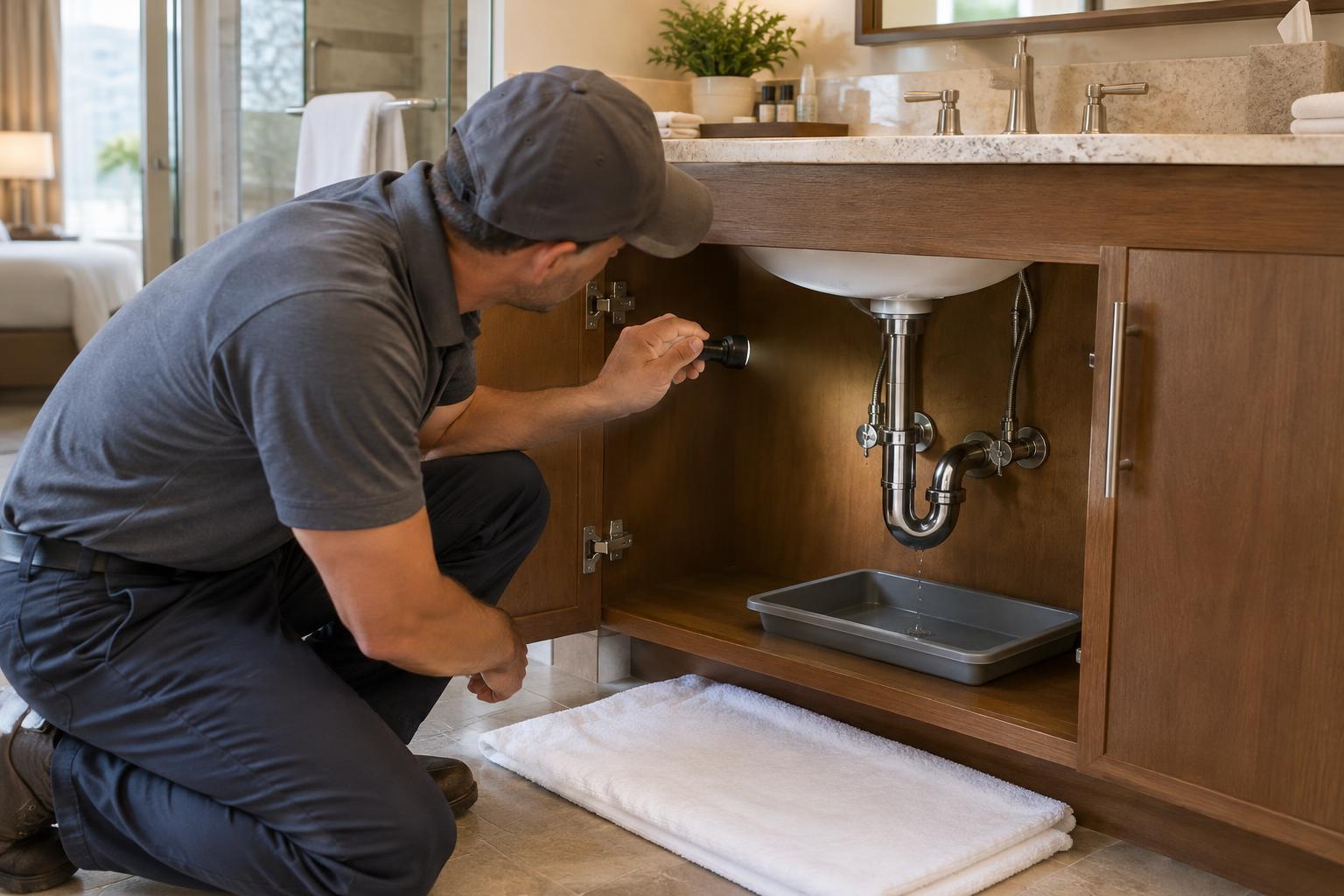
Common clues include a toilet that runs between flushes, a tap that will not fully close, an unexpectedly damp floor, peeling paint, stained ceilings or a persistent musty smell. Staff may also hear water moving when nearby fixtures are off. In kitchens and laundry areas, check accessible connections, hoses and drains as part of normal inspections. Avoid opening panels or moving equipment unless that work is within the employee’s role.
Water-use records can offer another clue. If a property tracks meter readings, compare like-for-like periods and look for unexplained changes, keeping occupancy, laundry schedules and irrigation in mind. A reading alone does not identify the source. It can, however, prompt a targeted check of fixtures and equipment. Where submetering is available, it may help narrow the search to a particular building or area.
Respond safely and limit disruption
When a leak is found, assess the immediate risk before attempting a repair. Keep guests away from slippery areas and report water near electrical equipment or outlets urgently. Staff should use only shutoff valves they are trained and authorized to operate. A major leak, suspected contamination or water reaching occupied spaces calls for prompt escalation under the property’s emergency procedures and, where needed, a qualified professional.
Guest communication should be clear and proportionate. If a room or facility cannot be used comfortably, explain the practical next step and arrange an alternative where possible. Coordinate access with the front desk so maintenance visits respect privacy and minimize repeated interruptions. Document affected rooms and spaces, including when they were taken out of service and when they were ready to use again.
Fix the cause, then check the surrounding area
An effective repair addresses the source rather than only the symptom. A stain below a bathroom, for instance, may come from a supply connection, a drain or a failed seal. The maintenance team should identify the cause, arrange the appropriate repair and test the fixture afterward. Plumbing work beyond routine staff capability belongs with a qualified tradesperson. Temporary containment may reduce damage, but it should not become a substitute for a lasting fix.
After the water stops, check nearby materials and spaces that may have become wet. Drying and cleaning needs depend on where the water came from, how far it spread and what materials were affected. Escalate concerns about extensive hidden moisture or damaged finishes rather than simply painting over a mark. Record the repair and follow-up inspection so a recurring problem can be recognized quickly.
Make leak prevention part of daily operations
A useful inspection routine is short enough to repeat consistently. Staff can check accessible taps, toilets, shower fittings and visible pipe connections while completing ordinary room or area checks. Maintenance teams can add scheduled inspections of equipment rooms, irrigation controls and other less visible locations. Clear ownership matters: every reported leak should have someone responsible for assessing it, tracking the repair and confirming that it is resolved.
Review recurring reports to find patterns. Several leaks from the same fixture type may suggest that replacement parts or installation practices need attention. Repeated damage in one location may warrant a closer investigation. Sharing these findings across housekeeping, operations and maintenance turns individual repairs into prevention. The aim is not a perfect inspection checklist; it is a reliable habit of noticing, reporting and following through before a small leak becomes a larger problem.