Privacy is a guest experience, not just a policy
Guests share more than a booking when they stay at a hotel. They entrust a property with access to their room, details about their plans and ways to contact them. A warm welcome can quickly feel intrusive if a staff member enters at the wrong time, discusses a reservation within earshot of others or sends messages the guest did not expect.
Privacy expectations vary. One guest may want daily room cleaning; another may prefer no interruptions throughout the stay. The most useful approach is to offer clear choices, explain what those choices mean and make sure every team that serves the guest can follow them. Staff should not have to guess whether a guest wants contact, and guests should not have to repeat a preference at every interaction.
Make room access predictable
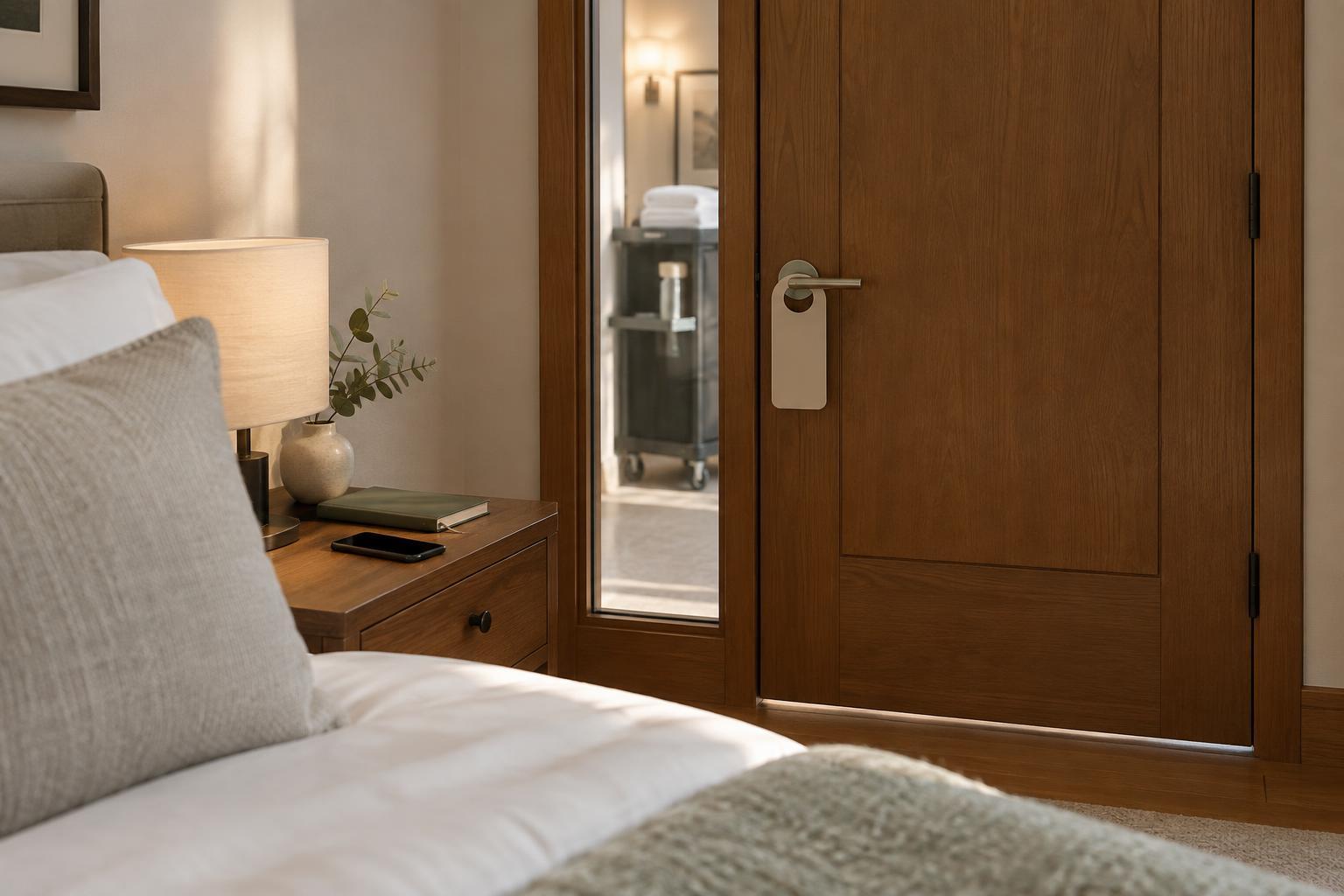
Housekeeping is a common point of friction because it involves entering a space the guest is using as a temporary home. At check-in or through a simple in-room notice, explain the usual cleaning schedule, how to request or decline service and how to reach the team if supplies are needed. If service is optional, make the choice easy to change. A guest who skips cleaning today may want fresh towels tomorrow.
Before entering an occupied room, staff should follow a consistent knock-and-announce procedure and allow time for a response. A privacy sign or recorded request should be visible to the staff member making the visit, not buried in a system they cannot access. If a room cannot be serviced because the guest declines access, a short, neutral record can help the next shift avoid another unwanted knock.
Properties may sometimes need access for maintenance, safety or other essential reasons. Explaining those exceptions in plain language is better than implying that a privacy request guarantees no entry under any circumstances. When access is needed, the team should limit the interruption where possible and communicate what happened through an appropriate channel.
Treat personal data as part of the stay
Reservation details, room numbers, contact information and notes about preferences help teams deliver service, but they can also reveal more than a guest intended to share. A practical standard is to collect and retain only what the property needs for a defined purpose, then limit access to employees who need it for their work. Front-desk conversations deserve the same care as digital records: avoid saying room numbers aloud where others may hear, and verify identity before sharing stay details.
Preference notes should describe service needs without unnecessary personal judgments. “Requests a quiet room” is useful; speculation about why the guest wants one is not. Teams should also know when a note may be outdated and how a guest can correct a preference. Clear internal practices reduce the chance that an old assumption follows someone from one visit to the next.
Guests need understandable explanations of how their information will be used, especially when a property offers apps, loyalty accounts or third-party services. Specific data-handling requirements depend on location and business arrangements, so operational teams should work from their property’s approved policies rather than making promises they cannot verify.
Keep helpful contact from becoming unwanted contact
A message about an arrival detail can be useful; repeated promotional messages after checkout can feel like an invasion of the same relationship. Separate communications needed to manage a stay from optional marketing, and make those purposes clear when asking for contact details. A guest’s phone number for a reservation is not, by itself, an invitation to use every available messaging channel.
Offer a straightforward way to state contact preferences and stop optional messages. Staff should be able to see and honor those choices across shifts and channels, whether the guest responds at the desk, by phone or through a digital tool. If a message is necessary, keep it relevant and discreet: a brief notice that assistance is available is often better than including sensitive details in a notification preview.
Good privacy practices are easiest to maintain when teams rehearse ordinary scenarios: a cleaner finds a privacy sign, a caller asks whether someone is staying at the property, or a guest asks why they received a text. A clear response for each situation protects boundaries without making service feel cold. The goal is not less hospitality, but hospitality that lets guests decide how close it should come.