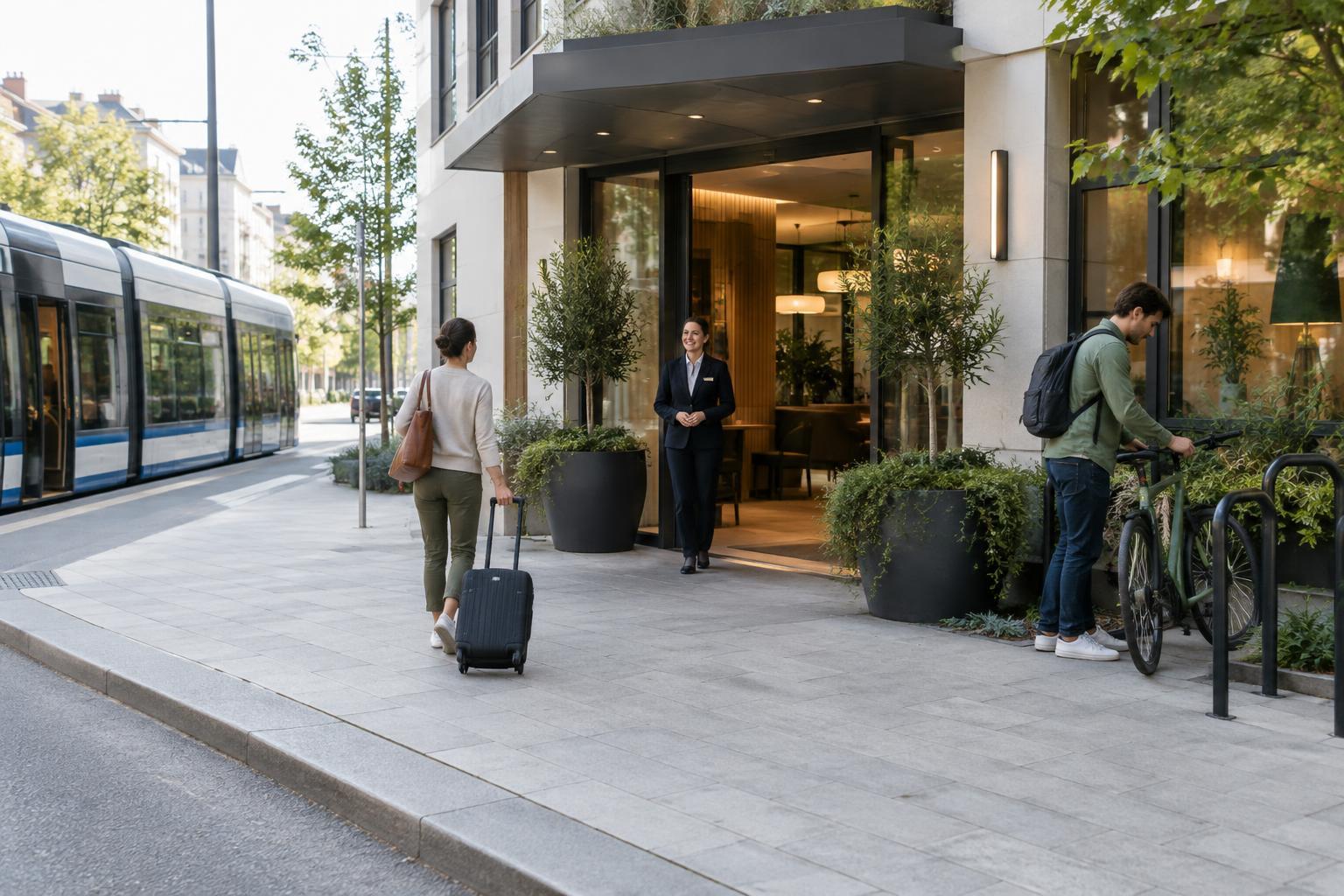
Make the journey part of the welcome
A property can be easy to find by car yet difficult to reach any other way. Guests may not know which station exit has a lift, whether a bus accepts contactless payment or if the last stretch is manageable with a suitcase. When those questions go unanswered, driving or booking a private vehicle can feel like the only reliable choice.
The most useful approach is to help guests compare realistic options before they travel. Include a short ‘Getting here’ section in booking confirmations and on the property website, with directions from common arrival points. Describe walking, public transport and shared-ride options alongside driving directions. Give approximate journey times only when they are reasonably dependable, and direct guests to the transport operator for schedules and fares that may change.
Give directions that work in real life
A useful route description goes beyond naming the nearest stop. Explain which entrance to use, how far the final walk is, whether the route includes steps or uneven ground, and where guests can enter the property with luggage. If the entrance is hard to spot, describe a recognizable landmark. These details can make a public transport journey feel less uncertain, particularly for first-time visitors.
Offer more than one route when circumstances call for it. A short walk may suit a guest arriving in daylight with a small bag, while an accessible bus route or a taxi from a closer station may be more practical for someone with limited mobility. For late arrivals, point out where guests can check current service information and explain what to do if their planned connection is unavailable. Avoid presenting one mode as the responsible choice for everyone.
Remove friction at the property
Information is strongest when the property can back it up. Train front-desk and reservations teams to answer basic questions about nearby stops, pickup points and luggage storage. A guest who can leave bags securely before check-in may be more willing to walk or use a bus. Clear signs from the street to the entrance, a comfortable place to wait and help locating a booked vehicle can also make arrivals smoother.
Where suitable, consider practical facilities such as secure bicycle parking, a place to dry wet clothing or a clearly identified meeting point for shared vehicles. A shuttle may help if routes and demand make it workable, but it needs an understandable timetable and a dependable backup plan. The aim is not to add every possible service. It is to find the few barriers guests regularly face and address those well.
Keep choices welcoming and claims modest
Transport needs vary. Some guests have mobility requirements, young children, heavy equipment, tight connections or safety concerns. Present options without making anyone justify their choice. Wording such as ‘If it suits your journey, the station is a ten-minute walk away’ offers useful guidance without implying that every guest should make the same trip.
Be equally careful with environmental language. Walking and public transport can be lower-impact choices for many journeys, but the comparison depends on factors such as distance, occupancy and the available service. Rather than promising that a particular route is ‘carbon-free’ or ‘the greenest,’ describe what guests can actually use. Honest, specific guidance is more helpful than a broad sustainability claim.
Maintain the guide and learn from questions
Arrival information needs an owner. Assign someone to review directions periodically and whenever staff hear about a changed stop, closed entrance or confusing pickup location. Ask colleagues who handle arrivals which questions come up most often, and use those questions to improve the guide. If a route is difficult to describe accurately, that may signal a need for better signage or a clearer alternative.
Guest feedback can reveal whether the guidance works without asking people to disclose more travel information than they want to share. A simple question at checkout about whether arrival directions were useful may be enough. Over time, the goal is a guide guests can trust: one that makes practical lower-impact choices visible, while helping every visitor arrive comfortably.