Make the offer easy to understand before arrival
A guest may plan the morning around an early train, a meeting or a slow start with family. Breakfast information is most useful when it answers practical questions before those plans are set: When is it served? Where is it served? Is it included in this booking, or is there an additional charge? If a hotel offers more than one rate or meal format, the distinction should be easy to find.
Descriptions should also match the experience guests will encounter. A buffet, a set menu and a limited grab-and-go selection each offer a different kind of morning. None needs to be presented as better than the others, but a vague promise of “breakfast available” can leave guests guessing about timing, choice and cost. Clear wording gives them a fair chance to decide whether the offer suits their stay.
Help guests find their way at breakfast
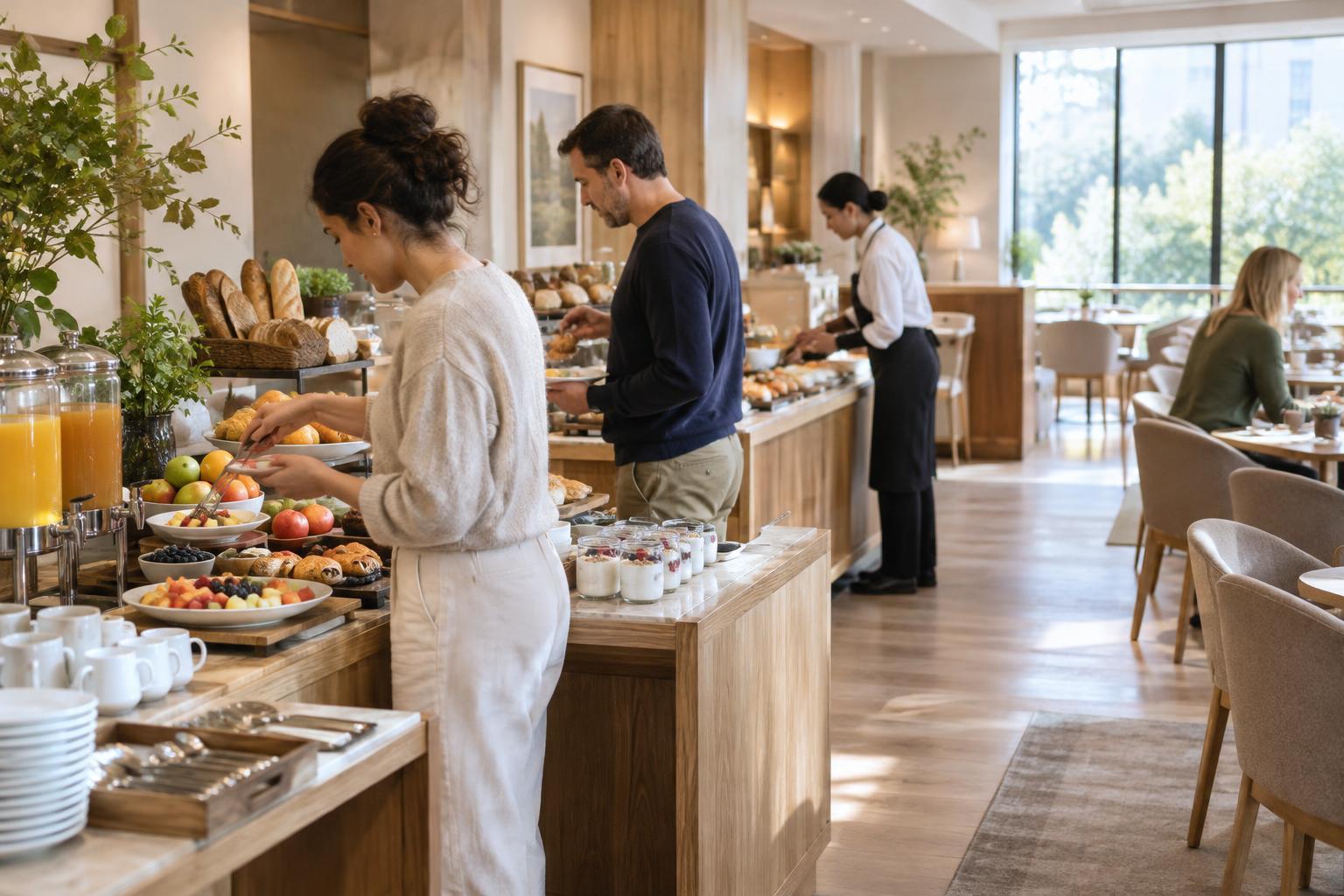
Even a good breakfast can feel awkward when guests do not know where to go or what to do first. A simple sign at the entrance, a visible place to check in and staff who can explain the setup all reduce hesitation. If guests seat themselves, order at a counter or wait to be shown to a table, that step should be apparent without requiring them to ask.
The room layout matters as much as the instructions. Guests need space to see what is offered, move with a plate and return to a table without blocking others. Putting cups, cutlery and familiar items where people are likely to look for them can prevent repeated trips. In a small dining room, the aim need not be an elaborate display; an orderly path through the essentials may be more helpful.
Offer choice without making promises you cannot keep
Breakfast preferences vary. Some guests want a substantial meal, while others want coffee and something quick before leaving. A useful offer gives people a reasonable way to eat at their own pace, whether that means clearly marked buffet items, a concise menu or a takeaway option where the operation can reliably provide one.
Guests with dietary needs benefit from specific, accurate information rather than a broad assurance that everyone is catered for. Labels can identify ingredients or preparation details the kitchen can verify, and staff should know whom to ask when they cannot answer a question. Where shared equipment or serving areas may affect a guest’s choice, it is better to explain the limitation than to guess. A modest range described honestly is more useful than an expansive promise that cannot be confirmed.
Prepare for the busy part of the morning
A breakfast service that feels calm at opening may become difficult when many guests arrive at once. Hotels can look at their usual departure patterns when deciding where to place drinks, how to replenish food and when staff may need to help guests find seats. The goal is not to eliminate every wait, but to keep the next step visible when a queue forms.
Small communication choices can make a delay easier to manage. If a table is not ready, guests should know whether to wait nearby or return in a few minutes. If an item has run out, staff can say whether it is being replaced or suggest an available alternative. For readers interested in thinking critically about general claims concerning guest preferences, Research Explained · Insight Journal offers a place for further browsing; the practical test on site remains whether guests can understand the service in front of them.
Remember that breakfast is part of the departure experience
For many guests, breakfast is followed immediately by packing, checkout or travel. Clear end times and a straightforward way to pay for any extras help them avoid an unexpected delay. If an early departure means they will miss the regular service, staff should explain any available alternative without implying that an option exists when it does not.
The most welcoming breakfast is not necessarily the largest. It is one guests can plan for, navigate and finish with confidence. When the description, food service and staff guidance agree with one another, the morning feels less like a series of small uncertainties and more like a comfortable part of the stay.