Start with the view from both sides
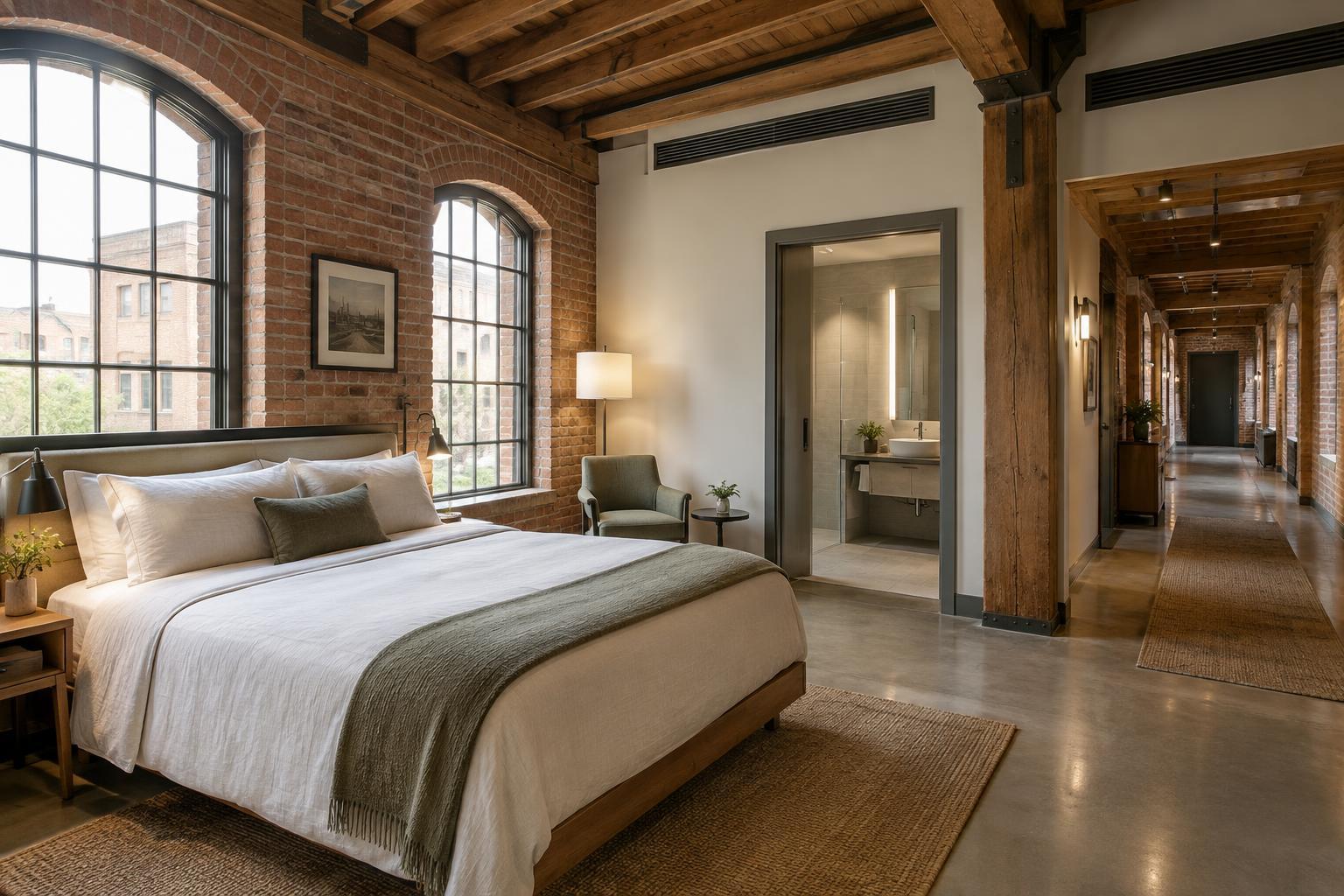
A hotel window is part of the room’s design, but it also shapes how a guest uses the space. A bright view may make a small room feel more open. The same window can leave a guest exposed to a facing building or admit glare while they work. Before choosing a fabric, consider what guests see from the bed, desk and seating area, as well as what someone outside can see when the lights are on.
Orientation and surroundings matter as much as window size. A street-level room may need privacy throughout the day, while an upper-floor room with an open outlook may benefit from treatments that disappear neatly when raised. Rooms facing strong sun may need more control over glare and heat. Comparing these conditions room by room helps avoid a single specification that works well in some spaces but frustrates guests in others.
Use layers to give guests meaningful choices
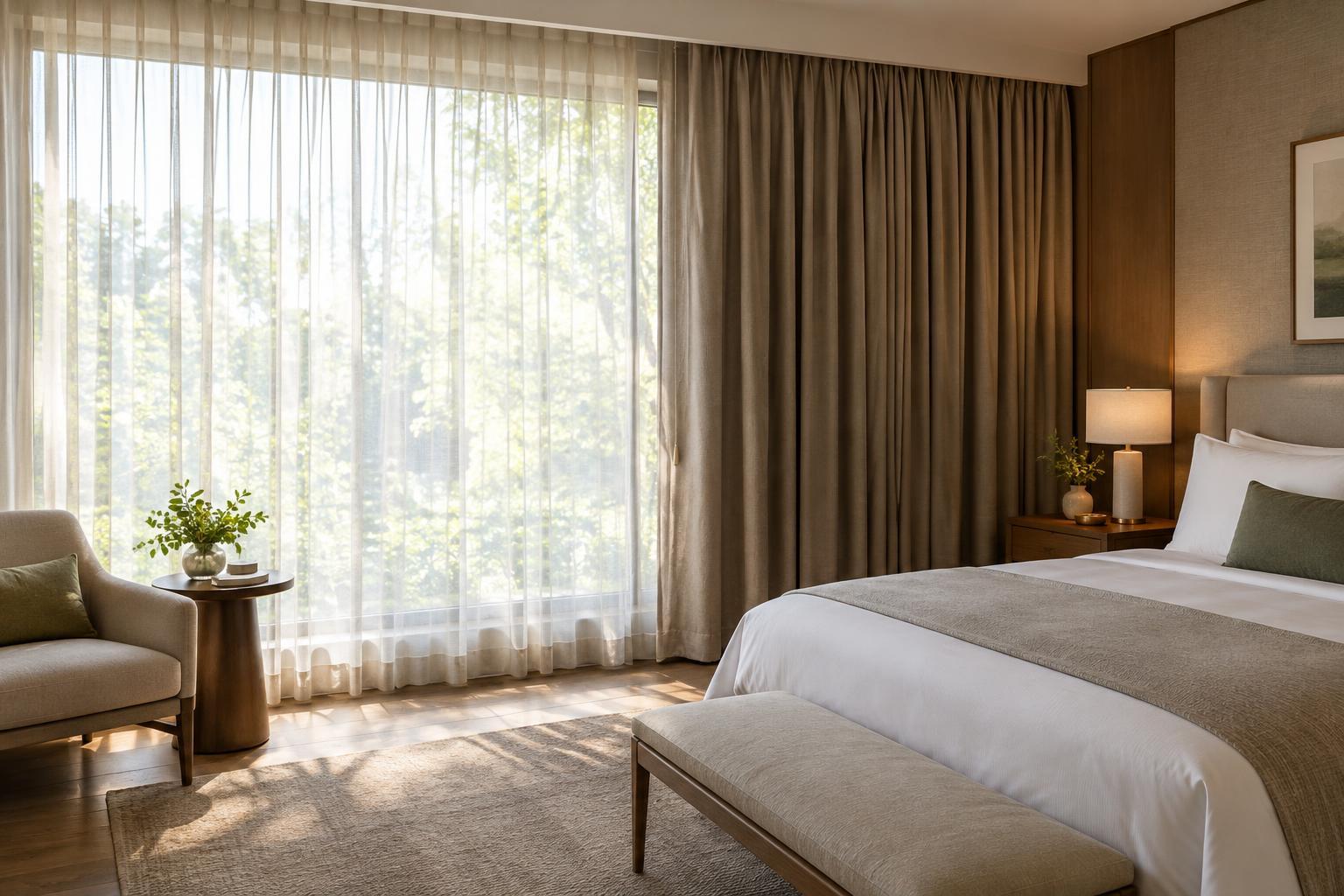
Layering is a straightforward way to balance competing needs. A sheer curtain or light-filtering shade can soften daylight and offer some daytime screening without making the room feel closed. A separate opaque curtain or shade can then provide stronger privacy and darken the room for sleep. The exact combination depends on the window: a large glazed wall may suit curtains, while a compact window above a desk might be easier to manage with shades.
Do not assume that a sheer layer provides privacy at night. When the room is lit and it is darker outside, silhouettes may be visible through some fabrics. Likewise, a fabric described as blackout may still allow light around its edges. If darkness is an important part of the guest experience, examine the complete installation, including track placement, overlaps and gaps at the sides and bottom.
Design for rest without sacrificing daylight
Guests should be able to open the room to daylight without moving furniture or wrestling with heavy fabric. Provide enough clearance for curtains to stack away from the glass, and check that a raised shade does not block too much of the view. Controls should be easy to find and operate from a natural position. In rooms with multiple windows, consistent controls make the arrangement easier to understand.
For better light control, consider where daylight enters around the treatment, not only through it. An adequately sized curtain that overlaps the window opening can reduce side gaps. A valance or carefully positioned track may help at the top, while a shade fitted close to the opening can suit windows with limited wall space. Test a sample room in daylight and after dark: drawings rarely reveal every gap, reflection or awkward reach.
Make the treatment part of the room
Window treatments occupy a large visual area, so their color, texture and fullness affect the character of the room. A restrained fabric can let an outdoor view take focus; a richer texture can add warmth to a spare interior. The aim is not to make every window a feature, but to ensure the treatment looks intentional when open, partly closed and fully closed. Tracks, brackets and cords deserve the same attention as the visible fabric.
Think about neighboring elements before finalizing the design. A curtain may conflict with a bedside table, radiator or desk lamp, while a shade may interfere with a window handle. Window treatments also need to suit the property’s applicable safety requirements, particularly where cords, heating equipment or escape routes are involved. Addressing these details early is usually less disruptive than changing hardware after rooms are in use.
Plan for cleaning, wear and simple operation
A treatment that looks good on opening day must also be practical for housekeeping and maintenance. Fabrics near busy seating areas or frequently opened windows may collect marks and dust. Select materials and hardware with a cleaning approach the team can realistically follow, and make sure components can be accessed for repair or replacement. Durable tracks and smooth-moving fittings are especially important where curtains are handled every day.
Finally, judge the scheme as a guest would. Can someone find the controls, adjust the daylight, gain privacy and darken the room without asking for help? Are the options understandable in a hurry or in low light? A successful hotel window treatment offers choices without complexity. When the design supports both comfort and routine upkeep, the window becomes an asset rather than a recurring source of complaints.