Atmosphere is part of the service
A guest may notice the food first, but the room shapes how the meal unfolds. Can they read the menu without using a phone light? Can they hear the person across the table? Does the space feel calm enough for a long conversation, or lively enough for a quick dinner before an event? Lighting, music and noise help answer those questions before a server says a word.
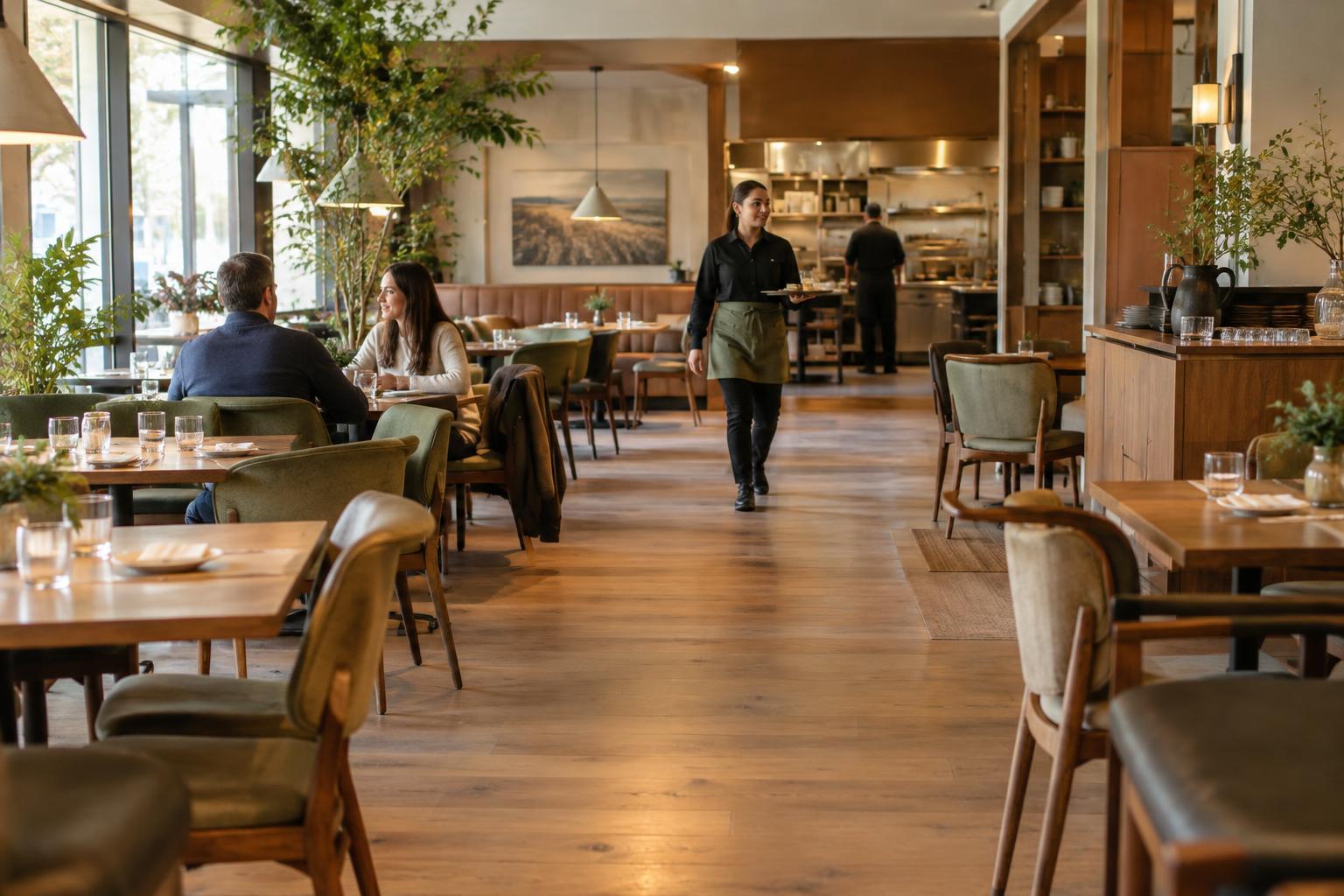
There is no single ideal setting for every restaurant. A busy counter-service spot and a quiet dining room can both be welcoming, even though they call for different levels of brightness and energy. The useful goal is alignment: the room should support the kind of visit the restaurant promises. It should also work for guests and staff, not just look or sound appealing in an empty space.
Light the tasks, then build the mood
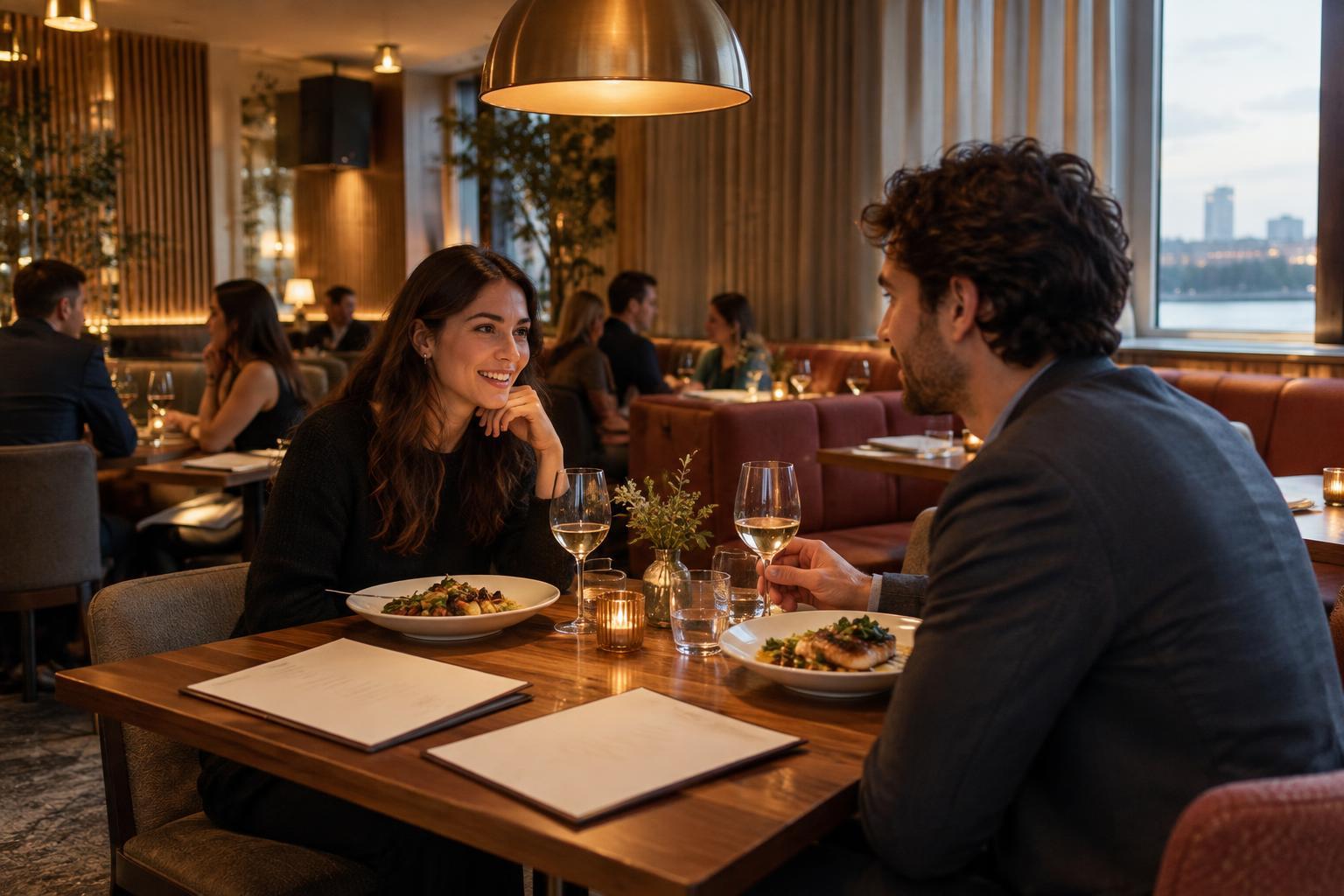
Low light can make a room feel intimate, but it becomes a problem when guests struggle with menus, bills or steps. Start by identifying the tasks that need clear visibility: reading, eating, navigating between tables and recognizing a server’s face. A brighter pool of light on each table can make these tasks easier while the wider room remains softer. Keeping circulation routes visible also helps guests move confidently through the space.
Glare deserves as much attention as brightness. An exposed bulb in a guest’s line of sight or a strong reflection on a glossy table can be uncomfortable even when the room seems dim overall. Adjustable fixtures, shades and careful placement can help. Before settling on a lighting scheme, sit in different seats at meal time, open a menu and look across the table. The view from the corner booth may be very different from the view at the bar.
Use music to set a pace, not compete for attention
Music can give a room warmth and continuity, particularly during quieter periods. Yet volume is often more important to comfort than the choice of playlist. If guests have to raise their voices to talk, conversation adds to the room’s sound level. Staff may then need to speak louder to take orders, creating a cycle that a louder playlist will not solve.
Choose music with the intended experience in mind, then test it while the restaurant is occupied. A level that seems modest before service may feel intrusive once dishes, voices and equipment fill the room. Check more than one location: speakers near a bar or a corner table may sound much louder than those by the entrance. Give the team a simple way to adjust volume during service, with the understanding that clear conversation takes priority over a fixed setting.
Treat noise as a room-wide issue
Not all restaurant noise comes from music. Plates, coffee machines, open kitchens, hard floors and neighboring tables all contribute. A lively sound can be part of a restaurant’s identity, but persistent clatter or harsh echoes may make it tiring to stay. Rather than trying to make the entire room silent, listen for sounds that are especially sharp, repetitive or difficult to escape.
Small operational changes can help. Staff can avoid stacking dishes close to occupied tables, and equipment can be positioned or maintained with its sound in mind. Layout also matters: a table beside a service station will have a different experience from one tucked into an alcove. Where the design allows, upholstery, curtains and other softer surfaces may help reduce reflections from hard materials. Any changes should still suit cleaning needs, access and the character of the restaurant.
Test the experience throughout a real meal
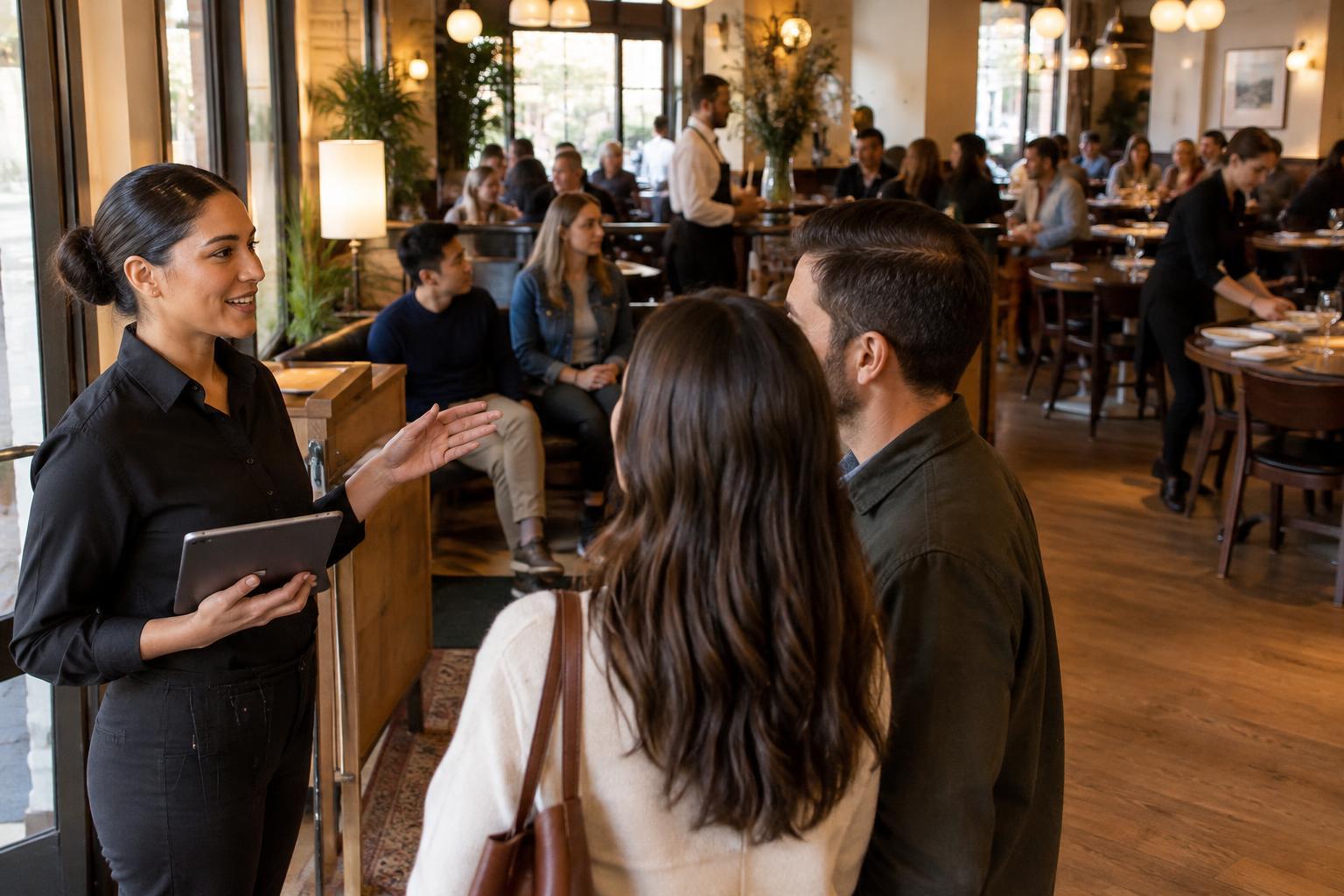
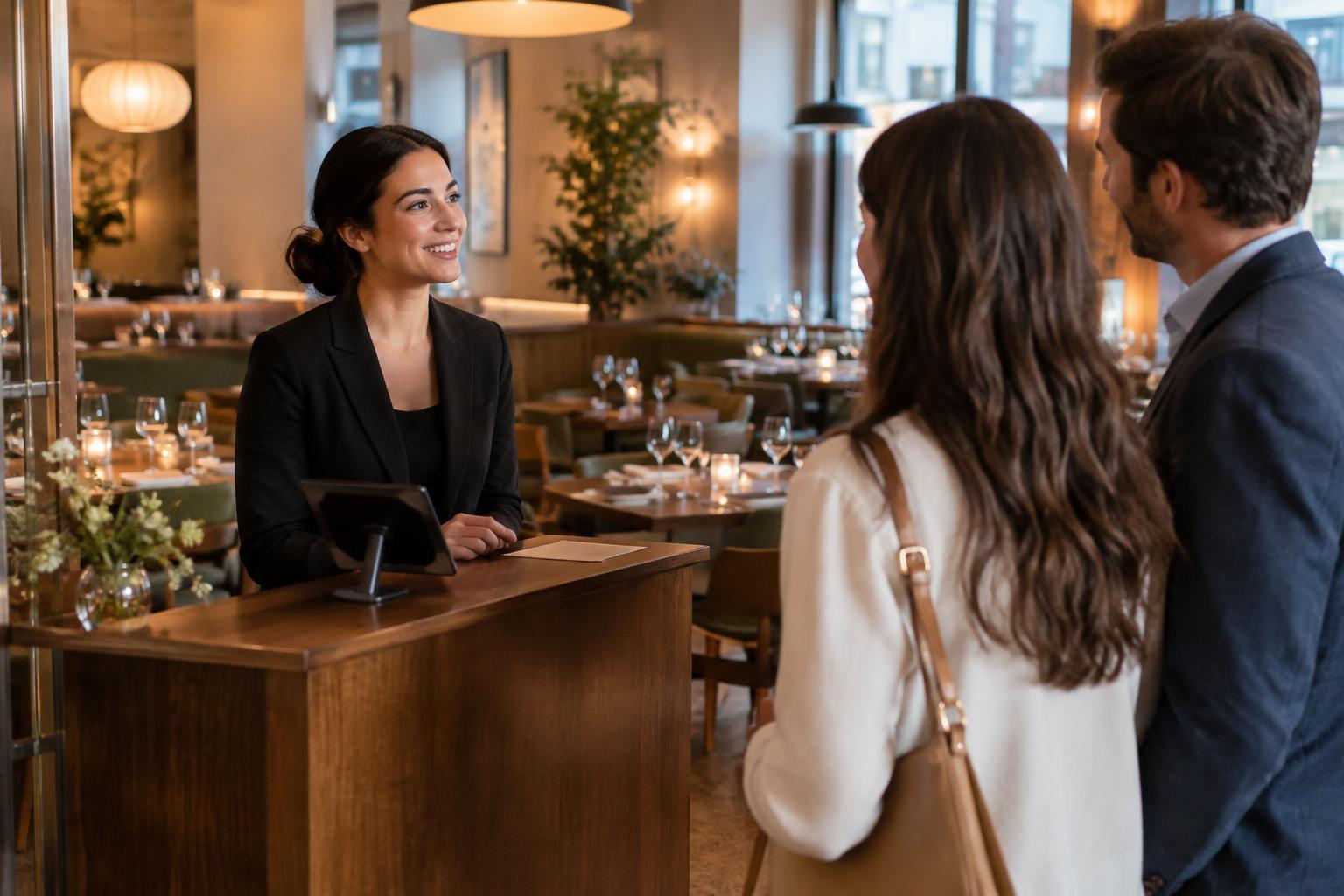
Lighting and sound change as daylight fades and seats fill. Walk through the guest journey at different points in service: entering, reading the menu, ordering, eating and paying. Notice whether people lean in to hear one another, whether staff can confirm an order without repeated questions, and whether the bill is easy to read. Ask the team what they notice from their stations, since they experience the room for longer than most guests.
The best adjustments may be modest: lowering one speaker, redirecting one fixture or moving a table away from a noisy pass. Make a change, observe it during service and check for unintended effects elsewhere. A comfortable restaurant does not need to be uniformly quiet or bright. It needs to let guests enjoy the atmosphere while still seeing their meal, hearing their companions and feeling at ease.