Start with the work each item must do
A lobby chair, restaurant table and housekeeping cart all face different demands. Before comparing products, describe where each item will be used, who will move or clean it, and what kinds of wear are most likely. A chair in a quiet guest room may need a different frame and upholstery from one moved repeatedly across a busy dining room. Outdoor pieces must also suit the property's exposure and storage arrangements.
Ask the people who use the space to describe recurring problems with existing items. Housekeeping may notice finishes that are difficult to wipe down; maintenance may know which fittings loosen; service staff may point out tables that wobble or carts that are awkward to steer. These observations turn a general request for “durable furniture” into practical purchase criteria.
Specify what must be replaceable or serviceable before requesting quotes. This might include chair glides, upholstery panels, casters, door hinges, lamps, controls or filters. A clear brief helps buyers compare products on more than appearance and initial price.
Examine construction, not just finish
Attractive surfaces can conceal weak connections. When assessing a sample, look at joints, fasteners, edges and moving parts as closely as the visible finish. Check whether a chair feels stable when used normally, whether a drawer runs smoothly, and whether a table can be leveled on the floors where it will stand. For equipment, consider how doors, handles and controls will hold up to frequent use.
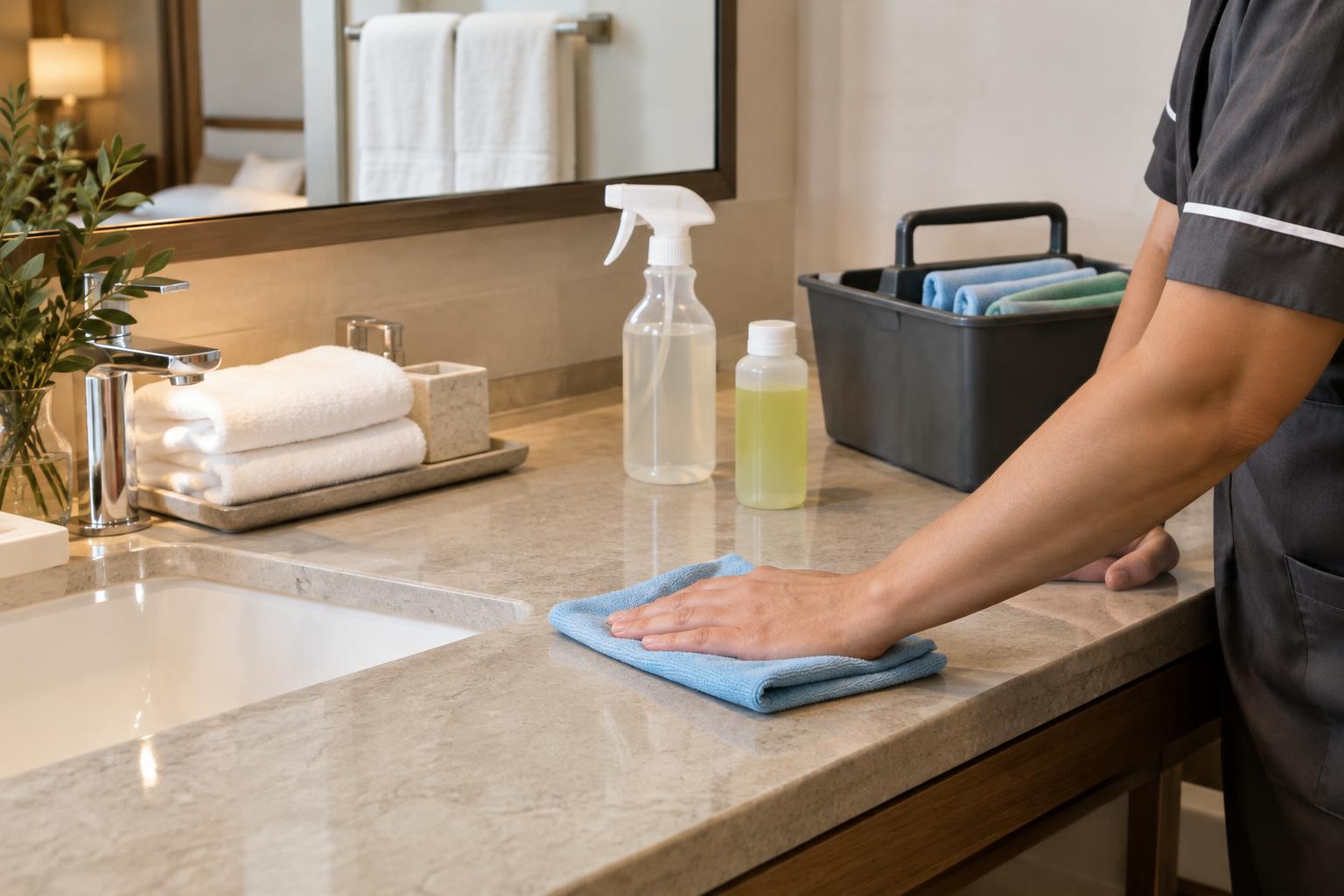
Match materials to the setting and cleaning routine. A surface that tolerates one cleaning product may not tolerate another, and a fabric that looks suitable in a sample book may be harder to maintain on a high-use seat. Request care instructions and check them against the property's cleaning procedures. If a product needs unusually delicate handling, decide whether staff can realistically provide it.
Where possible, test a sample in the intended space before placing a large order. Observe how it fits circulation routes, how easily it can be cleaned, and whether staff can move or adjust it without difficulty. A short trial cannot predict its full lifespan, but it can reveal avoidable problems.
Make repairability a question for suppliers
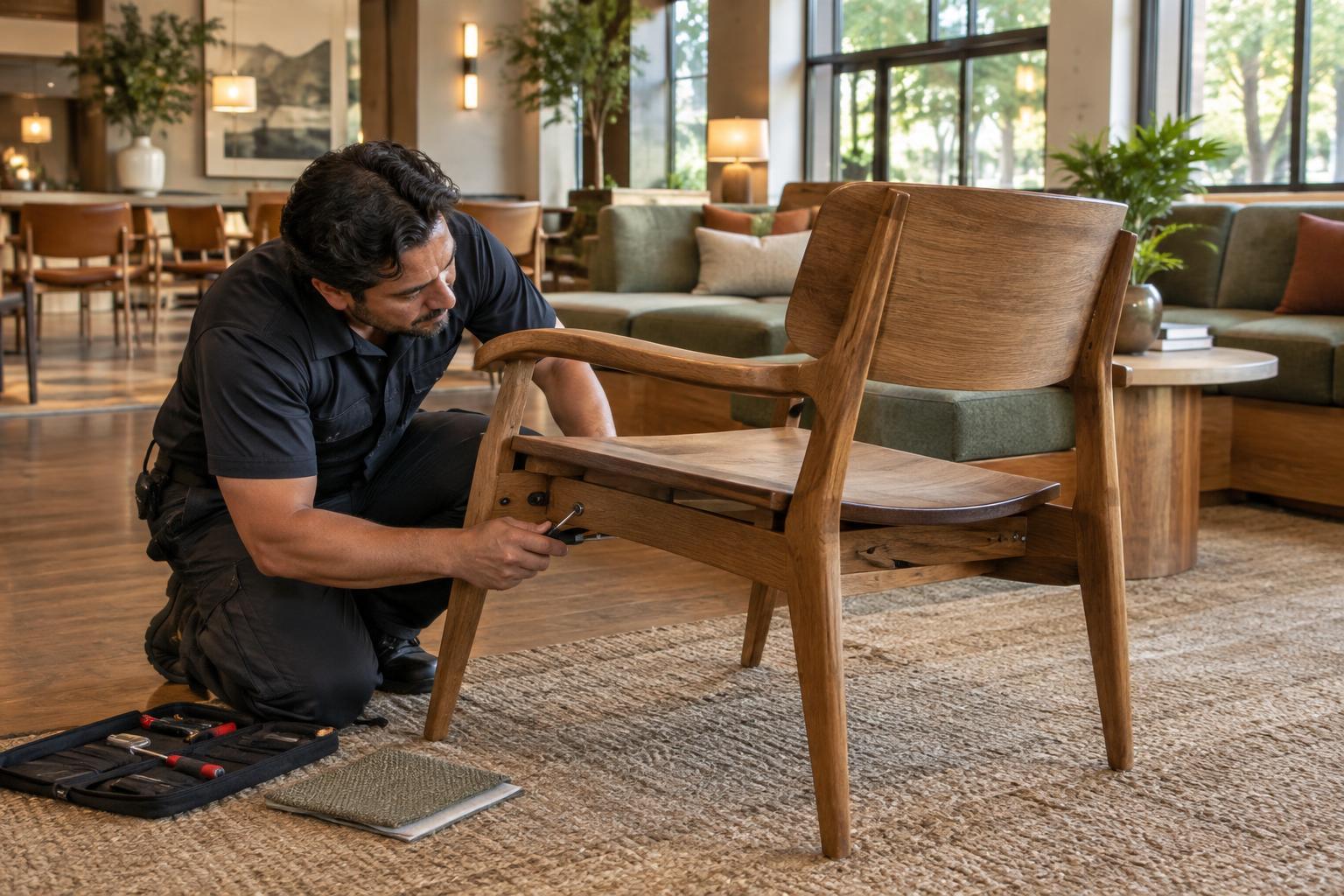
A product is not meaningfully repairable simply because it can be taken apart. Ask which components can be replaced, what tools are needed, and whether repairs can be done on site or require shipment elsewhere. For upholstered furniture, find out whether covers, cushions and damaged panels can be changed separately. For equipment, ask about access to commonly serviced parts and the availability of repair instructions.
Request written information about spare parts: how to identify them, how they are ordered, and whether the supplier expects to support the model over time. Avoid assuming that a warranty covers everyday wear or that a local technician can service every product. Clarify what the warranty includes, what it excludes, and who handles a fault when it occurs.
Standardization can also simplify upkeep. Using compatible glides, casters, lamps or fittings across several areas may reduce the range of spares a property needs to keep. Balance that convenience against the needs of each space; identical products are not always appropriate everywhere.
Compare the cost of keeping an item in service
The purchase price is only one part of an item's cost. Delivery, installation, cleaning, maintenance, replacement parts and time out of service can all affect the value of a purchase. A lower-priced table that needs frequent attention may be less useful than one with a higher initial cost and straightforward upkeep. The same comparison applies to equipment, where access for routine servicing can matter as much as a list of features.
Create a simple comparison sheet for shortlisted products. Record the quoted price, warranty terms, expected care tasks, replaceable components, spare-part information and any likely disruption during repair. Use what suppliers can confirm rather than assigning a precise lifespan you cannot verify. If information is missing, mark it as a question instead of treating it as a favorable answer.
Durability can support a property's sustainability goals when items remain useful longer and avoid premature replacement. That benefit is strongest when the property also has a plan to maintain, repair and eventually reuse or responsibly handle the item. Buying a repairable product without budgeting for repairs will not achieve much.
Plan for maintenance from the day of delivery
Good procurement continues after installation. Keep product details, care instructions, warranty documents and spare-part references where maintenance and purchasing teams can find them. Record the location of major items so a fault can be traced to the correct model. For items with replaceable components, decide which small spares are worth keeping on hand and who can authorize a repair.
Show staff how to clean and move new pieces as intended. Incorrect cleaning products, dragging furniture or forcing an adjustable component can shorten its useful life. A brief handover between supplier, operations and maintenance teams can prevent confusion about routine care and what to do when something breaks.
Review purchasing choices as items age. Note which finishes remain presentable, which repairs are practical, and where parts or service are difficult to obtain. Those records give the next buying decision a stronger foundation. The goal is not to find an item that never wears out, but to choose one the property can care for, fix and keep in use.