Start with a clear picture of energy use
An energy audit is a structured look at where a property uses energy, when it uses it and whether that use supports the guest experience. For a hotel, the scope might include guest rooms, public areas, laundry and kitchens. For a restaurant, it might cover cooking, refrigeration, ventilation, lighting and hot water. A first audit can be completed as a practical review by the operations team; complex system testing is better left to qualified specialists.
Gather available utility bills and meter readings, along with occupancy, covers served, opening hours and notes about unusual periods such as renovations or closures. Compare similar periods rather than judging a busy season against a quiet one. A rise in energy use may reflect more guests or meals, but it can also point to equipment running when it is not needed. Record what you know and what you cannot yet explain. That gap becomes a useful question for the site walk.
Walk the property when conditions change
Inspect the building during setup, peak service and closing, or during both occupied and quieter hotel periods. Different hours reveal different problems. Note lights left on in empty meeting rooms, outdoor lighting that runs in daylight, doors that do not close properly and heating or cooling that continues in unused spaces. Ask staff where they notice drafts, uncomfortable temperatures or equipment that seems to run constantly; their observations can help direct the review.
In kitchens, look at operating schedules for extraction, dishwashing and cooking equipment. Check whether refrigerator doors seal and close, and whether storage areas allow equipment to ventilate as intended. In hotels, include corridors, back-of-house areas and guest-room controls in the walk. Do not adjust refrigeration settings, ventilation or hot-water systems simply to save energy: each may have food-safety, hygiene, comfort or equipment requirements. Likewise, leave electrical panels and unfamiliar controls to trained personnel.
Check schedules and controls before considering replacements
Many useful findings concern timing rather than technology. Compare programmed schedules with actual operating hours. A dining room may be heated long before staff arrive, while a hotel function space may be conditioned every day despite occasional use. Timers, occupancy controls and clear opening and closing checklists can reduce unnecessary operation, provided they remain easy for staff to understand and override when service requires it.
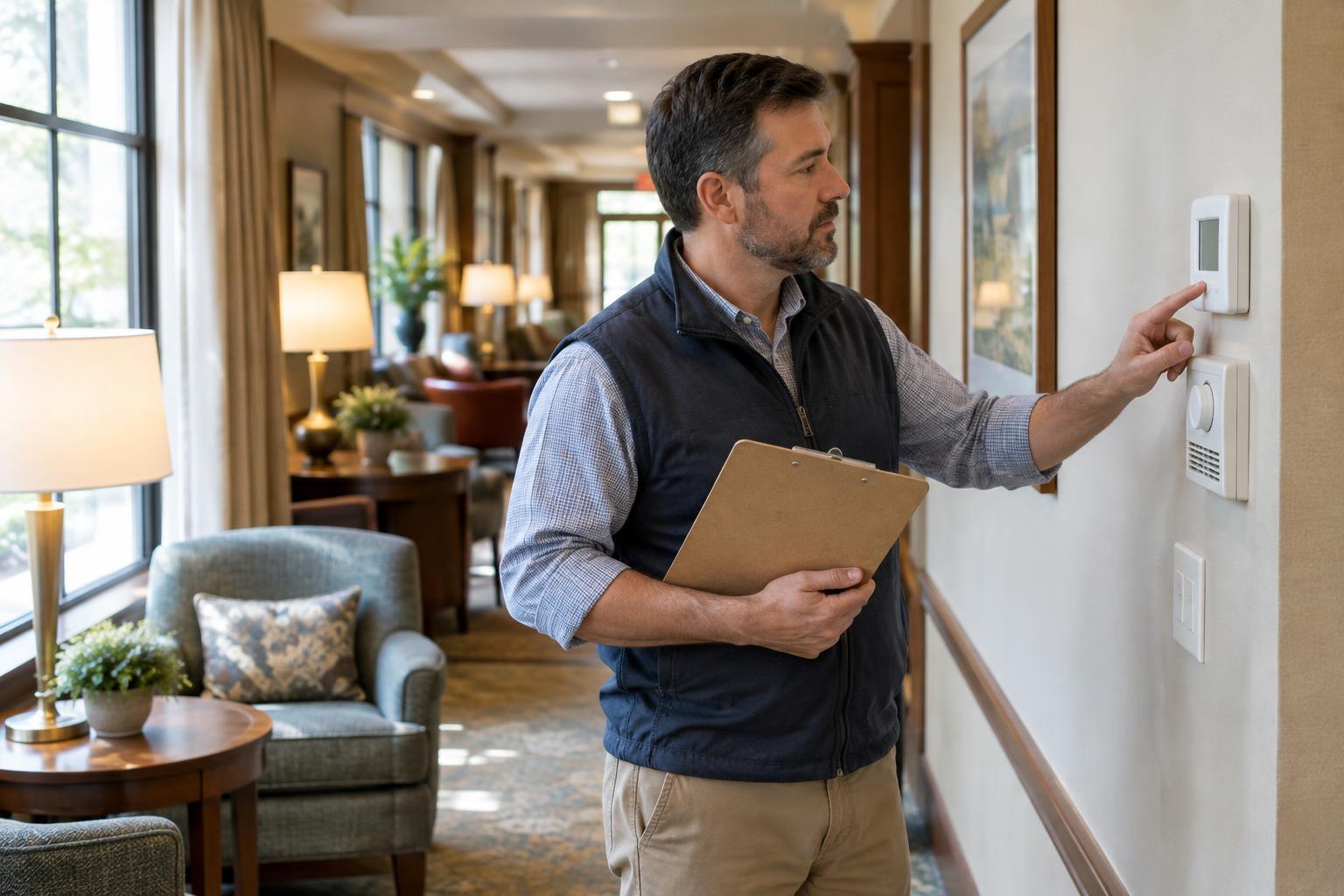
Review thermostat settings, lighting zones and equipment shutdown routines with the people who use them. A setting that appears inefficient may solve a problem elsewhere, such as a room that warms quickly when occupied or a kitchen that needs time to prepare for service. Instead of changing everything at once, identify the purpose of each setting, make a measured adjustment where appropriate and check whether the space still works for guests and staff.
Prioritize actions by effort, risk and guest impact
Turn observations into a short action list. Separate straightforward maintenance, such as repairing door seals or fixing a faulty sensor, from changes that need a contractor or a planned budget. For each item, note the location, the suspected source of waste, the proposed action and who will follow up. Give early attention to problems that waste energy repeatedly and can be addressed without disrupting service.
Equipment replacement should usually follow an understanding of how the existing equipment is used. A new appliance cannot compensate for poor scheduling, neglected maintenance or a door routinely left open. If a larger investment looks promising, ask a qualified supplier or engineer to assess suitability for the property and its operating needs. Avoid treating estimated savings as guaranteed results; usage, weather and service levels can all affect the outcome.
Measure what changed and make the audit repeatable
After a change, record its start date and review the next comparable utility readings alongside occupancy or covers served. If available, readings from a relevant submeter can make it easier to see the effect of a kitchen, laundry or other area. Also check for unintended consequences: guest complaints, slower service, staff workarounds or equipment struggling to maintain required conditions. An improvement only works if the operation can sustain it.
Keep the audit notes in a shared location and assign someone to revisit open items. Add schedule checks to seasonal changeovers and include simple observations in routine maintenance. Over time, the audit becomes less of a one-off hunt for waste and more of a way to manage the building deliberately. The aim is not the lowest possible energy use at any cost, but a property that uses energy where it matters and avoids using it where it does not.