Start with the guest’s task, not the channel
Guests rarely want technology or personal attention for its own sake. They want to accomplish something: check in after a long journey, change a reservation, order lunch, ask about an unfamiliar dish or resolve a billing concern. Their preferred way to do it can change from one moment to the next.
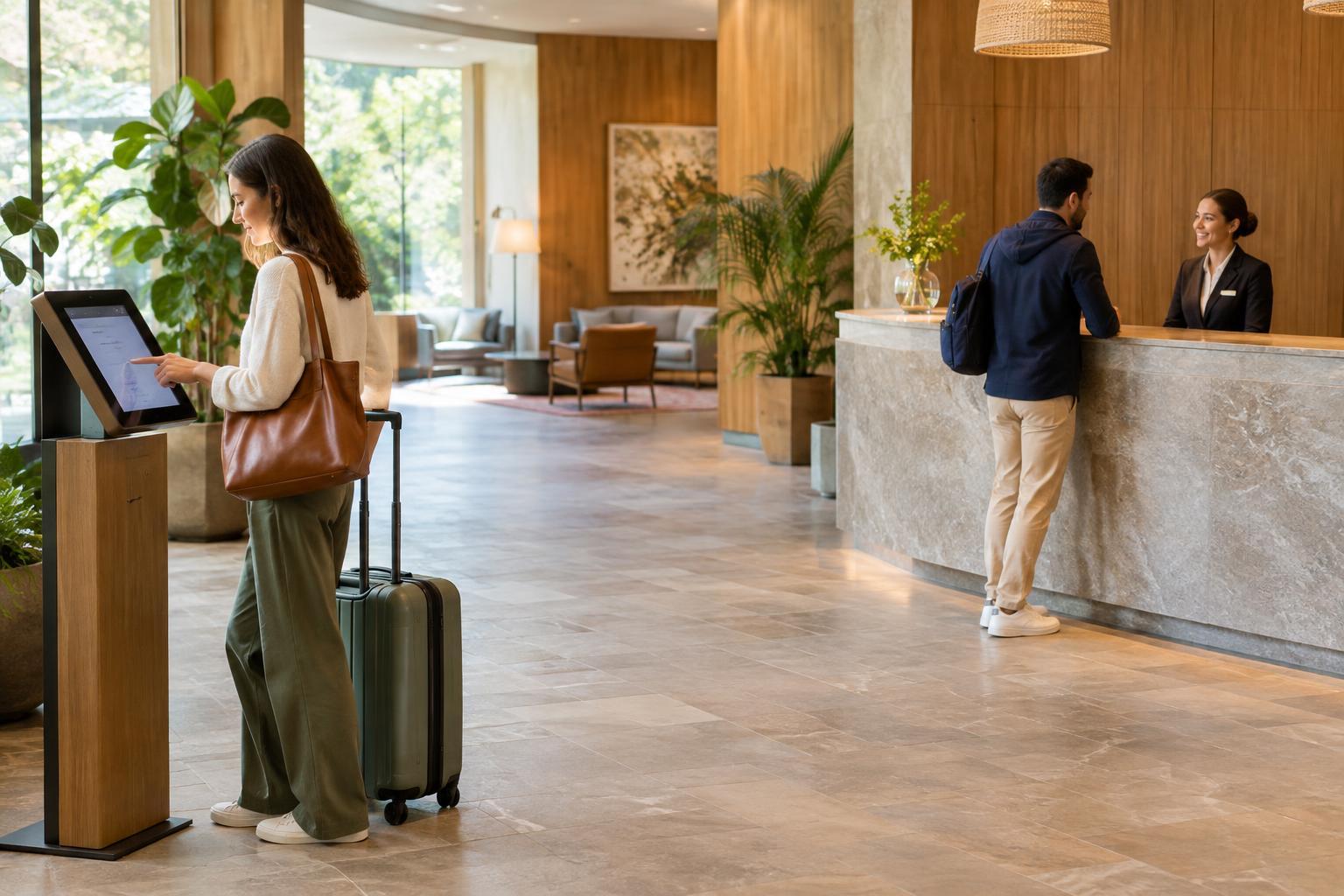
Self-service often suits tasks that are routine, clearly explained and easy to reverse. A guest who already knows what they want may appreciate completing a mobile check-in or paying a restaurant bill without waiting for a staff member. Human service becomes more valuable when a request is unusual, emotionally sensitive or hard to explain through preset choices. The aim is not to sort guests into “digital” and “traditional” groups. It is to make the right kind of help available for the task at hand.
Where self-service can make a stay or meal easier
A good self-service option gives guests control over timing and pace. It can be useful for viewing a menu, choosing a room preference, requesting extra towels or checking a departure time. In a busy lobby or dining room, it may also let someone complete a simple task while staff focus on requests that need conversation.
Convenience depends on execution. Instructions should use familiar language, show the next step and make it clear when a request has been received. Prices, fees and important conditions should be visible before a guest commits. If a screen times out quickly, a form asks for unnecessary details or a confirmation never arrives, a supposedly faster option can create more work for everyone.
Self-service should also be a choice rather than an obstacle. Guests may have limited connectivity, difficulty using a device or simply prefer to speak to someone. An accessible design and a readily available alternative help prevent a convenient tool for some guests from becoming a barrier for others.
When a person makes the difference
Human service is especially useful when the guest needs judgment, reassurance or a solution outside the standard process. A delayed arrival, a food allergy question, a room that does not meet expectations or a confusing charge may call for a person who can listen, clarify the issue and explain what can happen next. Guests may also welcome conversation when making a meaningful choice, such as selecting a place for a celebration meal.
The value is not merely that a staff member is present. It lies in their ability to recognize context and take appropriate action. Repeating a scripted apology without addressing the problem can feel less helpful than a well-designed form. Conversely, a team member who notices uncertainty, asks a clear question and offers a realistic option can turn a frustrating exchange into a manageable one.
Personal attention need not mean a long interaction. A brief greeting, a useful recommendation or a clear handoff to the right colleague may be enough. Good service respects guests who want privacy just as much as those who want to talk.
Make switching between options simple
Many guest journeys involve both self-service and staff assistance. Someone might book a table online, ask a server about an ingredient and pay at the table by phone. A hotel guest might check in on an app but speak with the front desk about an early departure. These shifts should feel like one continuous experience, not like starting over.
Where appropriate, staff should be able to see the relevant request or confirmation so guests do not have to repeat every detail. If systems cannot share information, a clear reference number or concise summary can still help. Signage and screens should show how to reach a person, and staff should be able to explain how to complete a digital task without pressuring guests to use it. An obvious escape route matters most when something goes wrong.
Use guest friction as a design signal
Teams can learn a great deal by observing where guests pause, ask for help or abandon a process. Frequent questions at a kiosk may indicate unclear wording. Repeated calls about a digital request may mean its confirmation is easy to miss. Staff workarounds may reveal that a process lacks an option guests regularly need.
Review those moments with both guests and employees in mind. Simplify routine steps, give staff room to handle exceptions and avoid measuring success only by how many interactions move to a screen. The better question is whether guests can complete their task comfortably and get capable help when they need it. Hospitality works best when efficiency and human attention support each other, rather than compete.