Start with what guests need to do
Hotel lighting has to support several activities in the same space. A guest may need to find a suitcase after arriving late, read in bed, check an outfit in the mirror and then settle down to sleep. One uniformly bright setting rarely suits all four moments. Layered lighting gives guests options by combining ambient light for general visibility, task light for focused activities and accent light for visual interest.
Before choosing fixtures, walk through the room as a guest would. Consider the route from the door to the bed and bathroom, the places where someone might sit or work, and the surfaces that deserve attention. This exercise helps each light earn its place. It also reveals gaps that are easy to miss on a floor plan, such as a dark luggage shelf or a bedside lamp that cannot be reached without getting out of bed.
Build a comfortable ambient foundation
Ambient light makes the room legible. It should help guests move around and understand the space without forcing them to look directly into a harsh source. Ceiling fixtures, shaded lamps and light reflected from walls or ceilings can all contribute. The aim is not to make every corner equally bright; some variation can make a room feel calmer while keeping circulation areas clear.
Pay particular attention to the entrance, where a guest is learning an unfamiliar layout. A convenient way to turn on general lighting near the door makes arrival easier. In larger rooms, separate controls for the entry and sleeping areas offer more flexibility than a single switch for everything. Test the result at night as well as during the day: window light can hide shadows and glare that become obvious after dark.
Put task light where work actually happens
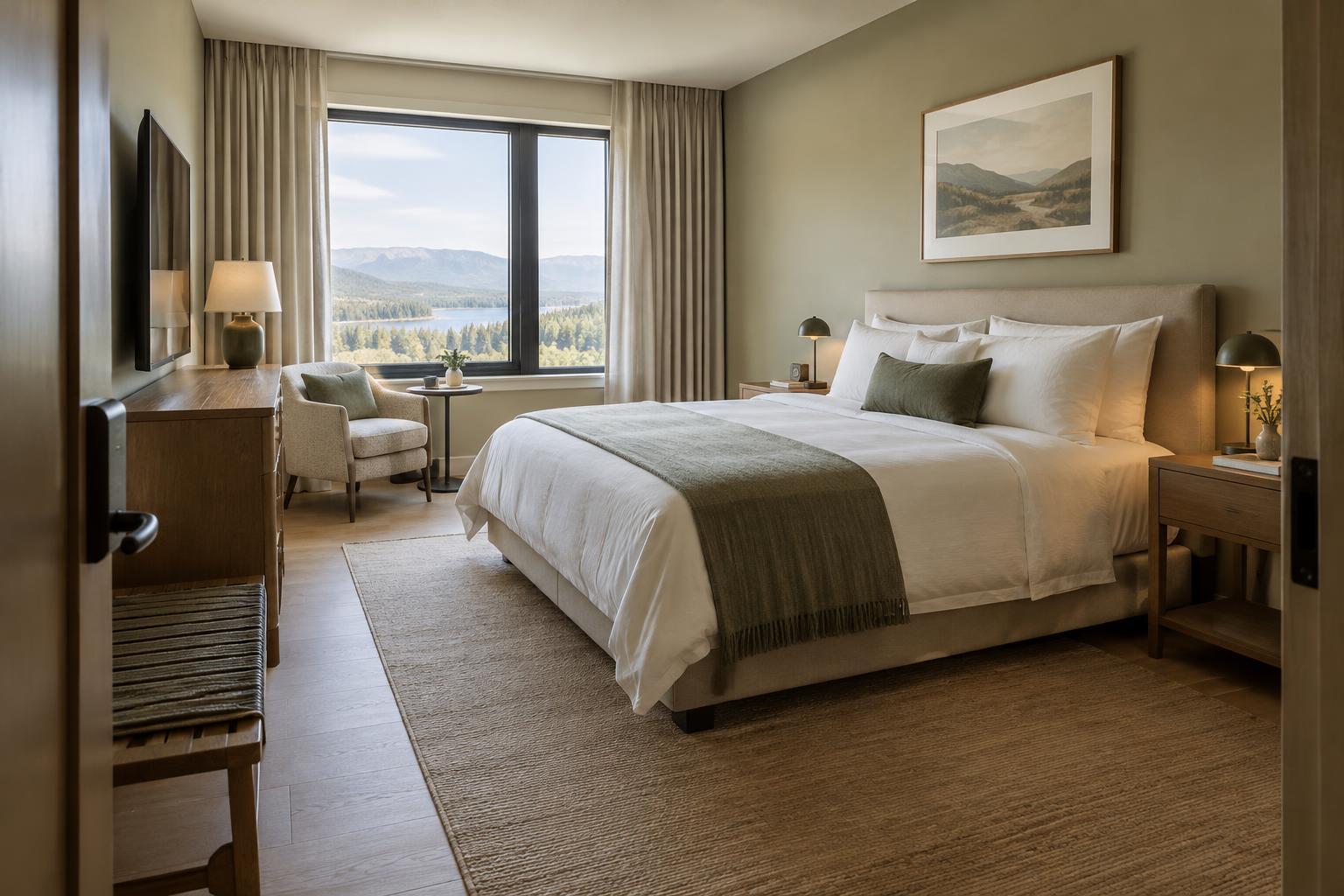
Task lighting should make a specific activity easier without lighting the whole room to the same level. A bedside reading light, for example, is most useful when it illuminates a book without shining into the eyes of someone on the other side of the bed. At a desk, a movable or well-positioned light can help guests see papers and keyboards while limiting reflections on a screen.
Mirrors need special consideration. A bright light above a bathroom mirror may leave shadows on the face, while light placed to either side can give more even illumination. The best arrangement depends on the mirror, fixture and room dimensions, so check it from the guest’s likely standing position. Similarly, a light inside or beside a wardrobe should reveal clothing clearly rather than create a bright spot that still leaves shelves in shadow.
Placement and control matter as much as brightness. Guests should be able to operate a bedside light from the bed, and a desk light should not require moving furniture to reach its switch. Where fixtures are adjustable, make sure they stay in position and have room to move without striking a wall or headboard.
Use accent light to give the room character
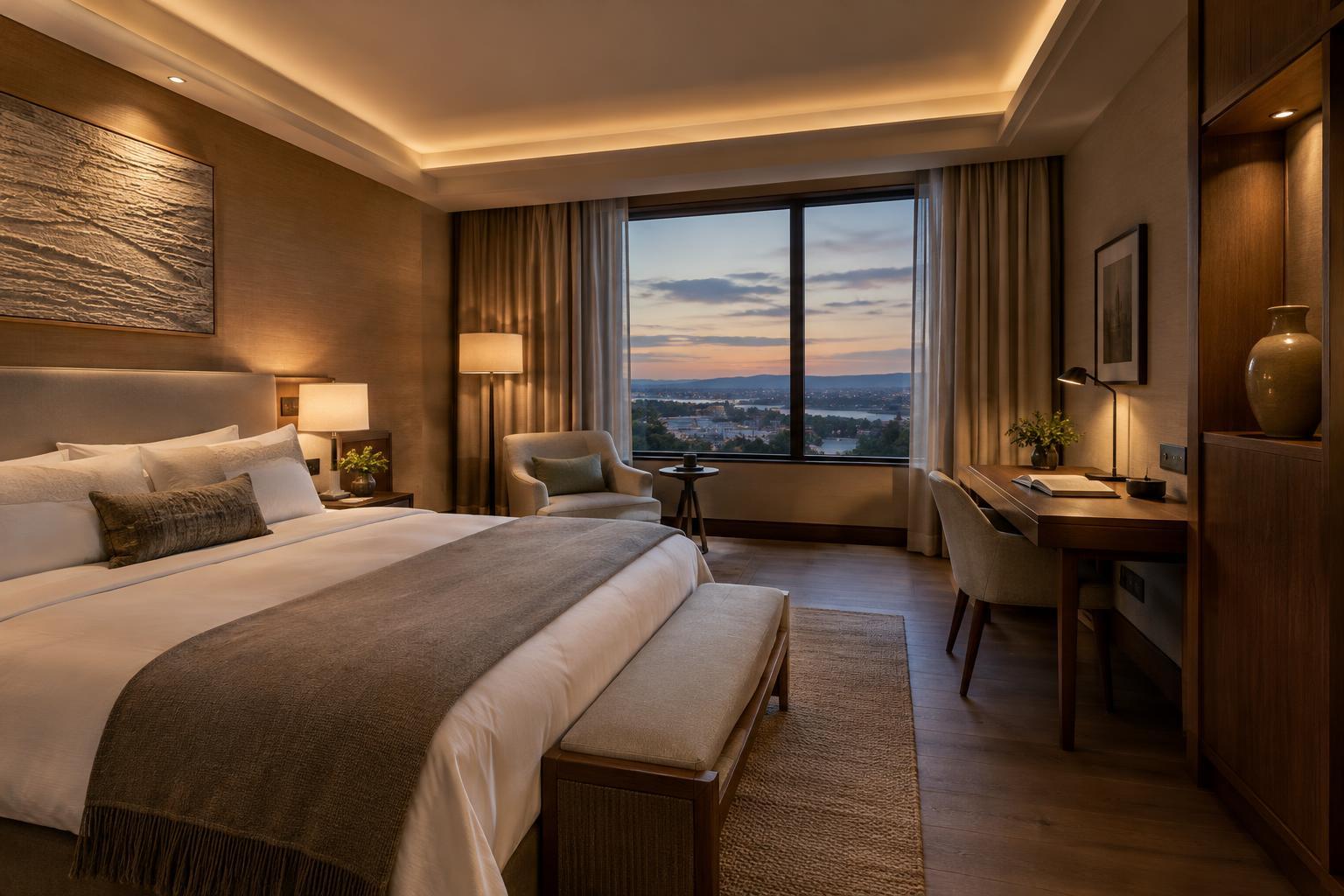
Accent lighting draws attention to features such as artwork, textured walls, shelving or a distinctive headboard. It can give a room depth and help express the hotel’s design identity. It works best when it highlights something worth noticing, rather than adding brightness for its own sake. A softly lit wall behind a bed, for instance, can provide visual interest without placing a glaring fixture in a guest’s line of sight.
Keep the balance between layers in mind. An accent light that overpowers the bedside lamp may make reading less comfortable; one aimed poorly at framed art may produce distracting reflections. Check views from the doorway, the bed and any seating area. In guest rooms, the most effective feature may be one guests can switch off independently when they want a darker space.
Make the layers easy to use and maintain
Even a carefully planned scheme can frustrate guests if its controls are confusing. Clear switches, logical grouping and a straightforward way to turn off lights at bedtime are more valuable than a long list of scenes nobody can decipher. Dimming can add flexibility, but controls should respond predictably. If automated settings are used, guests should still be able to choose a comfortable level for themselves.
Consider the room as an operating environment, too. Fixtures need to be accessible for cleaning and replacement, and a consistent selection of compatible lamps or components can simplify upkeep. Choose appropriate fittings for damp locations and check that shades, lenses and movable arms will hold up to routine use. Periodic checks can catch failed lamps, flicker, mismatched light appearance or switches that no longer work as expected.
Finally, test the complete room rather than evaluating fixtures one by one. Stand at the entrance, sit at the desk, read in bed and look in the mirror. Turn on different combinations of lights and notice whether each activity feels supported. A successful layered scheme gives guests enough light when they need it, less when they do not, and a simple sense of control throughout their stay.