Make the experience clear before guests arrive
For a parent or caregiver, a comfortable meal often starts before anyone enters the restaurant. Basic information can remove small uncertainties that otherwise feel important: Is there room for a stroller? Are high chairs available? Can a child share an adult dish? A restaurant can answer these questions in its booking information, menu or a brief response to a reservation inquiry. The goal is not to promise that every request can be met, but to help families decide what will work for them.
If space is limited, be specific rather than vaguely describing the restaurant as family-friendly. Guests may appreciate knowing that strollers need to be folded, that high chairs are limited or that a quieter seating area can be requested but not guaranteed. Clear expectations help staff, too: the host is less likely to have to negotiate a difficult arrangement at the door.
Plan seating for comfort and movement
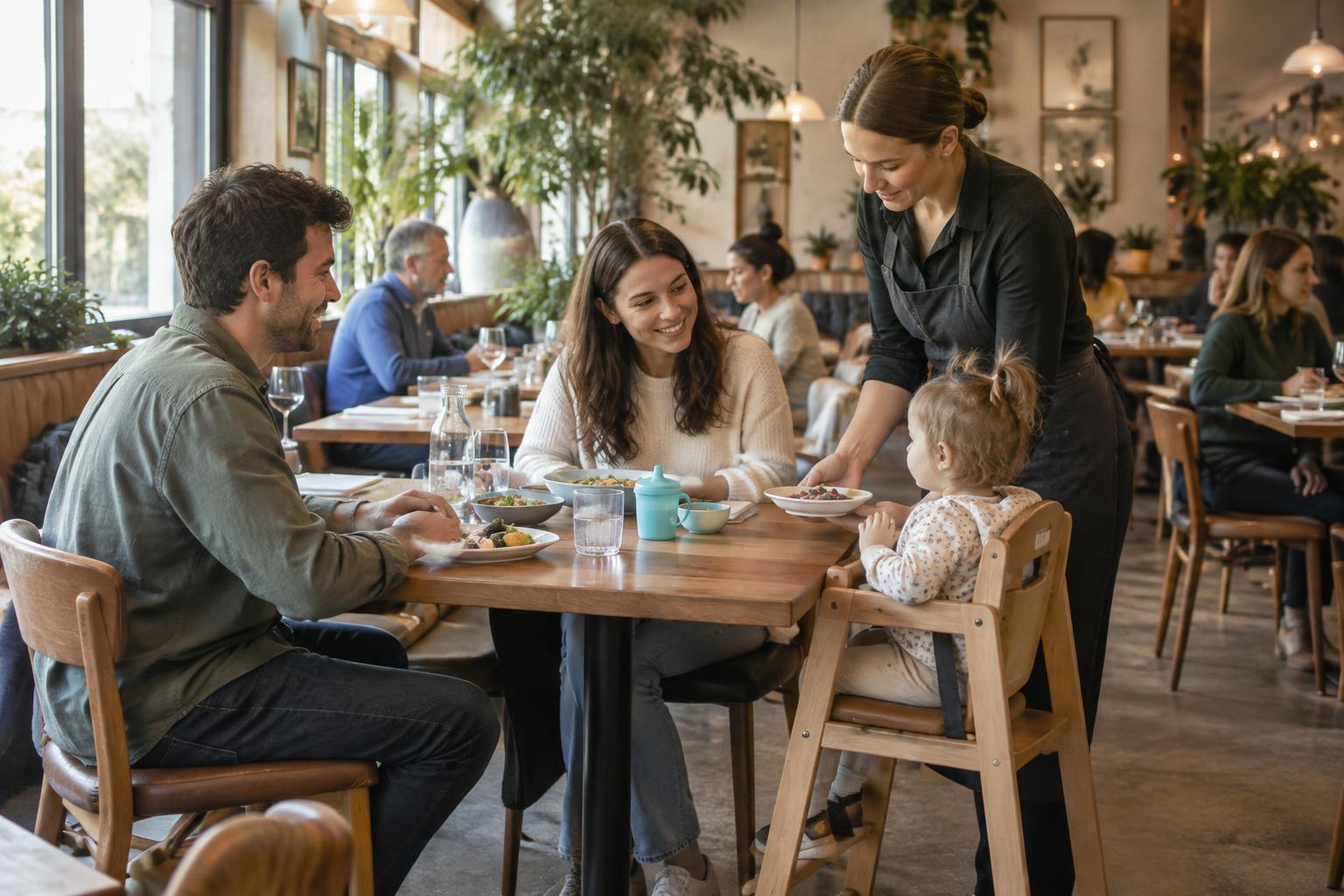
Families need enough room to sit together, manage coats and bags, and help a child without blocking a walkway. When possible, offer a choice between a booth and a table with space for a high chair. Place high chairs where servers and other guests can pass safely, and check that they are clean and stable before bringing them over. A high chair should be offered, not assumed; some families may prefer a booster seat or their own arrangement.
Small layout decisions can improve the experience for everyone. Keep access to restrooms straightforward, consider where a caregiver could change a child, and avoid seating a family beside a busy service station if another suitable table is available. Staff should be able to explain what facilities exist without embarrassment or guesswork. Not every restaurant can change its floor plan, but a seating plan can still identify tables that are easier to use with young children.
Offer flexible food choices without building a huge menu
A useful children’s offering is less about novelty than about ease of ordering. Smaller portions of suitable dishes, simple sides and the option to serve components separately can give families choices without creating an extensive second menu. Plain descriptions help caregivers understand what will arrive, while clear information about ingredients and available modifications lets them ask informed questions. Staff should confirm requests with the kitchen rather than guessing about an ingredient or promising a change that cannot be made.
Timing matters as much as choice. At the start of service, ask whether the family would like a child’s meal to arrive with the starters, alongside the main courses or at another point. Some parents will welcome early food; others would rather eat together. Offering the choice avoids turning one family’s preference into a blanket service rule.
Give staff a calm, consistent approach
A warm welcome does not require staff to entertain children or overlook the needs of other diners. It can be as simple as greeting everyone at the table, allowing a moment to settle in and asking one practical question at a time. Bringing water promptly, explaining any wait and checking whether the table needs extra napkins can make the meal easier without interrupting it repeatedly.
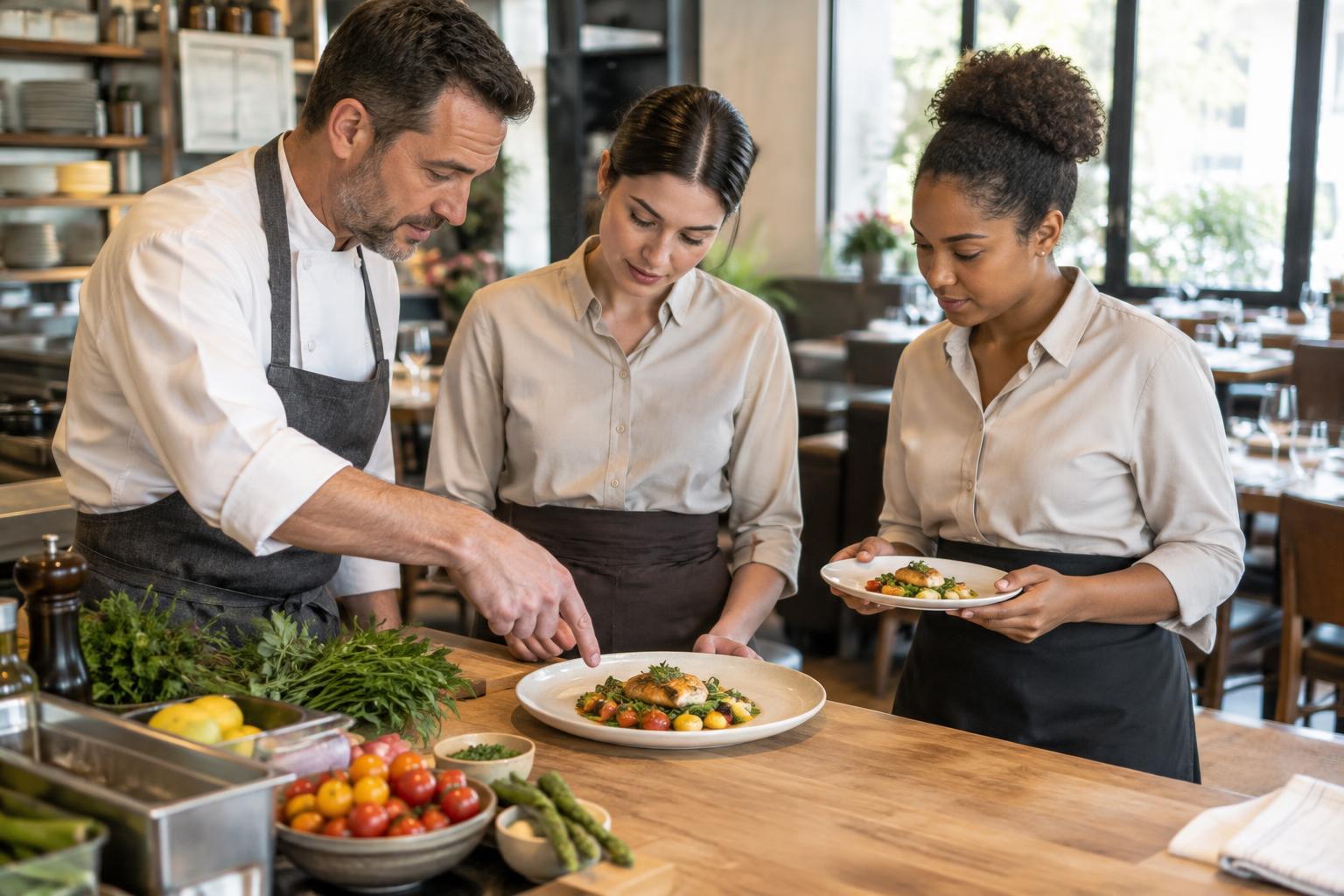
It also helps to agree on how the team will handle common requests, such as warming food when the kitchen can do so, replacing a dropped utensil or packing up leftovers. Staff should know which requests are possible and when to ask a manager. If a child becomes upset, a patient, matter-of-fact response is usually more useful than drawing attention to the table. Families remain responsible for supervising children; the restaurant’s role is to provide considerate service and maintain a safe, workable dining room.
Use small details to reduce friction
Comfort often depends on ordinary objects being ready when they are needed. Wipeable menus, sturdy cups, spare napkins and a few clean high chairs can be more valuable than elaborate activities that staff cannot maintain. If the restaurant offers crayons or another table activity, choose options that are easy to clean up and suitable for the space. Check supplies during routine opening tasks so a family’s arrival does not send someone searching through storage.
The best approach is to notice where the experience becomes awkward and improve one step at a time. Hosts can note recurring seating requests, while servers can share which menu questions are difficult to answer. These observations may point to a clearer menu note, a better place to store high chairs or a change in how food timing is discussed. A restaurant does not have to become exclusively child-focused to welcome families well. It needs a reliable way to help them enjoy a meal alongside everyone else.