Start with the guest experience and the site
Outdoor areas serve several purposes in hospitality. An entrance garden sets a first impression, a terrace offers somewhere to linger, and planting around rooms can provide shade and privacy. Before changing any of these spaces, observe where guests walk, sit and gather. Note which views matter, where planting blocks sightlines, and which areas need clear access for staff and deliveries. Biodiversity and water-saving goals work best when they support these everyday uses rather than compete with them.
Map the site’s sunny and shaded areas, slopes, exposed corners and places where water collects after rain. Check what is already growing before removing it: established plants that suit the site may be easier to care for than replacements. A patch of lawn used for events might be worth keeping, while a decorative strip that no one enters could become a planted bed. This selective approach makes the project more manageable and preserves the functions guests value.
Choose planting for place, not just appearance
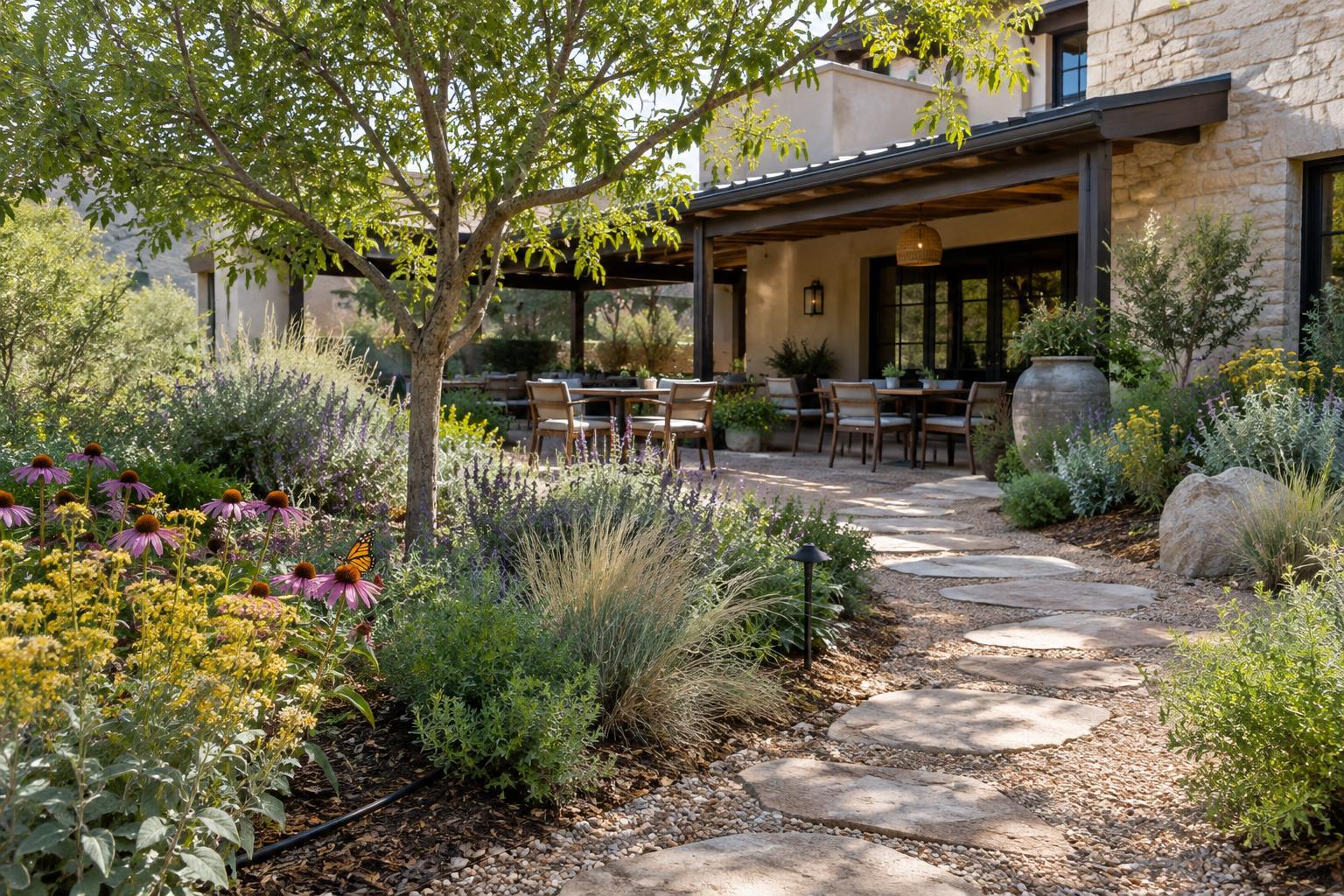
A varied mix of trees, shrubs, grasses and flowering plants can provide shelter and food for wildlife while giving a garden texture across the seasons. Start with species suited to the local climate, soil and available space. Locally native plants may be useful choices, but suitability still depends on the specific site. Check mature sizes so that a small entrance bed does not become an overgrown maintenance problem, and avoid species known to spread aggressively in the area.
Group plants with similar water needs together. Put those that need more moisture where they can be watered efficiently, rather than scattering them among plants that prefer drier conditions. In guest-facing areas, consider how planting will look outside its main flowering season and whether fallen fruit, thorns or dense growth could create problems along paths and seating. A garden can feel abundant without making movement, cleaning or visibility difficult.
Water where it helps, and check what happens next
Reducing water use is not simply a matter of watering less. Newly planted areas usually need consistent care while roots establish, even if the plants are expected to need little supplemental water later. Once established, water according to plant needs and actual conditions rather than an unchanging calendar. Early signs of stress, such as persistent wilting or unusually dry soil below the surface, are more useful than the appearance of the top layer alone.
Where appropriate, drip irrigation can direct water near roots instead of spraying paths and furniture. Mulch can help limit evaporation and suppress competing weeds, provided it is kept away from trunks and stems. Regularly inspect irrigation for leaks, clogged outlets and overspray; a well-designed system can still waste water when it is poorly adjusted. If rainwater collection is practical, plan for storage, maintenance and any local requirements before treating it as a reliable supply.
Make maintenance part of the habitat plan
A biodiverse outdoor space still needs care. A simple maintenance plan can identify where tidy edges and frequent clearing are essential, and where plants can be allowed to flower and set seed. Keeping paths, entrances and dining areas neat helps guests understand that less formal planting is intentional, not neglected. In quieter areas, leaving some leaf litter or plant stems for a time may offer habitat, provided it does not interfere with access, drainage or cleanliness.
Brief the people who maintain the grounds on the purpose of each area. Without that shared understanding, new planting may be cut back before flowering or watered as though every bed has the same needs. Record what is planted and note what struggles, thrives or requires repeated intervention. Those observations can guide small adjustments instead of prompting a costly redesign whenever part of the garden looks different from the original plan.
Help guests notice the benefits without overstating them
A comfortable outdoor space is more than a planting scheme. Provide clear routes, usable seating and shade where feasible, then let planting add character around them. Staff can explain why a meadow-like border is maintained differently from a formal bed, and a short, discreet sign can answer the same question when staff are busy. Clear communication is especially helpful during establishment, when new planting may look sparse.
Avoid promising that a garden will attract particular wildlife or meet a fixed water-saving target without evidence from the site. Instead, describe the choices the property has made: replacing a little-used lawn, selecting plants for local conditions or checking irrigation regularly. Over time, compare water use and maintenance notes with previous practice where records allow. The strongest outdoor plan is one the team can keep improving while guests continue to enjoy the space.