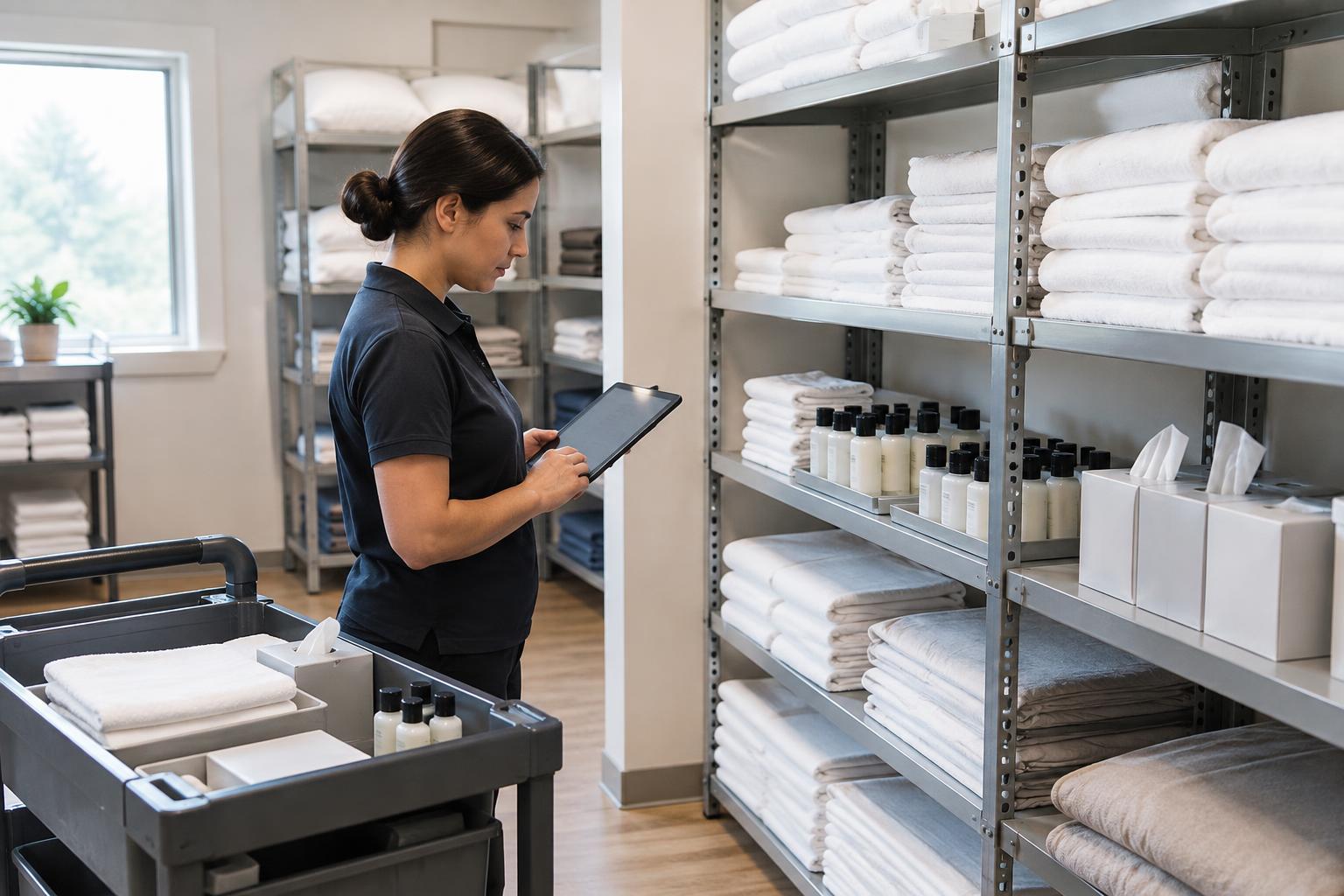
Start with the supplies guests and staff rely on
A missing bath towel or empty soap dispenser can interrupt an otherwise smooth stay. Excess stock creates a different problem: it takes up space, ties up purchasing budgets and can be difficult to count. Hotel supply inventory is the task of finding a practical balance between those two outcomes.
Begin with a list of items that operations use repeatedly, such as linens, toiletries, cleaning products, paper goods and front-desk supplies. Record where each item is stored, who uses it and how it is issued. Use one counting unit per item, whether that is an individual bottle, a case or a carton. If staff order by the case but issue by the bottle, note how many bottles a case contains. Consistent units make every later calculation easier to check.
Set a par level as a working stock target
A par level is the quantity an operation aims to have available for an item. It should reflect expected use, the time needed to replace stock and a modest allowance for variation. It is not necessarily the amount to purchase on every order. For items that circulate through the property, such as towels, account for stock in guest rooms, in the laundry and on the shelf rather than treating the storeroom count as the whole supply.
To choose an initial par, review actual usage where records are available. A housekeeping team can count how many amenity units it issues over a typical period; a restaurant team can do the same for napkins or takeaway packaging. Compare that use with delivery schedules and available storage. Then adjust for predictable changes, such as a planned group booking or a temporary room closure. An initial par is a starting assumption, not a permanent rule.
Use a reorder point to signal when to buy
A reorder point answers a different question from par: when should the next order be placed? A useful starting formula is expected use during supplier lead time, plus a safety allowance. Lead time is the interval between placing an order and having usable stock on site. The allowance provides a cushion if use rises or a delivery takes longer than expected.
For example, if a hotel generally uses 10 boxes of a supply each week and replacement usually takes two weeks, it expects to use about 20 boxes while waiting. With an illustrative safety allowance of five boxes, the reorder point would be 25 boxes. When available stock reaches that point, staff place an order. They can then order enough to return toward the chosen par, taking account of supplies already on order. This example is a planning method, not a recommended stock level for every hotel.
Make counts and orders part of the routine
Even a well-chosen reorder point fails if no one checks stock. Assign an owner for each supply group and set a counting schedule that fits how quickly items move. Frequently used or difficult-to-replace products may need closer attention than supplies that are easy to obtain. Keep counts in a shared spreadsheet or inventory system with the item name, counting unit, storage location, current quantity, reorder point and open orders.
Before purchasing, check what is physically on hand and what is already due to arrive. Note damaged or unusable goods separately so they do not appear available. When deliveries arrive, compare them with the order and update the record promptly. Clear labels and designated storage locations help staff find supplies without opening extra cases or making duplicate requests.
Review the numbers when operations change
Par levels and reorder points need occasional revision. If an item repeatedly runs out before delivery, examine usage, lead time and counting accuracy before raising the target. If stock regularly sits untouched, consider whether the par is too high or whether orders are being placed before existing deliveries are recorded. A change in room occupancy, service style, supplier packaging or product choice can also make an old setting less useful.
Keep the process simple enough for the team to follow. A short list of reliable counts, clear purchasing responsibility and a regular review are more useful than detailed records that no one maintains. When par levels describe how much stock the hotel needs and reorder points identify when to act, staff can spend less time chasing essentials and more time serving guests.