Start by defining what you will measure
A hotel or restaurant kitchen cannot reduce waste reliably by looking at the bins at the end of a shift. The more useful question is where food left the operation and why. Common points include spoiled stock, preparation trimmings, food cooked but not served, and food returned on guests’ plates. Keeping these categories separate makes the results easier to act on: a storage problem needs a different response from an oversized portion.
Decide what belongs in the record before tracking begins. For example, a team may record edible food separately from unavoidable scraps such as shells or bones. It may also note whether a discarded item was prepared in-house, bought ready-made or returned from service. The definitions need not be elaborate, but everyone using the log should understand them.
Build a measuring routine the team can keep
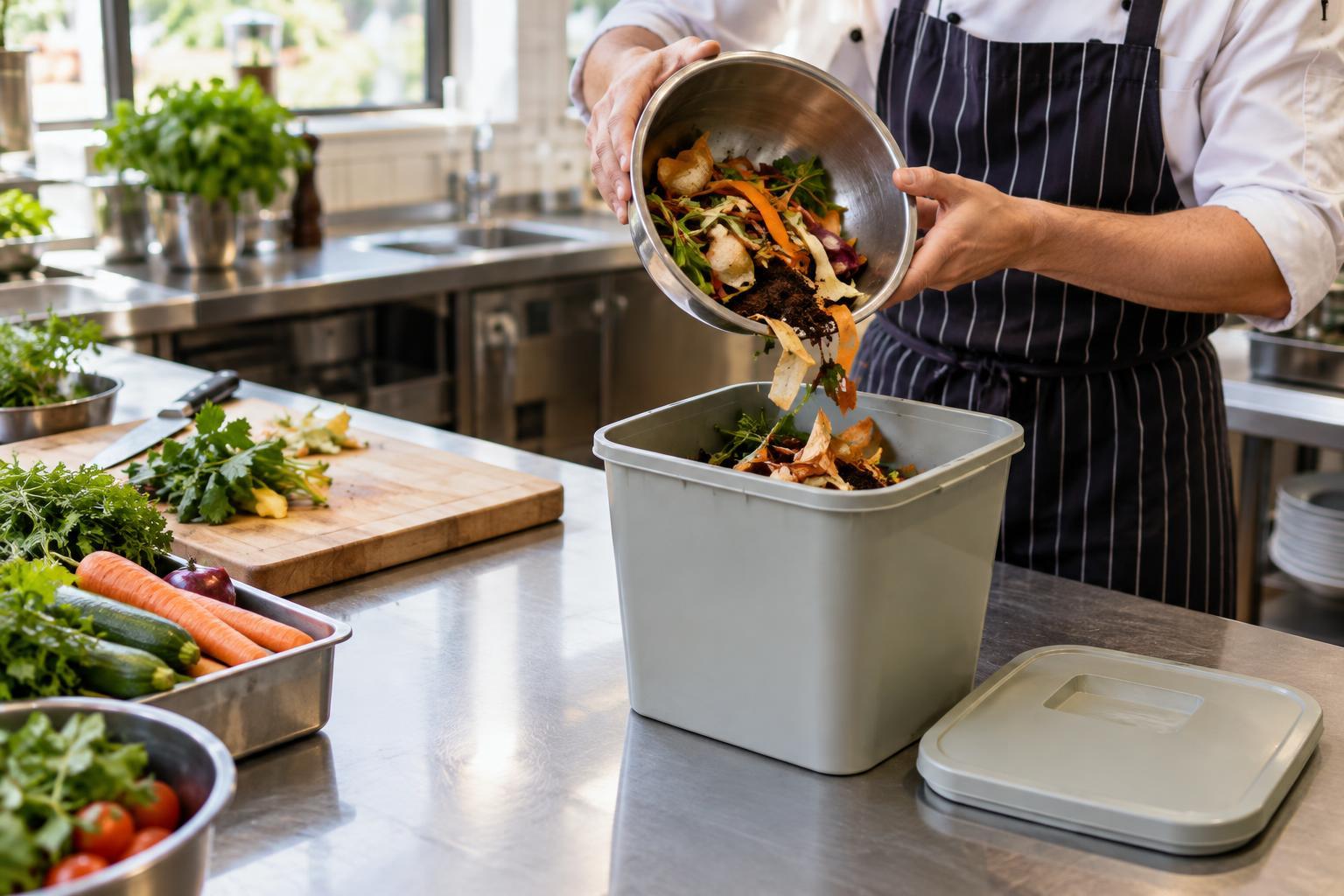
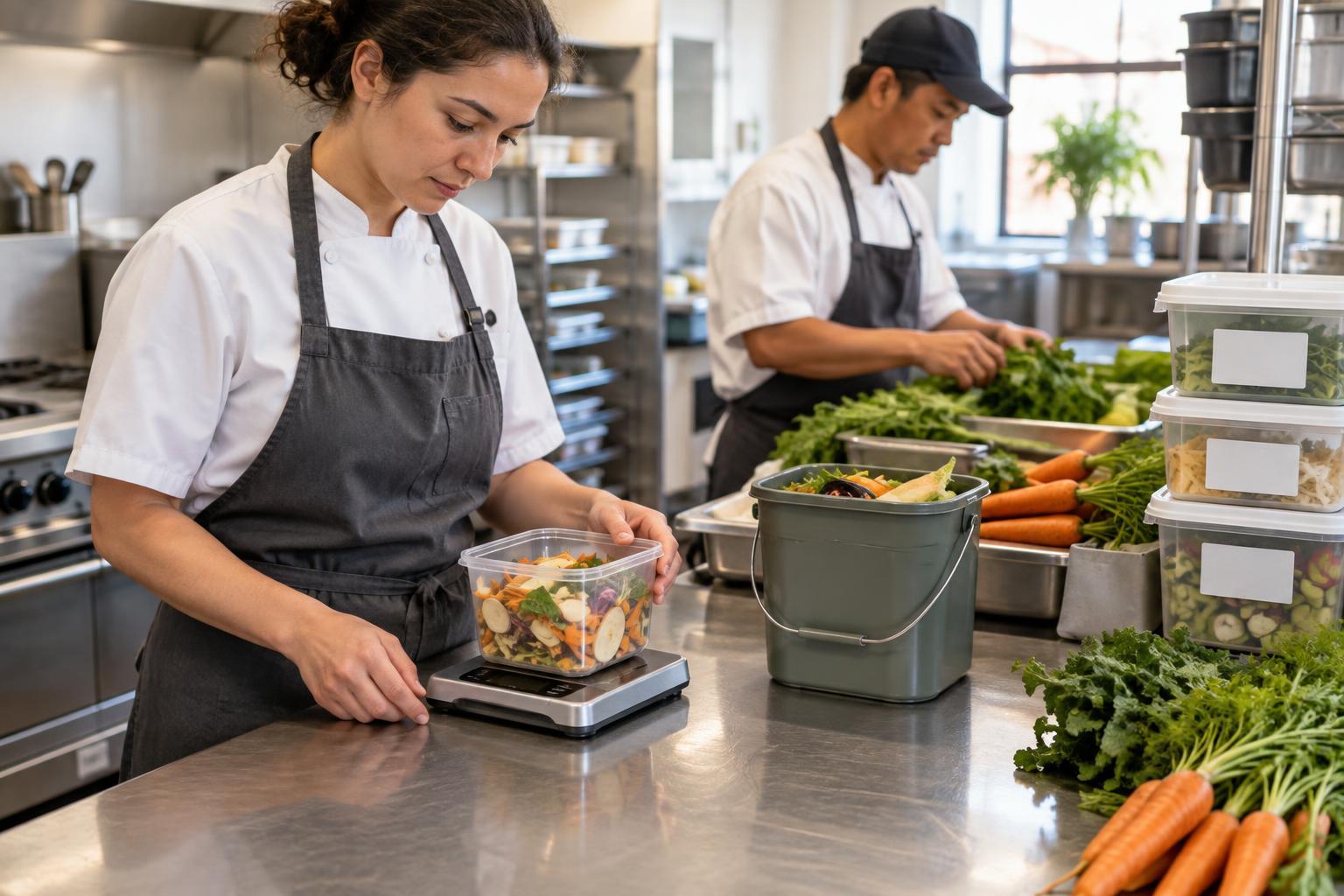
Choose a short trial period that includes the kitchen’s usual mix of services. Place clearly labeled collection containers near the points where waste occurs, while keeping them consistent with the kitchen’s food-safety and cleaning procedures. Weigh each category at a regular time, or use another consistent method if weighing every item is impractical. Record the date, service, food type, quantity and likely reason for disposal. A brief note such as “prepared too many breakfast pastries” is more useful than a total weight alone.
Make recording quick enough to survive a busy shift. A paper sheet or shared digital form can work; the best tool is one staff will actually use. Assign responsibility for checking entries and correcting unclear labels, rather than expecting every cook to interpret the data independently. Explain that the purpose is to improve decisions, not to blame individuals for every discard.
Review waste alongside activity, such as the number of meals served or the occupancy level. A busy weekend may generate more waste overall while producing less waste per guest. Compare similar services when possible, and note unusual events, menu changes or equipment problems that could affect the results.
Use the findings to prevent waste upstream
Look first for repeated patterns. If fresh ingredients spoil before use, examine order quantities, delivery schedules, storage conditions and stock rotation. If trim waste is high, check whether preparation methods can make better use of ingredients without lowering quality. Vegetable offcuts, for example, may have a suitable planned use, but only when they can be handled, stored and served safely.
Overproduction calls for a different set of questions. Compare preparation plans with actual demand by day and service. Smaller batches, prepared closer to the time of service, may help where staffing and equipment allow. Menus can also be designed so that ingredients have more than one appropriate use, reducing the chance that a slow-selling dish leaves a single-purpose product unused. These changes should be tested against guest expectations, service speed and food-safety requirements rather than treated as automatic fixes.
Pay attention to what guests leave behind
Plate waste can reveal a mismatch between what the kitchen serves and what guests want. Repeatedly returned sides may suggest a portion-size issue, an unclear menu description or a component guests do not enjoy. Ask service staff what they notice, and consider whether a choice of sides or a smaller portion would suit some guests. A single busy night is not enough to justify redesigning a dish; look for a pattern.
Buffets deserve particular attention because presentation and abundance can make it tempting to put out more food than guests will take. Smaller serving vessels, timely replenishment and closer communication between the kitchen and floor team may preserve an inviting display while limiting leftovers. Any plan to reuse unserved food must follow the operation’s food-safety rules; food that has been on a guest’s plate is not an ingredient for another service.
Turn measurement into an ongoing habit
Choose one or two changes at a time and keep measuring after they are introduced. If waste falls but shortages or guest complaints rise, the change may need adjusting. Share a short summary with purchasing, kitchen and service teams so each can see how its decisions affect the whole operation. Specific observations, such as which item is repeatedly overproduced, are more useful than a general instruction to waste less.
Some food waste will remain even in a well-run kitchen. Where suitable, options such as permitted food donation or organics collection can help manage what cannot be prevented, subject to local rules and practical handling requirements. The main goal, however, is to avoid creating excess food in the first place. Consistent records give a hospitality team a way to do that while maintaining safe preparation and a welcoming guest experience.