Treat checkout as part of the guest experience
Presenting the check is a service moment, not just an administrative task. Guests may be finishing a conversation, catching a train or deciding whether to order one last coffee. A server can watch for a natural pause, then ask whether the table is ready for the check rather than assuming the meal is over. Once requested, the bill should arrive promptly and discreetly, without making guests feel hurried to leave.
The aim is a predictable, comfortable finish. A guest should be able to see what they ordered, understand the total and choose how to pay without negotiating the process in front of the table. Small habits help: confirm that all orders have been entered, check for duplicate items and make sure any promised adjustment appears before presenting the bill.
Make the bill easy to read
An itemized check gives guests a way to verify charges without having to ask for an explanation of the total. Item names should be recognizable, even if the restaurant uses shorthand internally. When a bill includes a set-menu supplement, cover charge, service charge or other addition, the description should help guests understand what it is. Staff should also be ready to explain how a charge was communicated earlier in the visit.
If a guest questions an item, the best first response is to review it calmly. A simple acknowledgement and a careful check of the order are more useful than defending the bill before confirming the facts. Corrections should be made on a revised check so the guest can see the new total. This approach protects trust even when the original charge was accurate.
Agree on split payments before running cards
Groups do not all want the same kind of split. Some prefer equal shares; others want separate checks by person, by item or by household. Asking “How would you like to divide this?” leaves room for guests to choose. For a large table, it may help to ask about separate checks when taking orders, while changes are still easy to track. If the point-of-sale system has limits, explain those limits early and offer the simplest workable alternative.
Before processing payment, repeat the plan in plain language: which items belong on each check, whether an appetizer is shared and how any added charge will be allocated. Give guests a chance to review the resulting checks. If one person is paying a fixed amount and others are covering the balance, confirm the amounts before charging any card. A few seconds of verification can prevent a longer, more awkward correction afterward.
Keep tip choices clear and unpressured
A tip prompt should give guests enough information to make their own choice. If suggested percentages appear on a payment screen or printed check, make it clear what amount they are calculated from. Guests should also be able to find a custom amount or no-tip option without having to ask a staff member to change the screen for them.
Where a service charge is included, distinguish it from a voluntary tip. Staff need a consistent, accurate explanation of the charge and how the restaurant handles additional gratuities. Practices and requirements can vary by location, so operators should check the rules that apply to them rather than rely on a generic script. Whatever the policy, the guest-facing language should avoid implying that a voluntary amount is required.
Design a calm handoff and a clean finish
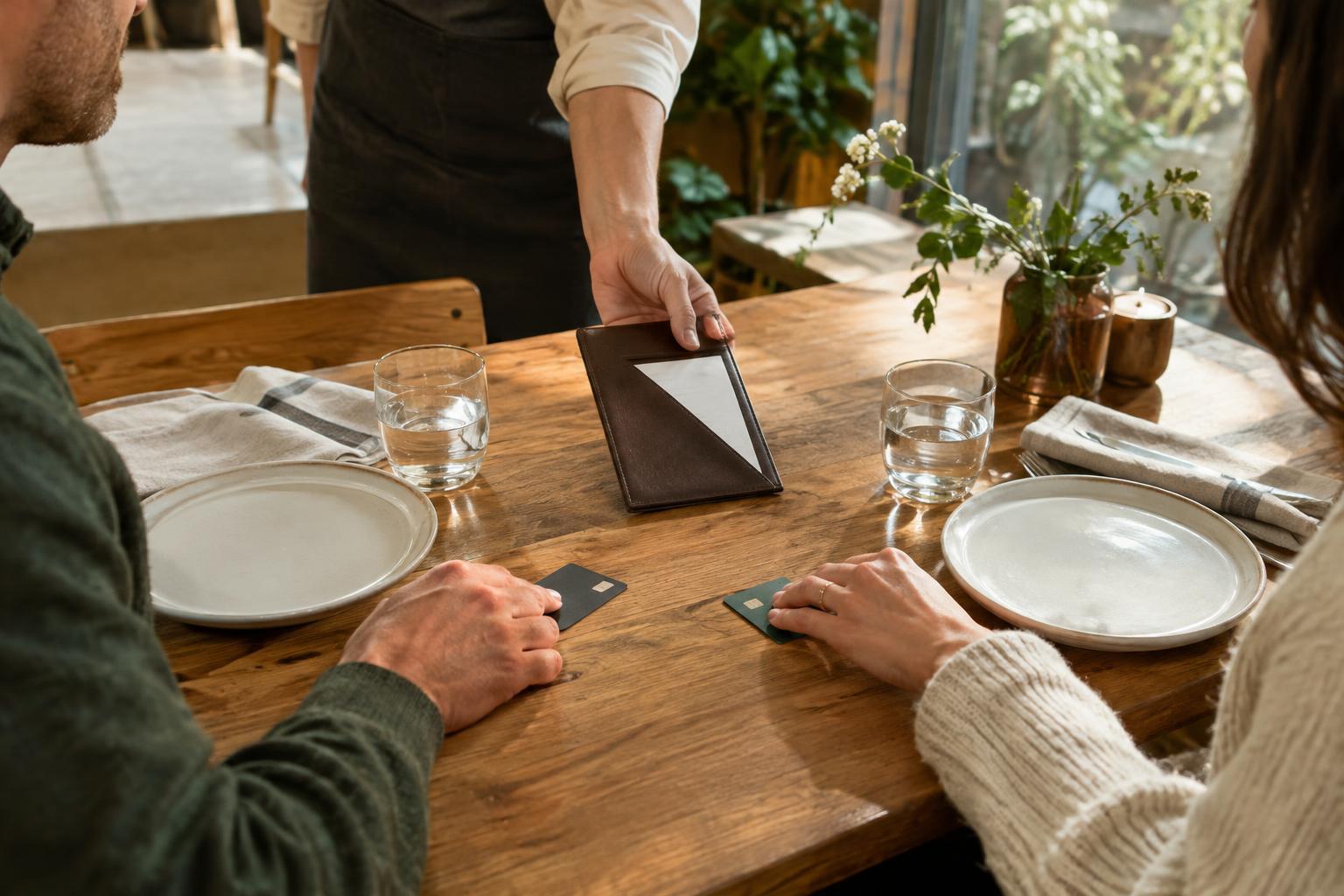
Payment devices can make checkout faster, but they can also create a moment of pressure if a server stands over a guest selecting a tip. When practical, give guests space to review the screen and complete the transaction. If the device must stay with the server, a brief explanation of its steps and a respectful pause can help. For cash payments, confirm whether change is needed rather than assuming the difference is a tip.
After payment, return cards and receipts promptly, thank the table and remain available if something looks wrong. Teams can make this easier by agreeing on simple routines: when to ask about splits, how to describe charges, who can correct a check and what to do when a terminal fails. A thoughtful checkout cannot replace a good meal, but it can ensure the last interaction feels as welcoming as the first.