Start with the guest experience, not the thermostat
Heating, ventilation and air conditioning work is easy to frame as a question of setpoints: raise one, lower another and expect energy use to fall. In a hotel, that approach can create complaints if it ignores what guests actually feel. A room may meet its temperature target yet still seem stuffy, humid, drafty or slow to cool after check-in. The goal is therefore to avoid conditioning empty space unnecessarily while making occupied spaces comfortable and predictable.
Begin by looking for recurring problems rather than applying the same change everywhere. Front desk notes, maintenance requests and room inspections can reveal floors that run warm, meeting rooms that become stuffy and guest rooms where controls are confusing. Ask staff to record the room or area, time and nature of each complaint. Those details help distinguish a control setting that needs adjustment from a faulty sensor, blocked vent or equipment issue.
Keep equipment working as intended
Basic maintenance is often the least disruptive place to start. Dirty filters, obstructed air paths, poorly fitting doors and neglected equipment can make it harder to deliver comfortable conditions. Establish a routine for checking filters, vents, accessible seals and condensate drainage, with tasks appropriate to the equipment and the property. A guest room inspection can also confirm that furniture or curtains are not blocking airflow.
Avoid treating every hot or cold room as a reason to change the building-wide settings. A room that never reaches its target may have a local fault, while a cluster of similar complaints may point to a wider problem. Document what was checked and whether the fix lasted. When work involves ventilation rates, refrigerants, electrical systems or major controls, use qualified personnel and follow applicable requirements rather than making an energy-saving change that could undermine safety or indoor air quality.
Use occupancy controls with a gentle touch
Guest rooms do not need the same heating or cooling response at every hour. Where systems allow it, an unoccupied room can move to a wider temperature range, then return toward a comfortable setting before or soon after a guest arrives. The useful range depends on the building, climate, equipment and how quickly a room can recover. Extreme setbacks may save less than expected if they leave a guest waiting in an uncomfortable room.
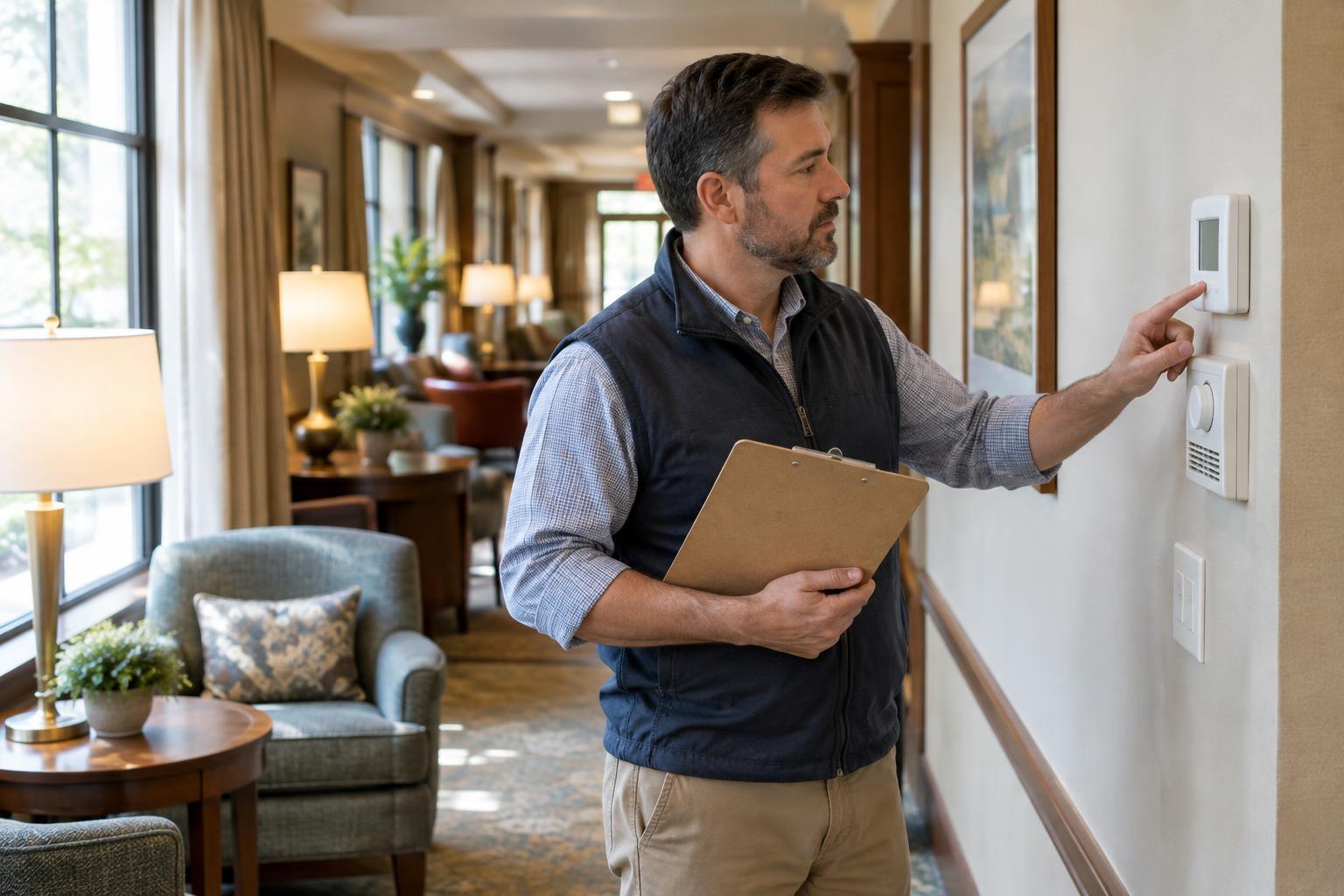
Controls should be easy to understand and should not fight the person using the room. Check that the thermostat responds when a guest makes a reasonable adjustment, and make it clear whom to contact if it does not. Housekeeping and front desk teams also need to know how the system behaves: a room that feels different while vacant may be operating as designed, but it must be ready for occupancy. Test any new schedule in a limited set of rooms before applying it across the property.
Match conditioning to each space
A hotel lobby, guest corridor, restaurant and meeting room have different patterns of use. Conditioning them as though they were all full throughout the day can waste energy; cutting service too far can make the arrival or dining experience unpleasant. Review operating hours, typical occupancy and areas with persistent complaints. Adjustable schedules or zoning may help align heating and cooling with use, provided ventilation and humidity needs remain part of the plan.
Pay particular attention to spaces that change quickly. A meeting room may be comfortable when empty but warm when people arrive. A restaurant may also experience changing heat loads during service. Staff need a simple way to flag these shifts, and operators should allow for the time a system takes to respond. Where doors are frequently left open or conditioned air escapes into unused areas, changes to routines or door hardware may help, as long as accessibility and service are preserved.
Measure savings alongside comfort
An energy bill alone cannot show whether an HVAC change succeeded. Compare energy use over meaningful periods while noting occupancy, weather and any changes to operating hours. Alongside that comparison, track comfort complaints, repeat calls, room moves related to temperature and maintenance issues. These measures will not explain every variation, but together they offer a better picture than energy use in isolation.
Make changes one at a time where practical, and set a review date so an unpopular setting does not quietly become permanent. Ask front desk and housekeeping teams what they notice; they often hear about discomfort before it appears in a formal report. The strongest approach is iterative: maintain the equipment, test a modest adjustment, listen to guests and staff, then keep or revise it. Less wasted heating and cooling should feel like a well-run stay, not a compromise guests are asked to tolerate.