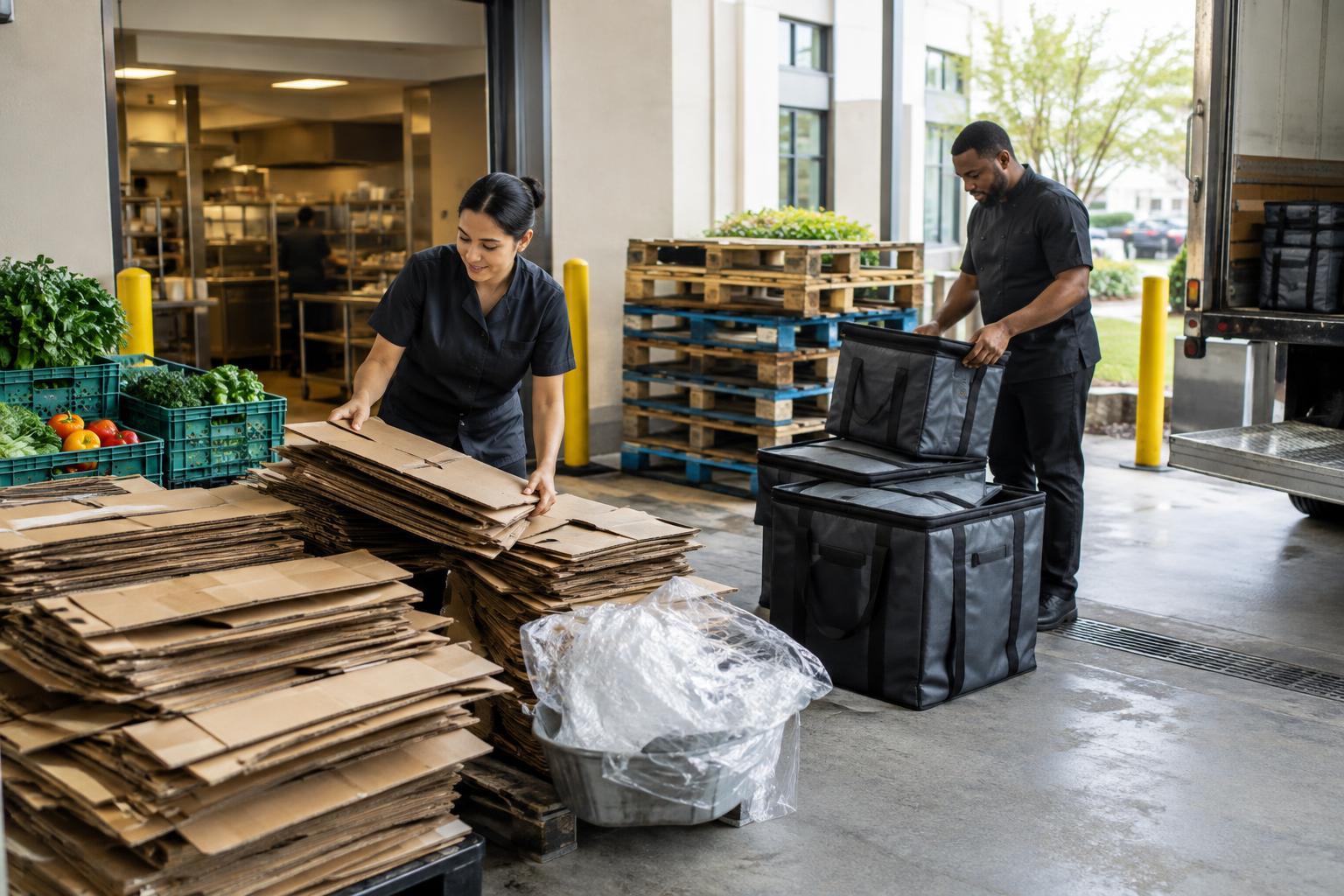
Start where deliveries arrive
Packaging waste can be easy to overlook when it never reaches a guest. A hotel receiving dock or restaurant back door may collect cardboard, plastic wrap, foam, pallets and protective inserts from routine orders. Before asking suppliers to change, spend a short period noting what arrives, which materials fill bins fastest and which deliveries cause handling problems. A simple tally by supplier and material is often more useful than a single total waste figure: it shows where a manageable change might begin.
Ask receiving staff what they notice as they unpack. Are small items shipped in oversized boxes? Are products wrapped individually even when they travel together? Do insulated containers have a return route? Include storage and disposal in the review. A package that appears tidy at delivery may take substantial staff time to break down, separate or carry to a distant collection point. The aim is to understand the whole task, not merely the volume visible in a bin.
Make specific requests of suppliers
A general request for “less packaging” leaves suppliers guessing. Instead, ask whether regularly ordered items can arrive in appropriately sized cartons, whether protective material can be reduced without increasing damage, or whether several compatible items can be consolidated into one delivery. For repeated orders, reusable crates, tubs or pallets may be worth discussing if the supplier can collect and clean them reliably. Trial one change at a time so the team can spot problems before extending it to other products.
Packaging protects goods, and eliminating it is not always the best choice. Food safety, temperature control, fragile equipment and product quality can justify particular materials. Ask suppliers what each layer does before requesting its removal. If a proposed change leads to damaged deliveries, spoiled ingredients or extra trips, it may shift rather than reduce the burden. Give staff a straightforward way to record these outcomes, then review them with the supplier instead of judging the trial by packaging volume alone.
Design a workable return and sorting system
Reusable packaging needs an owner and a place to wait. Agree with each participating supplier which containers are returnable, when they will be collected and how missing or damaged items will be handled. Mark a storage area so empty crates do not block receiving, exits or cleaning access. A brief handoff between receiving and purchasing staff can prevent containers from being discarded because nobody knows they belong to a return scheme.
For packaging that cannot be returned, make sorting fit the actual workflow. Put clearly labeled collection points near unpacking areas and confirm what the local collection service accepts; a material labeled recyclable is not necessarily collected in every location. Keep instructions short enough to follow during a busy delivery window. If staff must remove tape, flatten cartons or separate liners, allow time and space for those tasks. Otherwise, even a well-intended system may be bypassed when service gets busy.
Measure progress without creating extra work
Choose a few measures that staff can maintain, such as the number of overflowing bins after deliveries, the quantity of returned crates or the frequency of damaged shipments. Keep order volume in mind when comparing periods: more deliveries can produce more packaging even if each order is packed more efficiently. Notes from the people who unpack goods can explain changes that a count cannot, including seasonal products, new suppliers or an altered delivery schedule.
Review results with purchasing, receiving, kitchen or housekeeping teams, depending on the goods involved. If a trial saves disposal space but adds awkward storage or repeated follow-up calls, adjust it. Share successful requests with colleagues who place similar orders so improvements are not limited to one department. The most durable approach is usually a modest routine: notice avoidable packaging, ask a precise question, test a change and keep it only when it works for the supplier, staff and operation.