Start with the linen journey
A hotel’s laundry footprint begins before a washing machine starts. Housekeeping decides which items need changing, staff collect and sort them, and a laundry team washes, dries, finishes and returns them. Each step can affect water or energy use. A towel washed unnecessarily adds to the workload; a damp sheet left too long may need washing again. Looking at the whole journey helps a hotel find avoidable work without treating cleanliness as optional.
Begin with a simple baseline: record the number of loads, machine capacity, wash programs, rewash causes and approximate linen volume over a representative period. If equipment provides water and energy readings, track those too. Compare similar periods alongside occupancy and guest counts rather than judging a busy week against a quiet one. For outsourced laundry, ask what service information the provider can share, including how linen is transported and processed. The goal is to identify patterns, not to claim a precise saving from every small change.
Wash the right items in the right loads
Clear sorting rules prevent both unnecessary washing and poor results. Separate heavily soiled items from lightly used linen, and follow fabric-care instructions and the property’s hygiene procedures. Train staff to identify stains early and use an appropriate treatment before they set. If a persistent mark leads to repeated full washes, a targeted response may save resources and extend the item’s useful life.
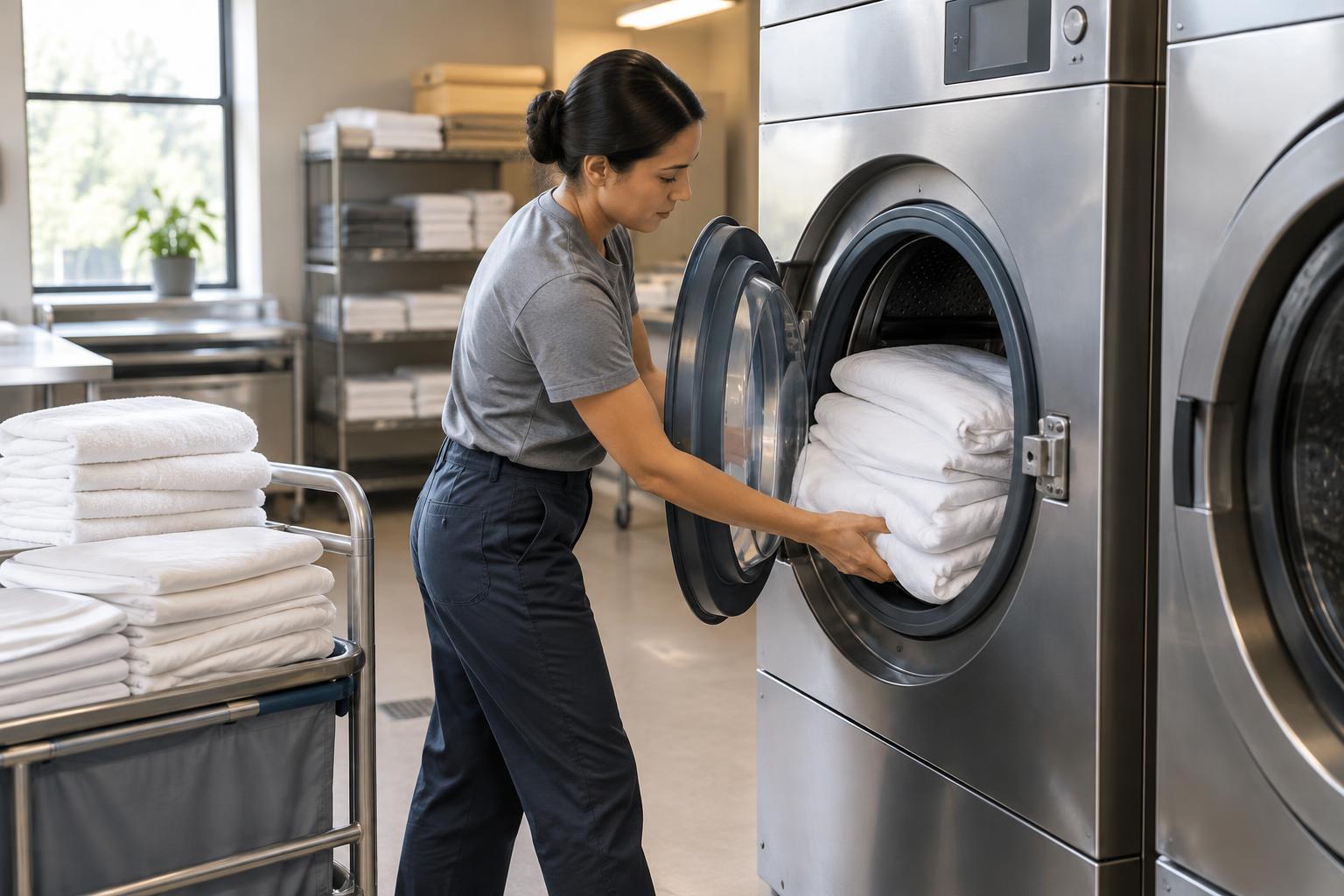
Run suitably full loads without overloading machines. Underfilled drums can waste water and energy per item, while overfilled drums may leave linen poorly cleaned or rinsed, creating rewashes. Review program settings with the equipment and chemical suppliers to find cycles that suit the fabrics and soil levels. Lower temperatures or shorter cycles may help in some cases, but they should only be used where cleaning results, hygiene requirements and manufacturer guidance allow. Staff need a straightforward way to flag loads that do not meet the expected standard.
Pay attention to drying and finishing
Water savings are only part of the picture. Dryers, heated finishing equipment and the systems that supply hot water can account for substantial energy use. Extracting more water during a suitable spin cycle can shorten drying time, provided the fabric and equipment can tolerate it. Clean lint filters, maintain airflow and check that sensors and timers work as intended. Overdrying consumes energy and can be hard on textiles; stopping too early risks damp linen that must be processed again.
Schedule loads so washed items move promptly to drying and finishing rather than sitting in carts. When replacing equipment, consider capacity, service support and expected operating needs alongside purchase price. A machine with useful controls will deliver little benefit if its programs are confusing or staff cannot maintain it. Any water-reuse or heat-recovery system also needs a maintenance plan and checks that it is suitable for the site’s water quality, equipment and hygiene requirements.
Make guest reuse a genuine choice
A towel or sheet reuse program can reduce laundry volume when guests understand and choose it. Explain the options in plain language at a point where guests will see them, such as the bathroom or a digital guest guide. Tell guests how to request fresh items, and make sure housekeeping follows the stated choice. An unclear sign or an inconsistent response can undermine trust even if the program reduces loads.
Set reasonable expectations for different stays. Some guests will want fresh linen because of a spill, accessibility need or personal preference. Others may be happy to reuse a towel that has a suitable place to dry. Room design can support that choice: adequate hooks or rails make reuse more practical than a message alone. Sustainability works best when it fits the guest experience rather than asking guests to solve an operational problem.
Keep improvements measurable and workable
Choose a few measures staff can influence, such as loads per occupied room, rewashes, rejected linen and equipment downtime. Review them with the people who collect, sort and process the laundry; they often know why a procedure fails in practice. A rise in rewashes after a program change, for example, is a reason to investigate rather than celebrate a shorter wash cycle.
Make one change at a time where possible, document the result and keep the cleanliness standard visible. Small, reliable improvements are more useful than an ambitious policy that staff cannot follow during a full-house turnover. By pairing guest choice with careful sorting, well-run machines and routine maintenance, a hotel can reduce avoidable laundry work while continuing to provide the fresh, comfortable linen guests expect.