Why a leak is more than a maintenance issue
Hotels and restaurants rely on refrigerants in guest-room cooling, central air-conditioning, walk-in coolers, freezers, display cases and ice machines. These systems are designed to keep refrigerant contained. When it escapes, the equipment may lose cooling capacity and use more energy while struggling to meet its set temperature. A leak can also interrupt a guest’s stay or put temperature-sensitive food at risk.
The environmental impact depends on the refrigerant. Some refrigerants have a high global warming potential, meaning a release can contribute substantially to climate change. A system with a lower-impact refrigerant is not automatically leak-proof, however. Keeping any system tight, maintained and operating efficiently remains important. Prevention protects the equipment investment as well as the experience it supports.
Know the signs without trying to diagnose the system yourself
A refrigerator that runs unusually long, a walk-in that struggles to hold its normal temperature or a guest room that no longer cools as expected may need attention. Ice forming where it normally does not, a new hissing sound or visible oily residue near a connection can also warrant a service call. None of these signs proves there is a refrigerant leak; blocked airflow, dirty components and other faults can produce similar symptoms.
Frontline teams can help by reporting changes early and accurately. Record the equipment location, the time the issue appeared, the displayed temperature if there is one, and any unusual sound or visible condition. Continue the property’s established food-temperature and guest-room procedures rather than assuming the equipment is safe because it still feels cool. Do not loosen fittings, cut lines or attempt to top up refrigerant. Leak detection and repair belong with qualified technicians.
Build prevention into routine operations
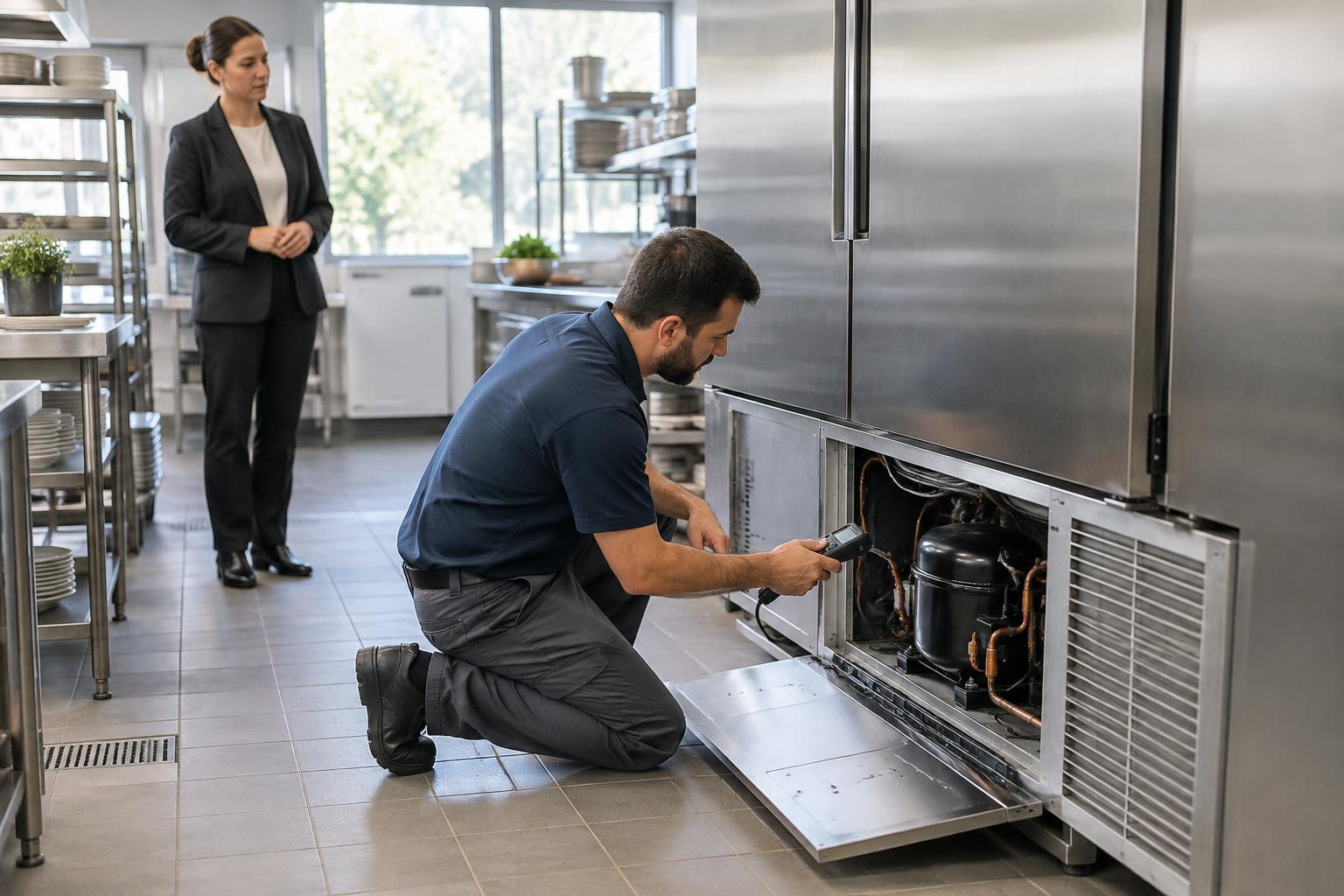
A preventive maintenance plan should identify every refrigerant-containing system, including equipment tucked away in kitchens, back-of-house areas and plant rooms. Keep a record of its location, service history and recurring problems. Schedule inspections with an appropriately qualified service provider, following the equipment manufacturer’s guidance and applicable local requirements. Repeated refrigerant additions should prompt an investigation, not become a routine way to keep a unit running.
Daily care matters too. Keep vents and coils accessible, avoid blocking airflow with stored supplies, and use equipment as intended. Staff should know whom to contact when a cooler is warming up or a room unit behaves differently. Managers can make reporting easier by using a simple maintenance log that distinguishes an urgent cooling failure from a non-urgent observation. Clear records help technicians trace intermittent faults and help teams plan repairs before a small problem causes a shutdown.
Respond promptly and protect people first
If a leak is suspected, notify the designated manager and arrange professional assessment. Keep people away from the affected equipment if there is an unusual smell, a loud release or another immediate concern, and follow the site’s emergency procedures. Refrigerants differ in their properties; some can displace oxygen in confined spaces, while others have flammability considerations. Staff should not rely on smell alone to judge whether an area is safe.
Protect food and service continuity at the same time. Check temperatures using the property’s normal procedures, move stock to suitable working equipment when appropriate, and document decisions about affected items. For guest areas, provide a practical alternative rather than waiting for a cooling complaint to escalate. A technician can identify the fault, repair it, test the system and handle refrigerant in accordance with local rules. Requirements for certification, leak checks, recovery and disposal vary by location.
Plan replacements with leaks in mind
A repair may be the right choice for a sound system with an isolated fault. If an older unit has repeated leaks or frequent breakdowns, compare the cost and disruption of continued repairs with a suitable replacement. Ask suppliers about energy efficiency, refrigerant type, serviceability and the availability of local technical support. The lowest-impact option depends on the full situation, including whether the equipment can be maintained reliably.
When equipment is retired, arrange for a qualified provider to recover its refrigerant and dispose of or recycle the unit through appropriate channels. Treating leak prevention as part of purchasing, maintenance and staff training makes it easier to sustain. For guests, the result is less visible but valuable: comfortable rooms, dependable food service and fewer avoidable disruptions.