Start with the guest experience
Small bottles of shampoo, conditioner and body wash are familiar hotel details, but they also create packaging and restocking work. Refillable systems offer an alternative: a larger container stays in the room and is replenished or replaced as needed. The change should not feel like a missing amenity. Guests still need products that are easy to find, pleasant to use and reliably available.
Before selecting dispensers, map the moments when a guest uses each product. Can someone reach the soap from the shower without stretching? Is the label readable when the bottle is wet? Can a guest tell shampoo from conditioner without relying only on color? These practical questions matter as much as the appearance of the container. A refillable system works best when it feels like a considered part of the room, not an afterthought.
Choose a system suited to the property
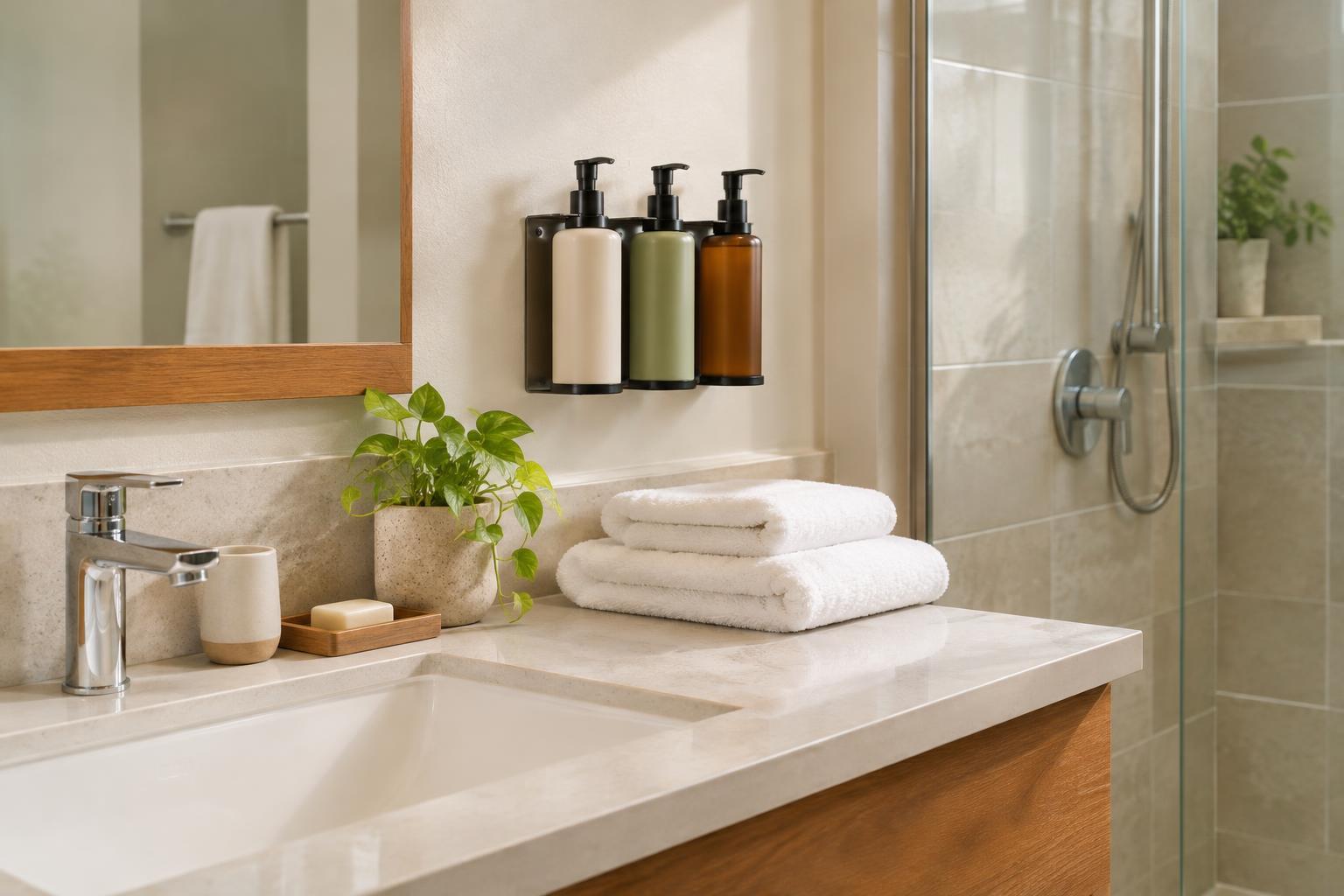
Wall-mounted dispensers can free up counter space and help housekeeping spot low product levels. Freestanding refillable bottles may suit rooms where permanent fixtures would be difficult to install. Both approaches have trade-offs. Fixtures need secure mounting and a plan for replacement; loose bottles need a stable place to sit and may require closer checks for damage or removal.
Choose containers that staff can open and close consistently, but that discourage casual tampering. Labels should identify the product plainly, remain legible after repeated cleaning and match the contents every time. Consider guests with limited grip strength or vision when testing pumps, placement and text size. If a dispenser is awkward to operate, its attractive design will not make it useful.
Product selection deserves the same care. A pleasant fragrance may suit some guests but bother others, so a lightly scented or fragrance-free option can be worth considering. Check that the product and dispenser are compatible, including whether the pump handles the product’s thickness. Keep a small supply of alternatives available where feasible for guests with preferences or accessibility needs.
Make hygiene a repeatable procedure
The central operational question is not simply how to refill a bottle, but how to do so cleanly and consistently. Establish written steps for checking levels, handling bulk product, cleaning containers and replacing worn parts. Staff should know what to do if a pump is clogged, a label is damaged or the contents are uncertain. A questionable container should be taken out of service rather than topped up.
Avoid informal practices such as combining leftover product from different containers or adding new product to a bottle whose condition cannot be verified. Use clean tools and follow the product supplier’s handling guidance, alongside any applicable local requirements. Some properties may find that exchanging sealed refillable cartridges is easier to manage than pouring from bulk stock; others may have the space and training to run a controlled bulk-refill process.
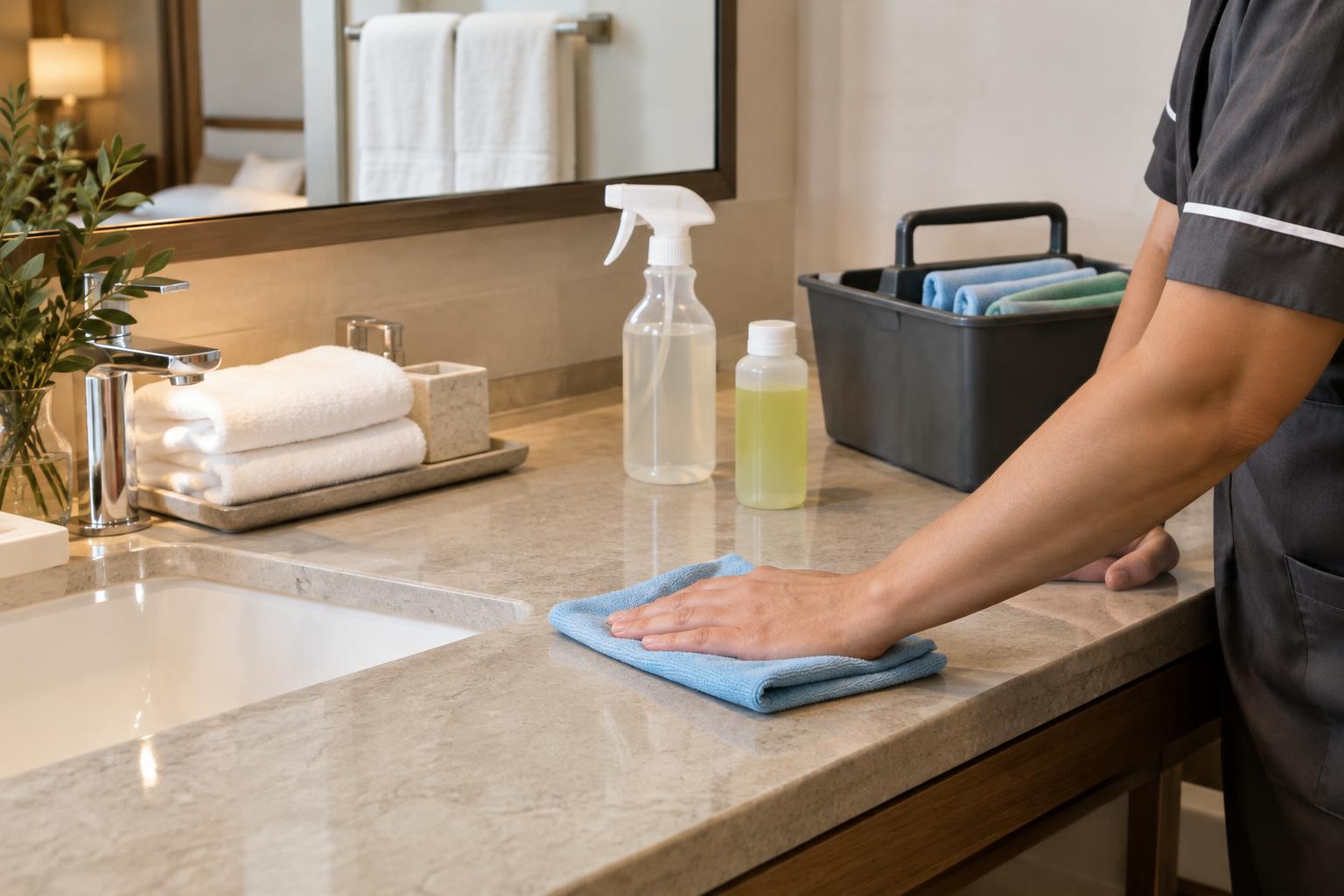
Build checks into the normal room-inspection routine. A quick pump test can reveal an empty or blocked dispenser before a guest does. Housekeeping also needs a clear way to report recurring problems, so a faulty fixture does not remain in service across multiple stays.
Look at the full operating picture
Refillables can reduce the number of small packages used, but their overall value depends on how long containers last, how products arrive and how much work the system adds. Compare packaging, delivery format, storage needs, breakage and staff time rather than judging the switch by bottle count alone. If a dispenser frequently leaks or is replaced often, its expected benefits may shrink.
Pilot the system in a manageable group of rooms before a property-wide change. Ask housekeeping what slows them down, and check whether guests can identify and use the products without explanation. Track straightforward observations such as product outages, pump failures and replacement frequency. The goal is to find a setup that remains practical on a busy turnover day, not just one that looks good when newly installed.
Explain the change without overpromising
Guests do not need a long sustainability message in the bathroom. Clear product labels and a brief note, if needed, can explain that the amenities are refillable. Avoid broad claims that the switch makes a stay environmentally harmless. A more credible approach is to describe the specific change: replacing individual bottles with a maintained refillable system.
Finally, make it easy for guests to flag an empty dispenser or request an alternative. Their feedback can uncover problems that a room inspection misses. With suitable products, dependable upkeep and thoughtful placement, refillable amenities can support a welcoming stay while making the use of disposable packaging more deliberate.