Let the guests set the pace
A table reset is more than a cleaning task. It is the transition between one guest experience and the next, and both parties can feel the effects of how it is handled. Clearing too early may suggest that diners should leave; waiting until the last moment can leave arriving guests standing while the team scrambles. The aim is to prepare steadily without treating a table as vacant before it is.
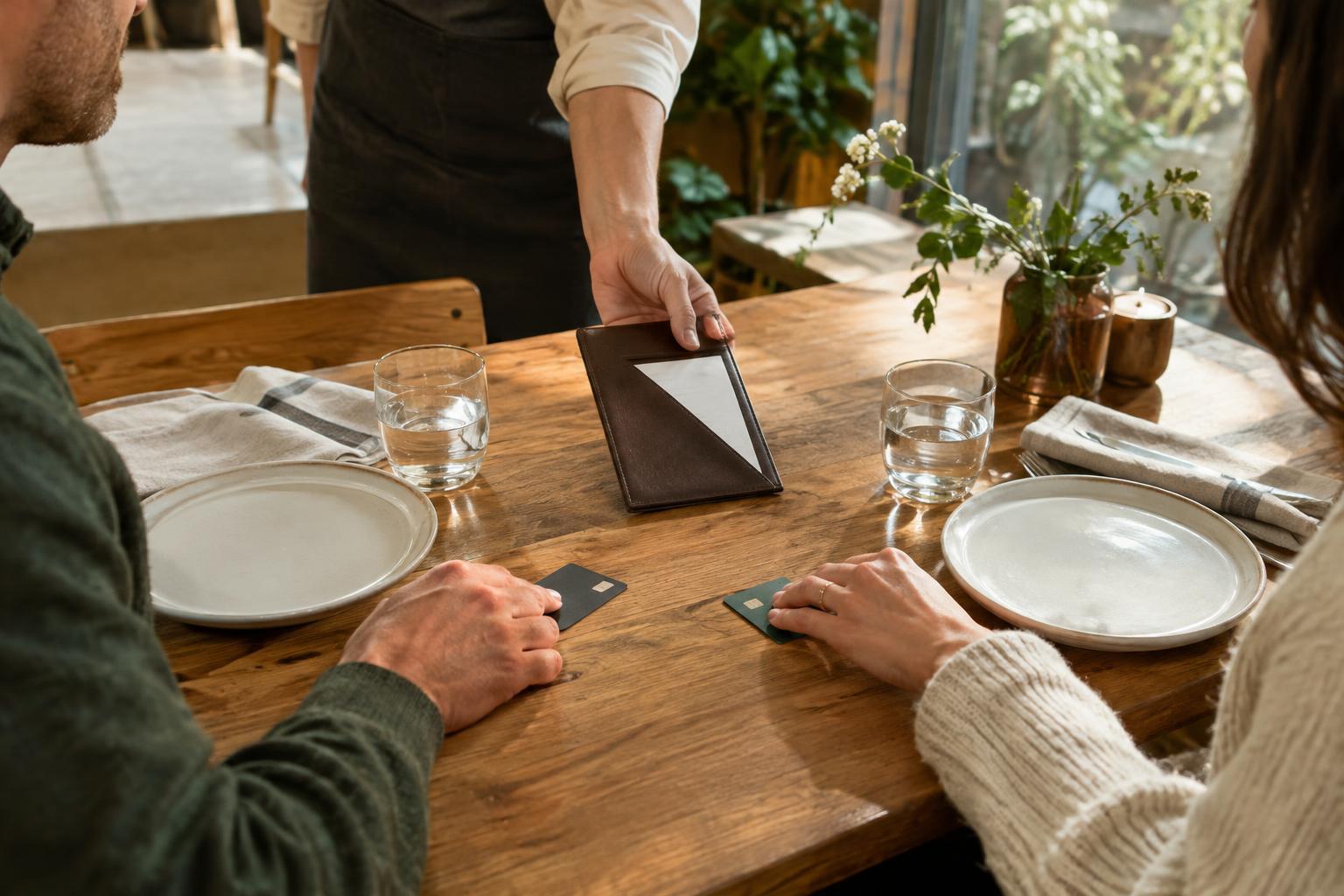
Watch for clear cues rather than relying on how long guests have been seated. Finished plates may be removed when everyone at the table has finished that course, but a pause in conversation is not a signal to clear drinks or personal items. If there is any doubt, a brief question such as “May I take these?” gives guests control. Once the bill has been paid, continue to offer the same courtesy. Payment does not mean the visit is over.
Make clearing feel like service, not a countdown
Small choices affect how clearing is perceived. Approach from a position where guests can see you, ask before reaching across them and avoid stacking a tall pile of dishes beside someone who is still eating. Remove what is no longer needed in manageable passes, while leaving water glasses and other useful items in place until the party is ready to go. If a guest declines, acknowledge it and return later rather than asking repeatedly.
Staff should also avoid using the next reservation as a reason to hurry diners unless the restaurant has clearly communicated a seating limit in advance. When timing becomes tight, the host and floor team can adjust their plan for incoming guests. A calm explanation about a short wait is usually better than making the current party feel responsible for the schedule.
Give the team a reliable reset sequence
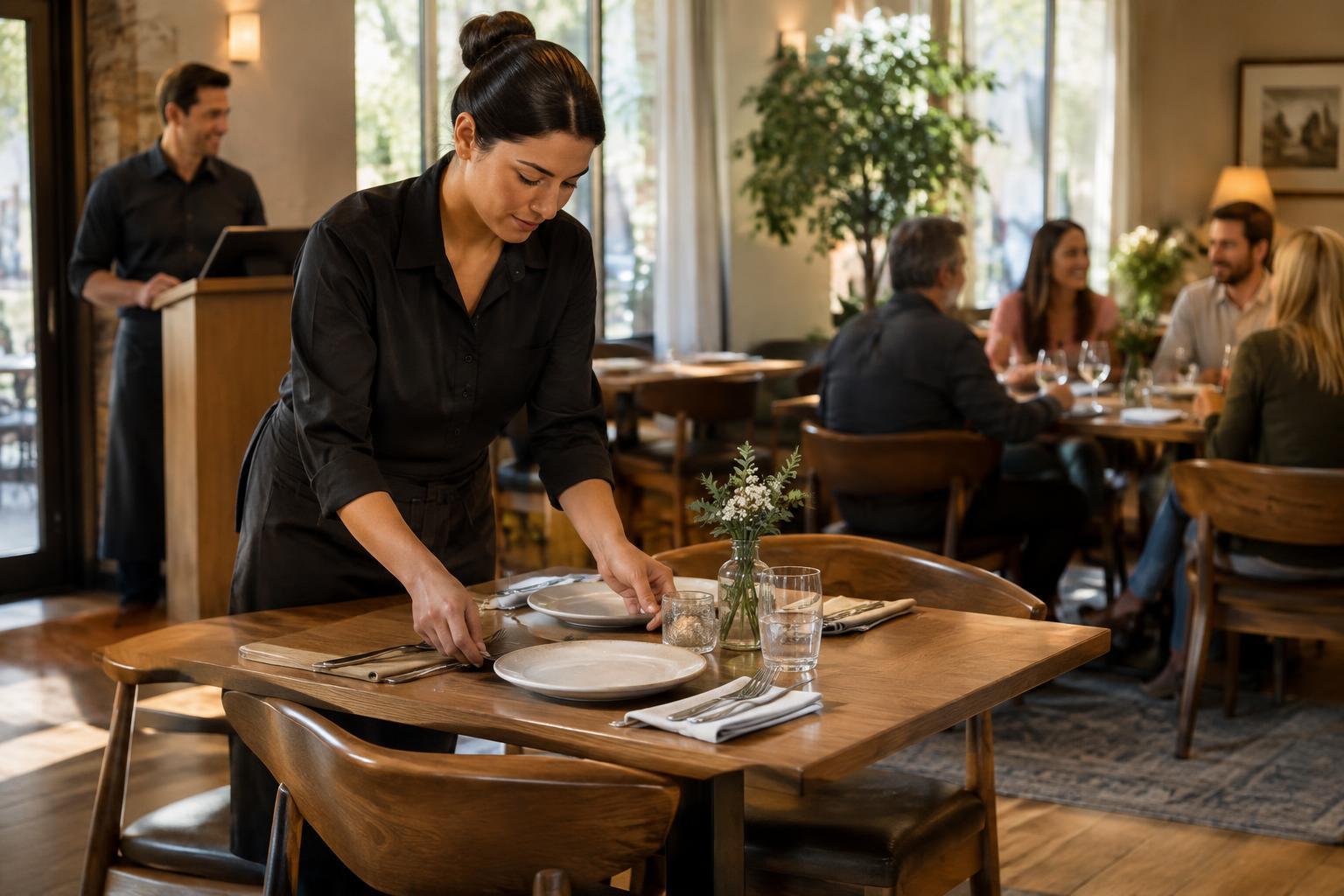
Once the last guest has left, a repeatable sequence helps staff work quickly without skipping details. First, check the chairs, floor and surrounding area for belongings; follow the restaurant’s procedure for anything left behind. Remove used tableware and linens, then clean the table and other guest-contact surfaces using the site’s approved products and procedures. Allow for any required product contact time before drying or resetting. Finish by checking chairs, menus, condiments and the floor, then lay the table for the next party.
Keeping clean items separate from used dishes prevents a hurried reset from becoming a messy one. It also helps to keep supplies close enough for staff to work efficiently without storing clutter in guest view. A final glance from the position of a seated diner can reveal crumbs, marks or an awkward chair that are easy to miss while standing.
Coordinate the handoff with the host
A table should be marked ready only when it is genuinely ready for guests, not simply when the previous party has stood up. Agree on a simple signal between servers, bussers and hosts so no one has to guess whether cleaning is complete. In a small restaurant, that may be a spoken confirmation; in a larger operation, it may be a status change in the seating system. Whatever the method, one clear handoff reduces the chance of guests being led to a half-set table.
During a busy period, managers can help by assigning someone to monitor resets while other staff attend to departing and arriving guests. That role need not mean rushing the work. It means noticing which tables need attention, directing help where it will matter and telling the host when a realistic seating delay is developing.
Protect the welcome at both ends
Departing diners should have room to gather coats, check for belongings and say goodbye without staff moving in around them. Arriving diners, meanwhile, benefit from an honest welcome. If their table needs another few minutes, offer a comfortable place to wait where possible and update them rather than leaving them to watch a frantic reset.
Efficiency comes from preparation and coordination, not from speeding up guests. When the team clears with permission, resets in a consistent order and communicates when a table is truly ready, the changeover can feel almost invisible. The departing party leaves at its own pace, and the next party arrives at a table that feels prepared for them.