Start with the work behind the guest experience
A welcoming room and a well-served meal depend on systems guests may never see: heating and cooling, laundry, refrigeration, deliveries, cleaning and waste collection. Each uses resources. Sustainable hospitality begins by looking at those routine activities rather than treating sustainability as a separate amenity or a collection of signs asking guests to help.
There is no single impact that ranks first for every property. A hotel with extensive climate control may face different priorities from a small restaurant that buys and prepares large amounts of perishable food. Building age, local weather, menu, occupancy and service style all matter. A useful first step is to map what the business buys, uses and discards, then identify where changes could reduce waste while maintaining comfort, safety and accessibility.
Energy: buildings, equipment and daily habits
For hotels, energy is closely tied to keeping rooms comfortable and shared spaces usable. Heating, cooling, ventilation, lighting, hot water and laundry can all contribute. Restaurants add cooking equipment, refrigeration, dishwashing and ventilation. Equipment that runs when it is not needed may waste energy, but switching it off without regard for food safety, air quality or guest comfort is not a sound solution.
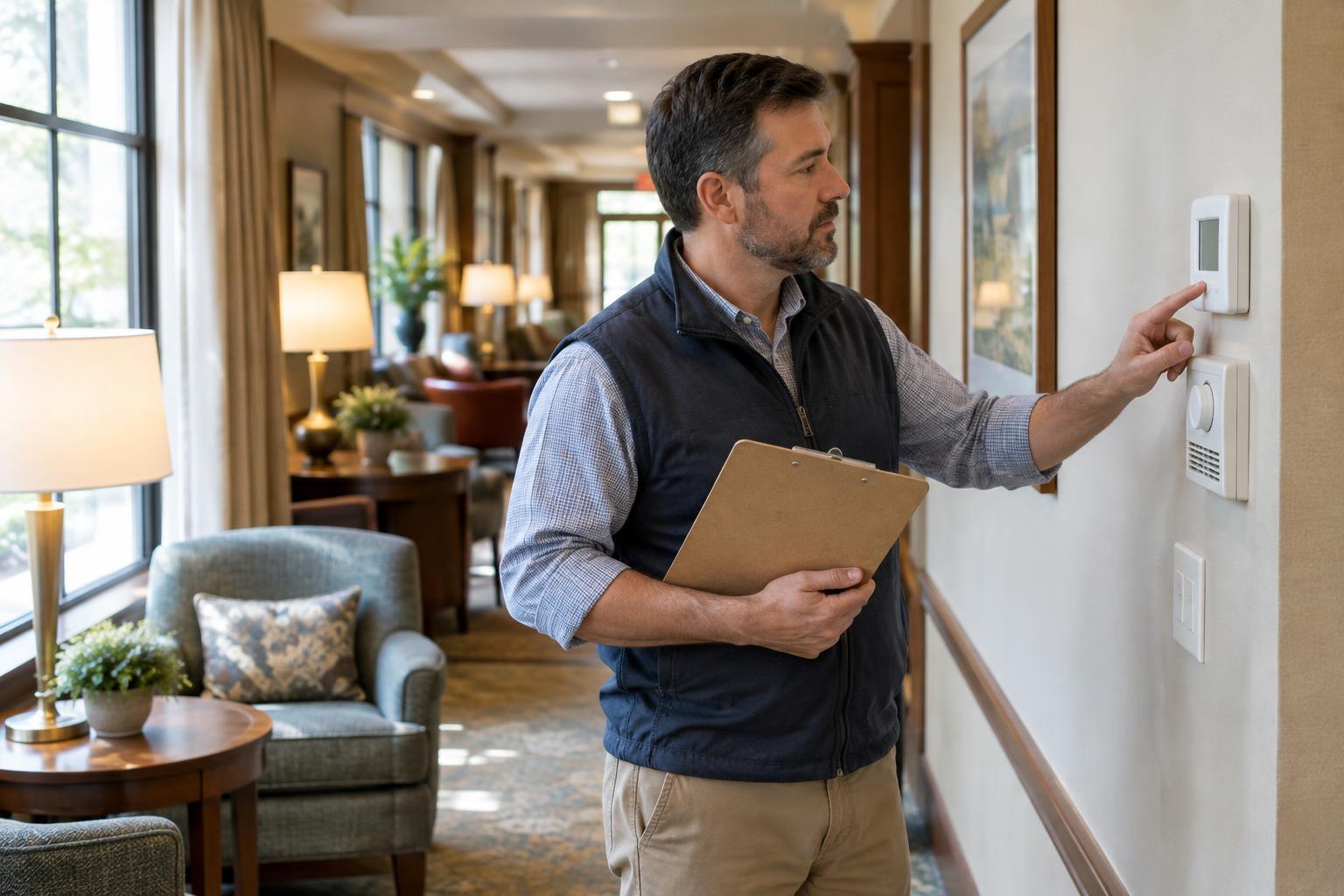
Teams can begin with operating schedules and maintenance. Check that heating and cooling settings match how spaces are used, keep filters and equipment maintained, and review when lights and kitchen appliances need to be on. When equipment reaches the end of its useful life, energy use can be one factor in choosing a replacement. These steps work best when staff can report uncomfortable rooms or poorly performing equipment; a lower bill alone does not show whether service has improved.
Food: purchasing, preparation and leftovers
Food connects restaurants, hotel dining rooms and event operations to impacts beyond their own walls. Growing, processing, packaging and transporting ingredients use resources, while food discarded after purchase carries those earlier impacts with it. Menus and portion sizes therefore deserve as much attention as what happens at the bin. The most useful changes depend on what a kitchen actually serves and throws away.
Start by recording food waste in simple categories, such as preparation scraps, spoiled stock, buffet leftovers and plate returns. These categories point to different responses: better storage, more accurate ordering, smaller batches on a buffet or an optional portion size. Menu planning can also make good use of ingredients across dishes. Any effort to repurpose food must follow appropriate food-safety practices; preventing unnecessary purchases and overproduction is often the clearer first step.
Water and materials: look beyond visible disposables
Water use is easy to notice at a tap, but it also supports showers, laundry, dishwashing, cleaning and sometimes outdoor landscaping. Leaks, inefficient fixtures and procedures that use more water than necessary are practical places to investigate. Hotels can review linen and towel routines while still providing fresh items when guests need them. Restaurants can examine dishwashing processes without compromising sanitation.
Materials create another set of choices. Guest amenities, takeaway containers, cleaning supplies, linens and furnishings all have purchasing and disposal impacts. Replacing every disposable item with a reusable one is not automatically better if that item breaks quickly, is hard to clean or does not suit the service. Consider durability, refill options, packaging, cleaning needs and what local collection systems can actually accept. Buying less of an unnecessary item may be more straightforward than finding a different version of it.
Choose priorities the team can sustain
An improvement plan does not need to start with a major renovation. Pick a few measurable questions: When is energy used in an empty area? Which foods are discarded most often? Where are leaks or repeat purchases occurring? Bills, purchasing records, maintenance logs and brief staff observations can help establish a starting point. Compare results over a sensible period, allowing for changes in occupancy or the number of meals served.
Give each change an owner and explain its purpose to the people doing the work. A new buffet routine will only last if kitchen and service staff can use it during a busy shift. Guest communication should be clear rather than self-congratulatory: explain an opt-in housekeeping option, for example, while making it easy to request service. The goal is not to shift responsibility onto guests, but to make thoughtful operations part of a reliably welcoming experience.