Why service style matters
A menu is only part of a restaurant experience. The way dishes arrive affects how guests settle in, how often staff visit the table and how smoothly the kitchen can work. Plated, family-style and buffet service can each feel welcoming, but they create different expectations. Understanding those differences helps a team choose a format that suits the occasion rather than relying on habit.
Before choosing, consider how long guests are likely to stay, whether they will be seated at fixed tables and how much choice they expect during the meal. The room matters too: serving dishes need table space, while a buffet needs a clear route that does not crowd entrances or staff pathways. No style removes the need for attentive service; it changes where that attention is most useful.
Plated service: a composed meal at each place
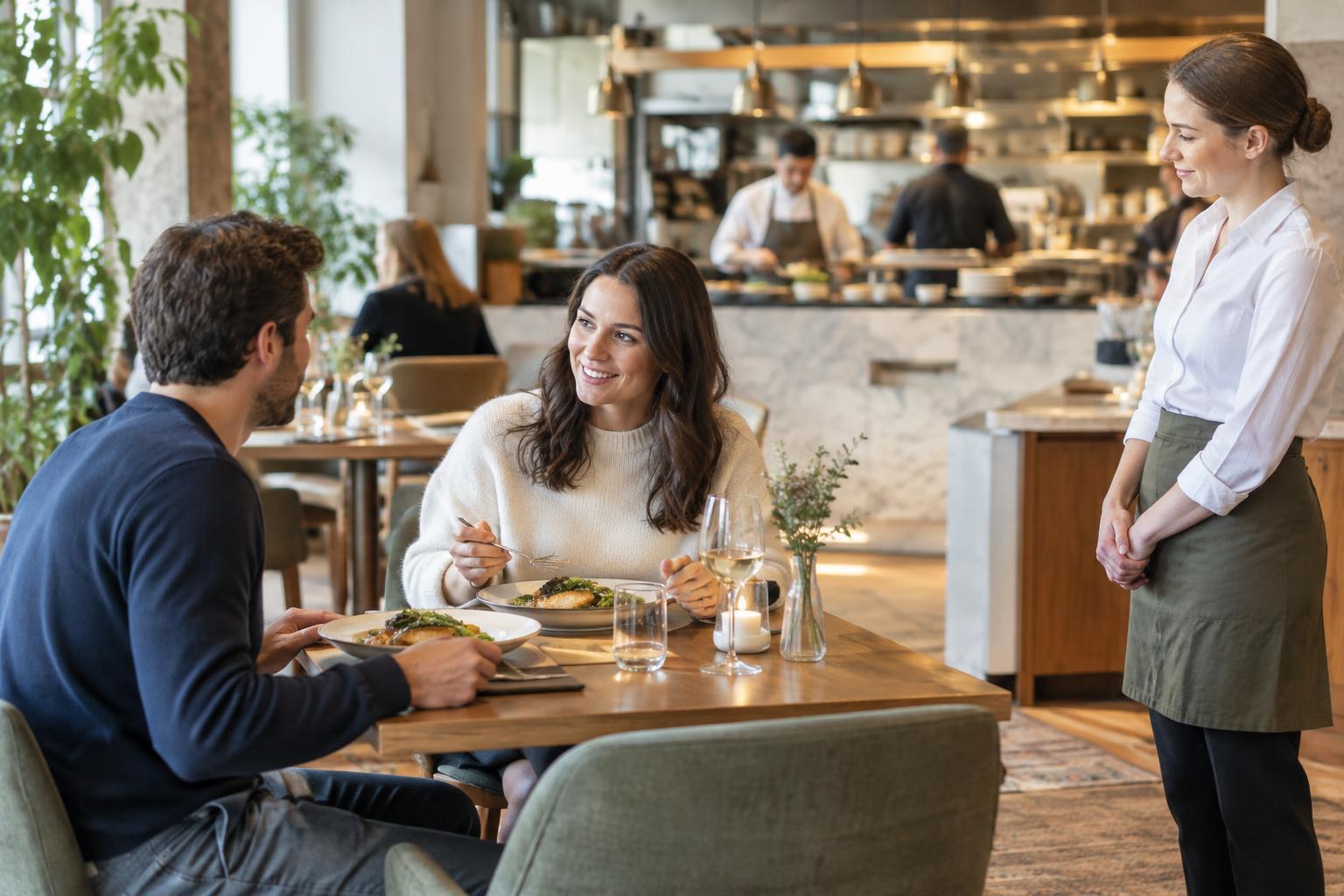
In plated service, the kitchen portions and presents each dish before a server brings it to the guest. This gives the kitchen control over presentation and portioning, and it keeps serving dishes off the table. It can suit a quiet dinner, a tasting menu or an event where hosts want everyone served at roughly the same time.
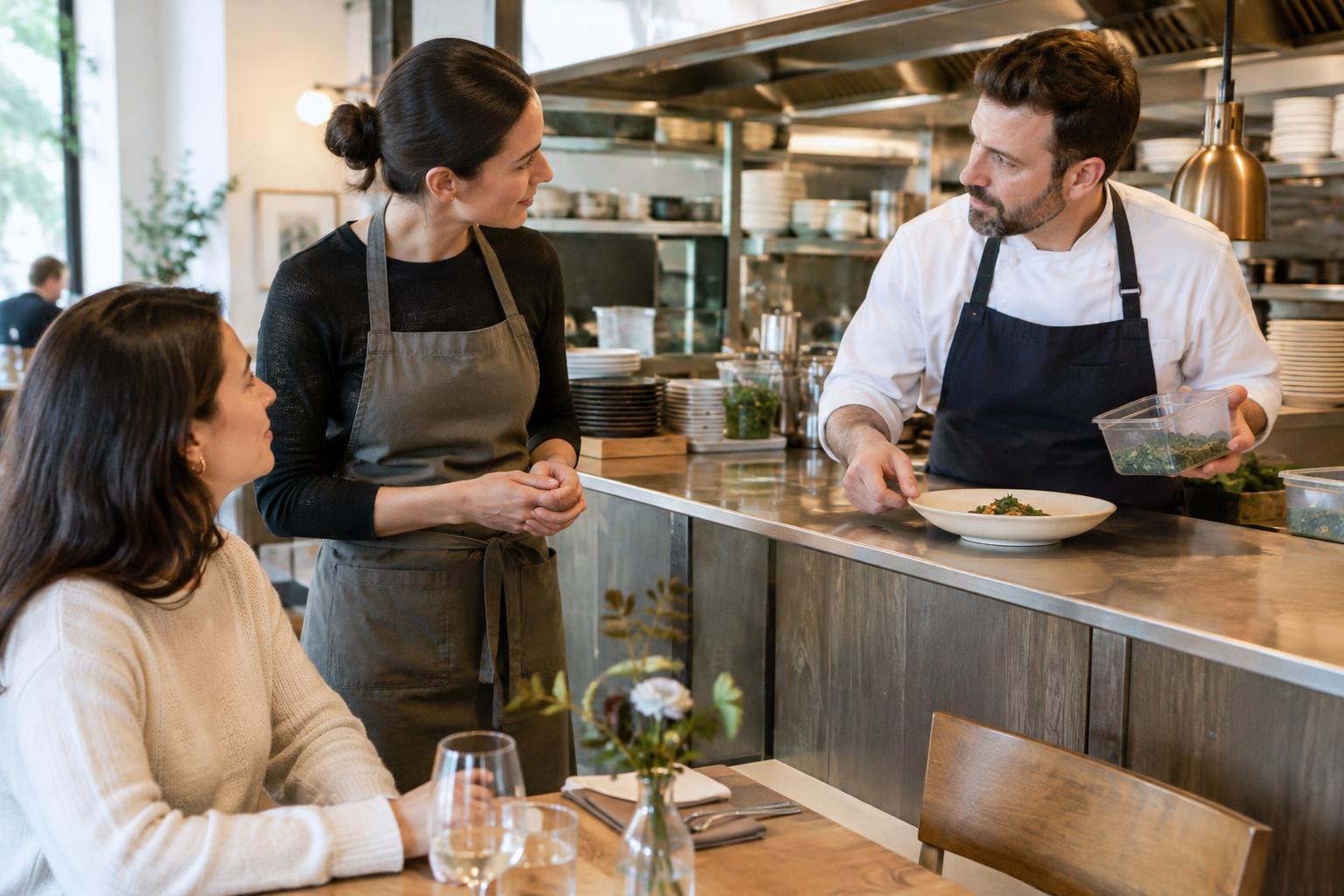
The main challenge is coordination. Staff need to know which guest ordered which dish, and the kitchen must be ready to send courses at a pace the dining room can handle. If many plates are ready at once, a delayed handoff can affect food quality. Clear table identifiers, a reliable way to note dietary requests and brief communication between kitchen and floor teams can make service calmer.
Plated dining also shapes guest choice. Guests usually decide what to eat before a course arrives, rather than sampling several dishes at the table. Servers can still make the experience flexible by explaining options clearly and checking whether guests need anything after the food is served.
Family-style service: sharing as part of the experience
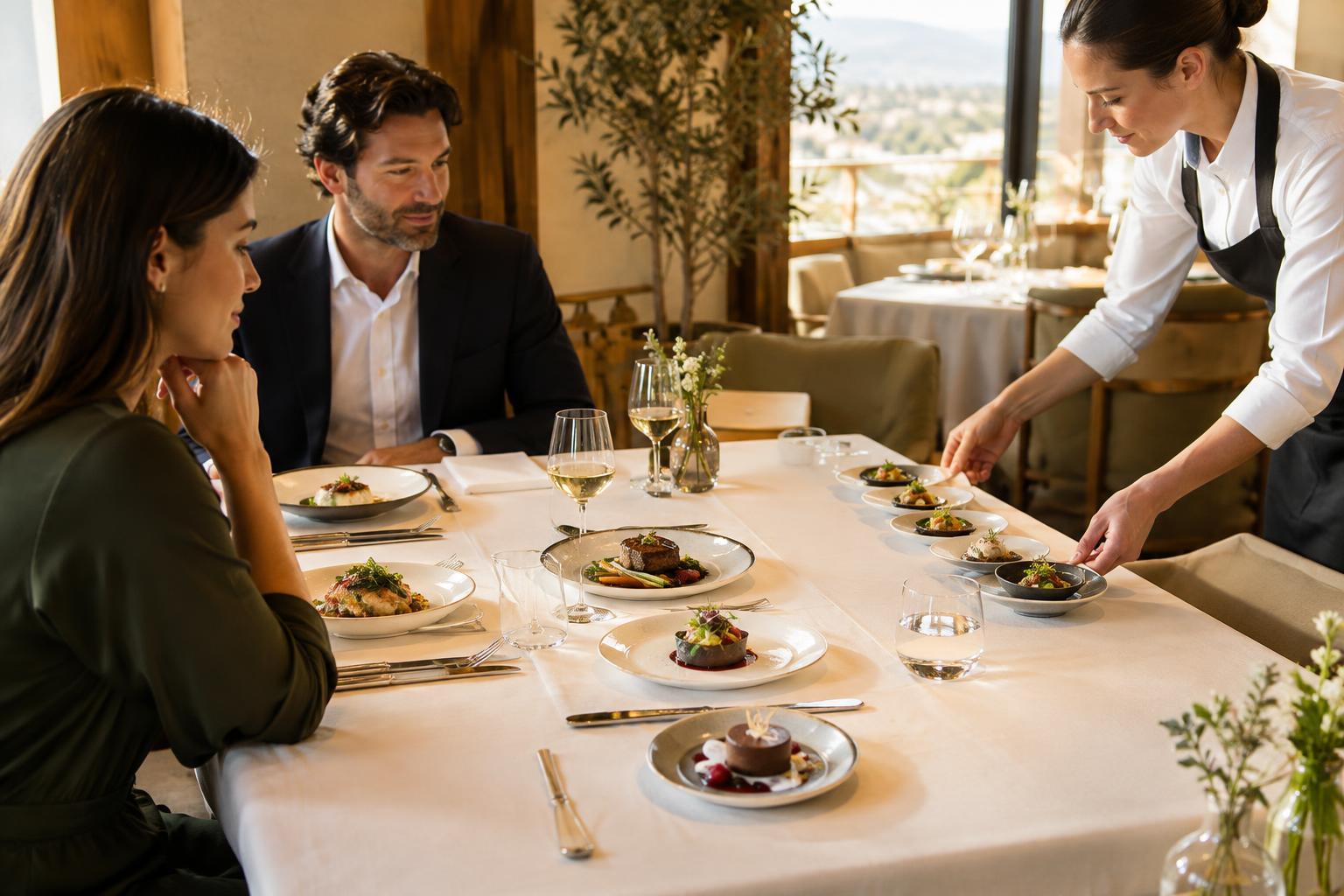
Family-style service brings larger dishes to the table for guests to pass and portion themselves. It encourages conversation and makes the meal feel communal. It can work well for groups that want to try several foods together, especially when the menu is designed around dishes that are easy to share.
The table must be ready for the format. Guests need room for serving platters, utensils, drinks and their own plates. Staff may need to explain what each dish contains, replace empty platters and offer clean serving utensils when needed. Portions should be planned with the group size in mind so that people seated farther from a dish have a fair chance to enjoy it.
Sharing also requires care around dietary needs. A guest may not be comfortable taking food from a communal dish, and serving utensils can move between plates. When possible, teams can identify ingredients clearly and arrange a separate portion for someone who needs one. A thoughtful alternative is more hospitable than assuming every guest wants to share.
Buffet service: choice and movement
At a buffet, guests select food from a shared display, often returning for additional items. This gives diners control over what and how much they take. It can be useful when guests arrive at different times or have varied preferences, provided the space can accommodate people moving between tables and the food station.
A successful buffet is more than a row of dishes. The route should be easy to understand, with plates positioned where guests begin and enough space to step aside while deciding. Labels can help guests identify dishes and ask informed questions. Staff still have an active role: they replenish food, keep the area tidy, respond to requests and follow appropriate food-handling procedures.
Movement can be the format’s drawback. A station placed in a narrow passage may create a queue that interrupts seated guests or servers. For larger groups, separate stations or a staggered invitation to visit the buffet may help, depending on the room. Guests who cannot comfortably carry a plate should have a clear way to ask for assistance.
Choosing a style that fits the occasion
Start with the experience you want guests to have. Plated service supports an orderly course-by-course meal; family-style service puts sharing at the center; a buffet offers visible choice and a less fixed dining rhythm. Then test that preference against the room layout, menu, staffing and guests’ access needs.
The formats do not have to be used alone. A restaurant might serve a plated main course after shared starters, or offer a small buffet alongside table service. Whatever the mix, guests should know what to expect: whether to remain seated, pass dishes or visit a station. When the instructions are simple and staff are prepared to help, the service style becomes a natural part of the welcome.