Treat the handoff as part of the meal
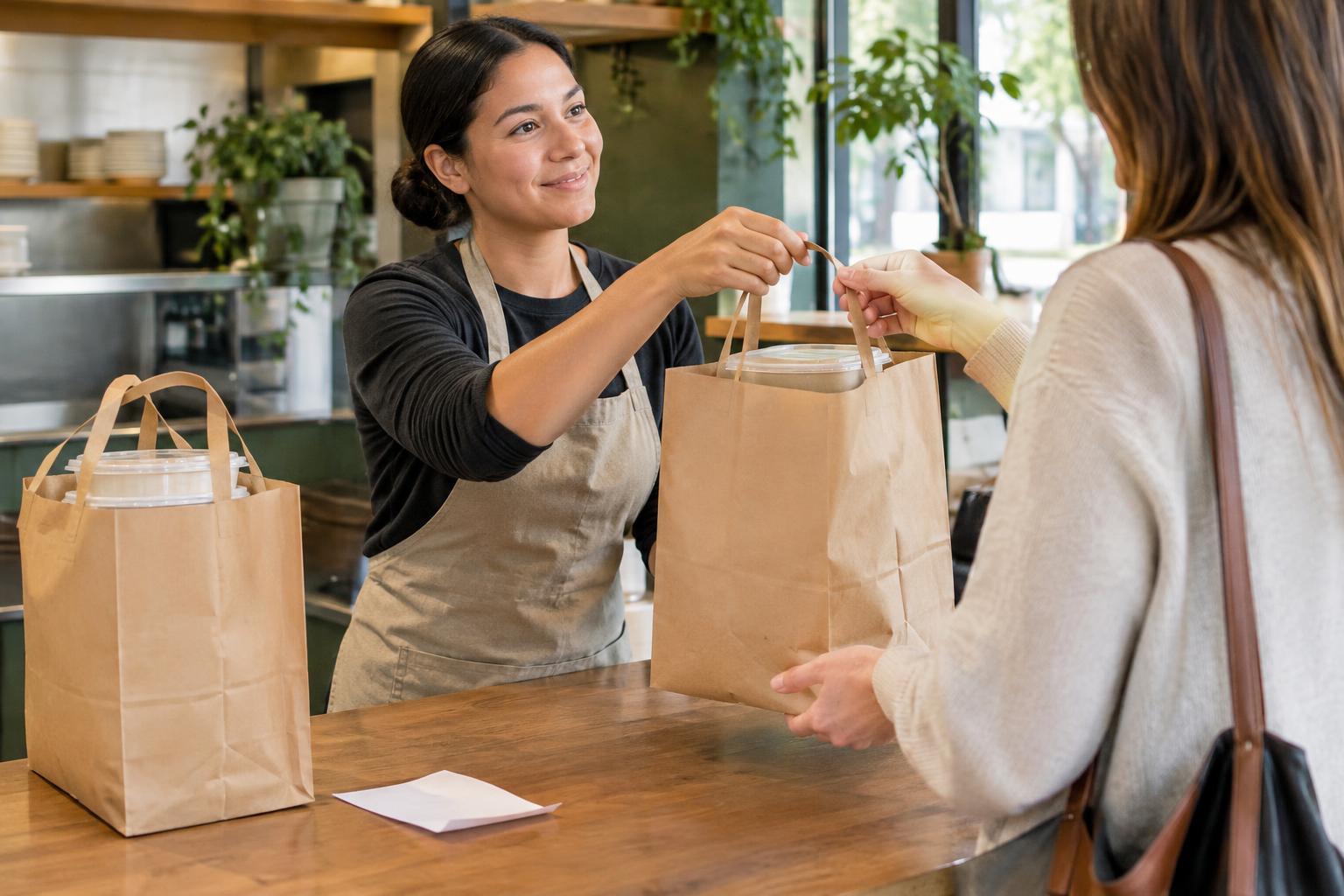
For a takeout guest, the counter or pickup shelf is the last point of contact before the meal is opened elsewhere. A smooth handoff answers three questions quickly: Is this my order? Is everything here? How do I carry it safely? When those answers are unclear, even well-prepared food can arrive with a frustrating first impression.
Design the handoff around the guest’s actual path. Someone may be holding a phone, managing a child or collecting several bags at once. A clear pickup location, a stable place to set items down and an employee who can resolve a question make collection easier. The goal is not to add a lengthy conversation to every order; it is to make the next step obvious.
Choose packaging for the journey
Packaging should suit the food and the likely trip, not just the size of the portion. A container that closes securely while leaving enough space for the food is usually more useful than one that looks neat but crushes a sandwich or lets a sauce leak. Consider whether hot, crisp, cold and sauced items need different containers or separate compartments. Keeping a cold dessert away from a hot entrée, for example, protects both items better than placing everything in one crowded bag.
Test a packed order as a guest might handle it: lift it by its handles, set it on a car seat or walk with it for a few minutes. Check whether containers tip, lids loosen or condensation affects the food. If a dish is likely to soften in transit, consider packing a topping separately and telling the guest where it is. Avoid promising that packaging will preserve a freshly plated texture indefinitely; travel changes some foods.
Useful packaging also reduces guesswork. Secure sauces and dressings, label them when they are easy to confuse and avoid hiding small items beneath heavy containers. If the restaurant is trying to reduce packaging waste, start by removing unnecessary layers while retaining the parts that prevent spills and protect food. The most practical choice balances the dish, the journey and the guest’s ability to handle the order.
Make the order check repeatable
A check works best when it follows the same sequence during quiet and busy periods. Before sealing a bag, compare its contents with the order record: main items, sides, drinks, paid extras and requested modifications. Confirm that the correct name or order number is attached. A designated final checker can help, but the process should also be clear when staffing changes.
Some checks need more care than counting containers. A modification may affect which sauce belongs with a dish or whether a topping should be packed separately. If a guest has stated an allergy or other food restriction, follow the restaurant’s established preparation and verification procedures rather than relying on a handwritten bag note as a substitute. When an item cannot be verified, pause and resolve the uncertainty before handing it over.
Keep the check visible enough to prevent mix-ups without displaying unnecessary guest information. A short label with an order name or number and the number of bags can be more useful at pickup than a long printout. For multi-bag orders, mark each bag as part of the same set so a guest does not leave with only one.
Give pickup instructions guests can act on
Pickup messages should tell guests where to go and what to do when they arrive. “Collect at the counter beside the entrance and give your order name” is clearer than “Ready for pickup.” If the collection point differs from the ordering counter, explain the difference. For a restaurant with more than one entrance, identify the relevant entrance using a feature a visitor can see.
Instructions should match the setup on site. A message directing guests to a shelf is unhelpful if staff have moved orders behind the counter. Review signs, confirmation messages and staff wording together whenever the pickup flow changes. If guests are asked to wait for an employee, make it clear how to get that employee’s attention without interrupting table service.
Use small failures to improve the flow
Missing drinks, leaking containers and guests waiting in the wrong place are useful signals. Record recurring problems in simple terms and look for the step where they arise. If drinks are often forgotten, they may need a place on the final-check list rather than another reminder to “be careful.” If guests cluster near a doorway, the pickup sign or shelf position may need attention.
A reliable takeout handoff is a modest system of physical choices and clear communication. Packaging protects the food, checks protect the order and instructions protect the guest’s time. When those pieces work together, pickup feels less like a transaction to navigate and more like a natural continuation of the restaurant’s hospitality.