Make the entrance easy to understand
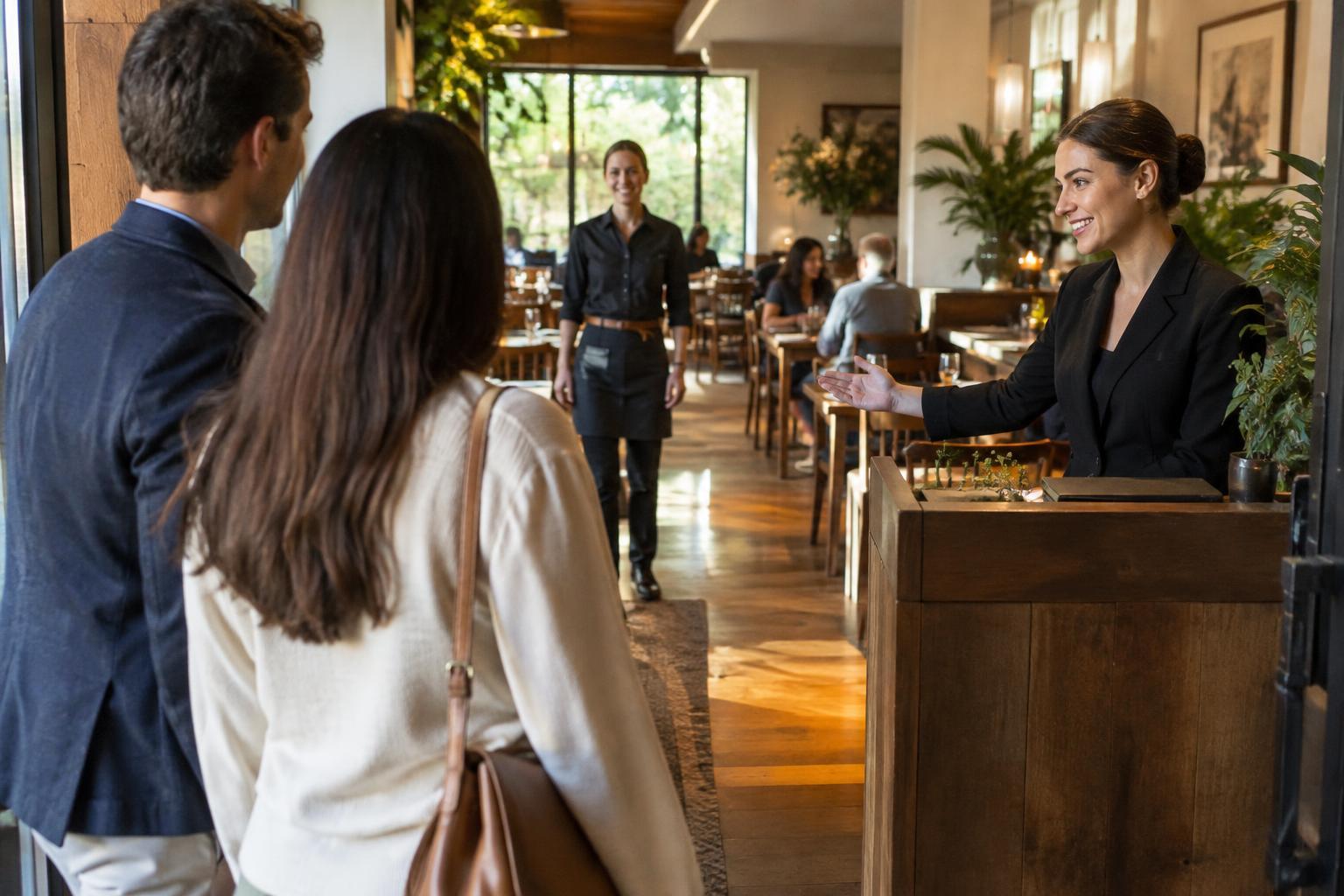
The arrival experience starts with a simple question: where should a guest go? A visible entrance, an uncluttered path and a clearly identifiable greeting point reduce hesitation before anyone speaks. If guests must check in at a host stand, that should be apparent from the doorway. In a small restaurant without a stand, a team member can make eye contact and acknowledge arrivals while finishing another task.
Acknowledgment is not the same as an immediate conversation. When the host is occupied, a brief greeting such as “Welcome, I’ll be with you shortly” lets guests know they have been seen. This matters when the entrance is busy or when arriving guests cannot tell whether they should wait, approach the counter or seat themselves. Staff should also have a consistent way to notice people who enter while the host is away from the door.
Greet people, then gather the essentials
A useful greeting is warm, brief and practical. After welcoming guests, the host can ask for the reservation name or party size and confirm details that affect seating. Questions should sound like an offer of help rather than a checklist. For example, asking whether the party has a seating preference or needs an accessible route gives guests room to explain what would make the visit more comfortable.
Not every request can be met at once. A window table may be occupied, or a large party may need to wait while tables are prepared. The host can acknowledge the preference, explain what is available and offer a choice where possible. Avoid promising a specific table unless the team can reasonably provide it. Guests are better served by a clear option than by an enthusiastic promise that the dining room cannot keep.
The arrival process should also work for people who need more time to communicate or move through the space. Staff can speak directly to the guest, avoid assumptions and ask before offering physical assistance. A calm pace and a clear route to the table often make a more meaningful welcome than elaborate language.
Give wait information guests can use
A wait is easier to manage when guests know what it involves. If a table is not ready, explain the next step: where to wait, how they will be called and whether they need to remain nearby. If the restaurant offers a bar or lounge, present it as an option rather than directing everyone there. Guests may prefer to stay near the entrance, especially if they are with children or have limited time.
Wait estimates should reflect what the team knows, not what it hopes will happen. Table turnover is unpredictable, so an estimate may need a range and a brief qualification. If the situation changes, update waiting guests rather than leaving them to ask. For walk-ins when capacity is tight, a straightforward explanation of available seating times allows people to make their own decision.
Reservation holders need clear communication too. When their table is delayed, acknowledge the delay and give a realistic update. Quietly checking the dining room, kitchen and service team before making a new promise helps prevent a series of shifting estimates.
Connect the welcome to the dining room
The greeting should not end abruptly when guests leave the entrance. Before leading a party to its table, the host can confirm that the table is ready, the route is clear and any relevant requests have been passed to the server. A short handoff can communicate practical details, such as an accessibility need or a guest who has asked about menu options, without making the guest repeat the conversation.
Once seated, guests benefit from knowing what happens next. The host might point out where menus are and let the party know a server will be with them. If the restaurant uses a digital menu, staff should be prepared to explain how to access it and offer an alternative when available. These small explanations are especially helpful when a restaurant’s ordering process is unfamiliar.
Consistency matters more than a scripted speech. Hosts and servers can agree on who gives the first menu explanation, who handles wait updates and who responds if a requested table is unavailable. Clear ownership prevents guests from receiving conflicting information or feeling forgotten between teams.
Improve the arrival through observation
A practical way to assess the arrival experience is to walk through it from a guest’s point of view. Can a first-time visitor find the entrance and greeting point? Is there room to wait without blocking a doorway or a server’s path? Can the host see new arrivals while managing reservations? Answers may suggest small changes to signage, furniture placement or staff positioning.
Teams can also discuss recurring points of confusion after service. If guests often ask whether to seat themselves, the welcome point may need to be clearer. If quoted waits regularly change, the seating process may need closer coordination. The goal is not to eliminate every delay; it is to make the next step understandable. A guest who feels noticed and informed is better prepared to settle in and enjoy the meal.