A clear picture of where everyone will sleep
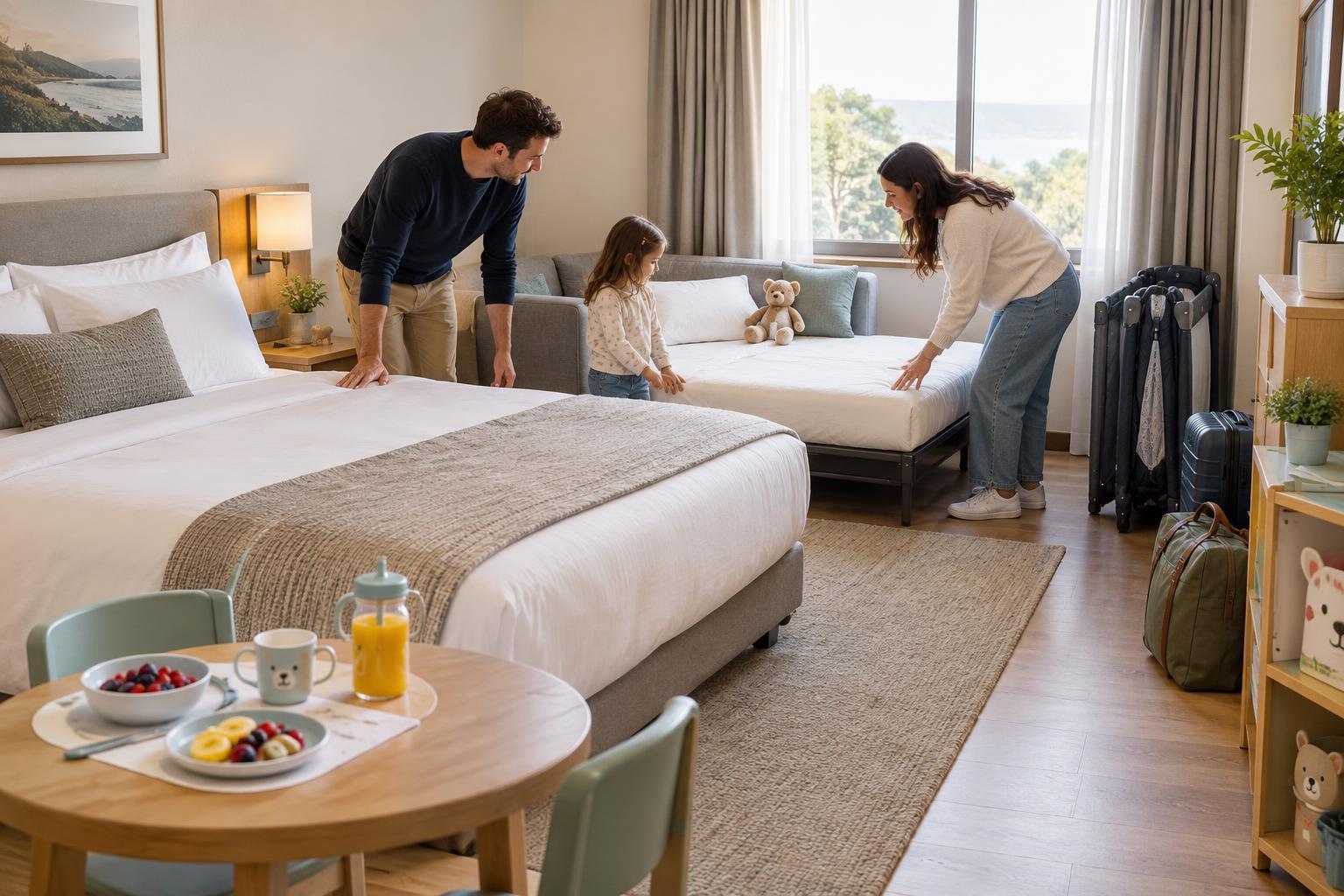
For a family, “sleeps four” may not answer the most important questions. Parents and caregivers often want to know whether the room has two beds, a sofa bed or space for a cot. They may also need to know whether a child can sleep in a separate area, whether connecting rooms are available and how many guests the property permits in each room. Clear descriptions and photographs make it easier to judge whether the space suits children of different ages.
Small layout details can shape the whole stay. A family may value room for a stroller, a bathroom that can be used without waking a sleeping child, or a place for adults to sit after bedtime. Not every property can offer these features, but it can describe what is available. When a family must call to confirm basic sleeping arrangements, they may keep looking.
Useful amenities, not just a family-friendly label
The phrase “family-friendly” means different things to different guests. A traveler with an infant may be looking for a cot, a way to warm food and somewhere to store milk or snacks. A family with older children may care more about laundry access, reliable Wi-Fi or activities within walking distance. Listing specific amenities, along with any fees or reservation requirements, is more helpful than relying on a broad label.
Availability matters as much as the amenity itself. If a property has only a limited number of cots or high chairs, guests need to know whether they can request one in advance and whether it will be confirmed. The same principle applies to parking, elevators and luggage storage. Families often travel with more belongings and less flexibility, so an accurate account of everyday conveniences helps them plan without promising a perfect trip.
Meals that fit children’s routines
Dining can influence a booking decision even when guests expect to eat outside the property. Families may check breakfast hours, whether there is a refrigerator in the room, and whether nearby food options are easy to reach. At a hotel restaurant, clear menus and realistic information about portion sizes, high chairs and takeaway options can help caregivers decide what will work after a long journey.
Flexibility is often more valuable than a large children’s menu. An early dining window, straightforward substitutions when possible and staff who can explain ingredients can make a meal less stressful. Properties should avoid implying that every dietary need can be met unless they can support that promise. Clear communication gives guests the chance to ask questions before they arrive and choose another option if necessary.
Practical information about getting around and feeling comfortable
Families may look closely at a property’s location, but “close to attractions” is only a starting point. Walking distances, stairs, public transport access and the ease of using a stroller may matter more than a list of nearby sights. Useful descriptions explain the route from parking or the entrance to the guest room and note features such as elevators where relevant.
Comfort also includes knowing what to expect on site. A pool, play area or outdoor space may appeal to children, while caregivers will want to understand access rules, opening hours and supervision expectations. Rather than making vague safety assurances, a property can describe its facilities and policies plainly. This lets families assess what suits their children and avoids surprises at check-in.
Policies that make the booking decision easier
Before committing, families often compare the full cost and the room’s suitability, not just the nightly rate. Child age policies, charges for extra beds, breakfast pricing and occupancy limits should be easy to find. Cancellation and change terms also deserve plain language: children get ill, travel plans shift and guests need to understand their options before paying.
For hospitality teams, the goal is not to promise that every family will feel at home. It is to make the decision easier through accurate details and consistent answers across the booking page, confirmation and front desk. For travelers, it helps to identify the few needs that are essential—such as a particular bed setup or access to a refrigerator—and confirm them before booking. When expectations are clear on both sides, arrival is more likely to begin with a welcome rather than a negotiation.