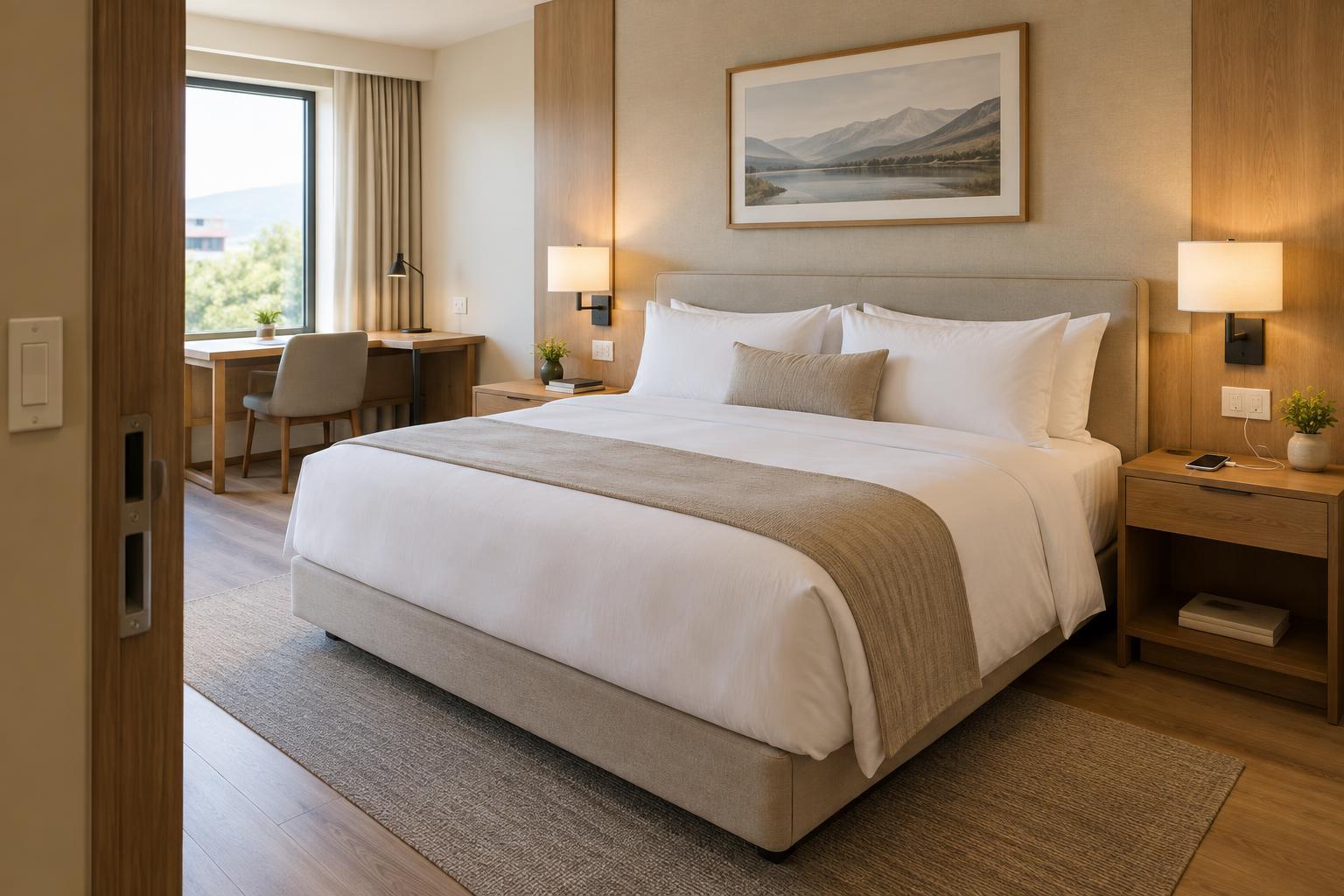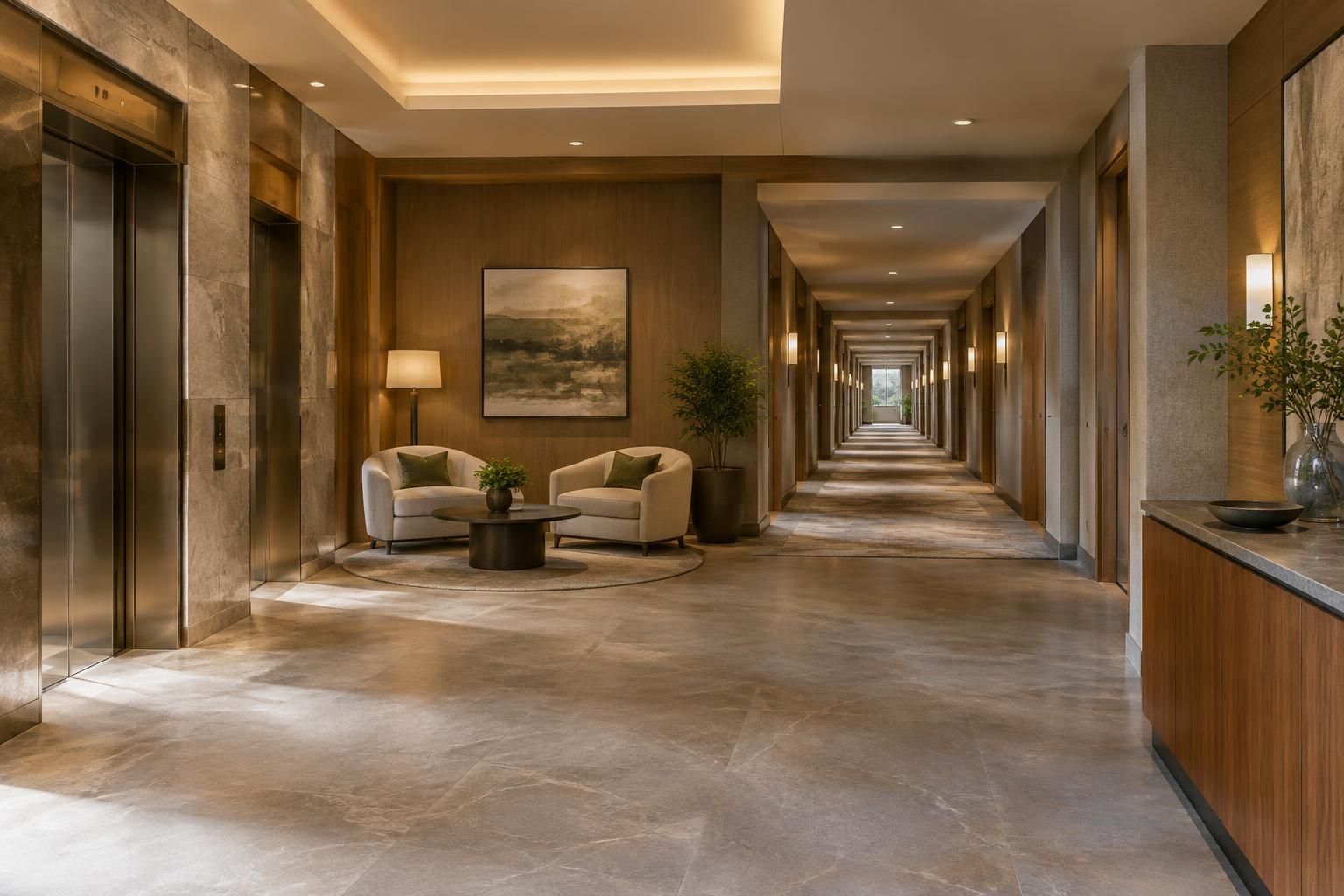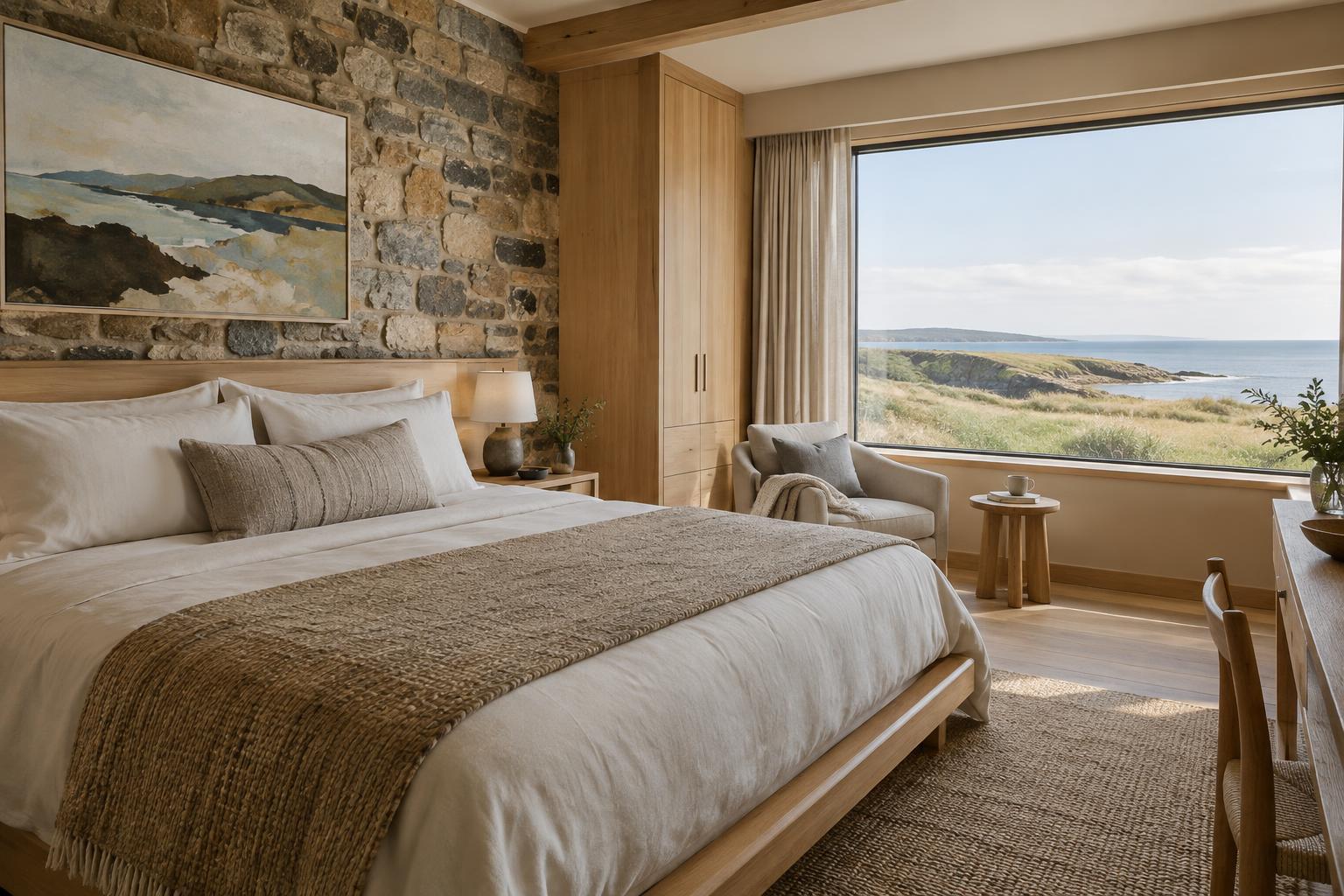
Start with the place, not a visual theme
A sense of place begins with observation. Before choosing artwork or finishes, a hotel team can look at the building, its setting and the way guests will use it. What can people see from the windows? Which materials appear in nearby buildings? How does the light change through the day? These questions offer more useful direction than a broad idea such as “coastal” or “urban,” which can easily lead to generic decoration.
The aim is not to reproduce the surroundings indoors. A hotel near a working harbor, for example, need not fill its lobby with nautical objects. It might instead draw on the colors of weathered surfaces, commission images that show everyday life in the area, or use a locally familiar material in a contemporary way. The strongest connections are often specific enough to be interesting but subtle enough to let guests form their own impressions.
Choose art that rewards attention
Art can introduce guests to perspectives they might not encounter during a short stay. A mix of established and emerging local artists, where available, can give shared spaces and guest rooms distinct voices. The selection should still fit the experience the hotel wants to offer: an energetic restaurant may suit bold work, while a quiet corridor may benefit from pieces that invite a slower look.
Consider where guests will meet each work. A piece above a reception desk may be seen from across a room; one beside a lift is likely to be viewed close up and briefly. Lighting, glare, sightlines and accessibility affect whether art can be enjoyed at all. Short, readable labels can identify the artist and the work without requiring guests to read a long explanation.
Working with artists is more meaningful when their work is treated as a contribution rather than as interchangeable décor. Discuss the intended setting, reproduction plans and upkeep before installation. If a hotel wants to tell an artist’s story, it should check how that person wishes to be represented. This helps the interpretation feel accurate and respectful.
Let materials do practical work
Locally relevant materials can connect a hotel to its setting through touch as well as appearance. Stone, timber, tile or textiles might reflect regional craft or building traditions, but “local” alone does not make a product suitable. A finish must also meet the demands of its location. A textured wall surface may work well in a lounge yet be difficult to clean beside a busy breakfast counter.
Ask suppliers for samples and test them in the light and conditions where they will be used. Consider how surfaces respond to luggage, spills, cleaning products and repeated contact. A durable material that can be repaired may retain its character better than a delicate one that needs frequent replacement. Maintenance staff should have a voice in these choices; they will know which details are hard to reach, clean or restore.
Not every item needs to come from nearby. Availability, performance and the distance a product travels are only some of the factors in a responsible specification. Using a few well-chosen local materials where guests can notice and enjoy them may create a clearer connection than applying them everywhere.
Build a coherent guest journey
Art and materials are most effective when they relate to the hotel’s wider design rather than appearing as isolated features. A simple palette can carry through the entrance, public rooms and guest floors, while each area offers a different detail. Repetition gives guests a thread to follow; variation keeps the experience from feeling staged.
This does not require every room to look the same. A lobby might introduce the work of several artists, while guest rooms use smaller pieces suited to a restful setting. Where a building has a notable existing feature, new choices can frame it rather than compete with it. The story should also be easy for staff to share in ordinary conversation, without asking them to recite a script or speak for a community.
Plan for change and care
A sense of place is not finished on opening day. Artwork may need conservation, textiles will wear, and a supplier may stop making a particular finish. Keep a clear record of materials, makers, installation details and care instructions so future teams can make informed repairs. If works rotate, plan how they will be stored and how replacement pieces will fit the spaces.
Guest feedback can reveal whether a design detail invites curiosity, creates confusion or gets in the way. Staff observations are just as valuable: they may notice a label that is hard to read or a surface that never stays clean. Reviewing these small points helps the hotel preserve what works without freezing its identity in time. The result is a place that feels connected to its surroundings and remains welcoming in daily use.